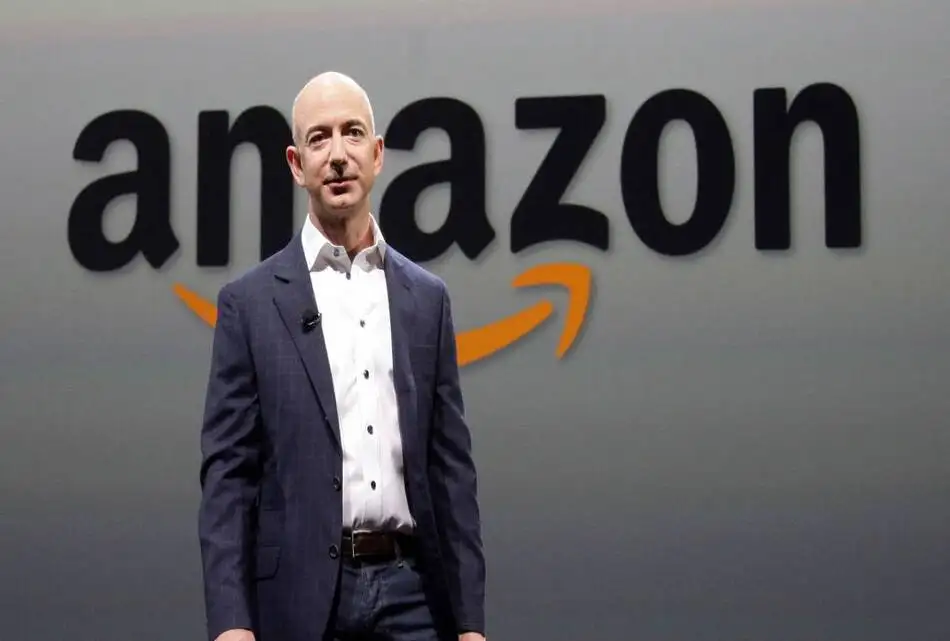
Amazon has grown from an online bookseller into one of the world’s largest technology and retail companies. Yet its founder, Jeff Bezos, once warned that the business would eventually fail, arguing that even the most successful companies rarely survive indefinitely. His prediction was not necessarily a sign of pessimism about Amazon’s prospects. Instead, it reflected his belief that businesses must continuously adapt to changing customer expectations and avoid becoming complacent.
That philosophy is attracting renewed attention as Amazon increases its investment in Artificial Intelligence (AI), cloud infrastructure and other technology initiatives. The spending is intended to support future growth, but it is also putting pressure on free cash flow. This creates a familiar strategic challenge for the company: how to invest for the future without losing the customer-focused culture that helped it become a global business.
Bezos’ thinking about the long-term survival of companies offers a useful framework for understanding Amazon’s current position. His central message was that size and market leadership do not guarantee survival. Companies must continue behaving like challengers, even after becoming industry leaders.
Jeff Bezos Predicted Amazon Would Eventually Go Bankrupt
Jeff Bezos has repeatedly expressed the view that Amazon will not remain successful forever simply because of its current market position. His warning that the company would eventually go bankrupt reflected a broader observation about the limited lifespan of large corporations.
For Bezos, the possibility of failure was something Amazon’s leadership needed to recognise rather than ignore. A company can become successful, build a strong customer base and dominate important markets, yet still become vulnerable if it stops adapting.
This perspective shaped the way Bezos approached Amazon’s long-term strategy. Rather than treating market leadership as a permanent achievement, he encouraged employees and executives to consider what could eventually make the business irrelevant.
The warning also challenged the assumption that a company with enormous financial resources and a powerful brand is protected from disruption. Consumer preferences, technology and competitive conditions can change, creating opportunities for new businesses to challenge established players.
Amazon’s history reflects this emphasis on continuous reinvention. The company expanded beyond online bookselling into general merchandise, cloud computing, digital entertainment, devices and other services. Its willingness to enter new markets helped transform it into a diversified technology and retail group.
What the 30-Year Rule Says About the Survival of Big Companies
The idea behind Bezos’ 30-year rule is that major companies should not assume their success will last indefinitely. Large businesses often develop systems, processes and management structures that support their growth. Over time, however, those same structures can make them slower to respond to new competition and changing customer needs.
The rule is best understood as a warning about corporate complacency rather than a precise prediction that every company will fail after three decades. It encourages businesses to question whether their existing products, operating models and organisational habits will remain relevant in the future.
For established companies, longevity can create a particular challenge. As businesses grow, they may become more focused on protecting existing revenue streams than experimenting with new ideas. This can make it difficult to respond quickly when customers begin demanding different products or services.
Bezos’ philosophy suggests that companies should resist this tendency by maintaining a willingness to experiment, accept calculated risks and rethink established practices. A successful business must continue to earn customer trust rather than rely on its historical achievements.
The principle is especially relevant in technology markets, where new products and business models can change competitive conditions quickly. Companies that fail to respond to these developments risk losing relevance, regardless of how strong their current market position appears.
Bezos Believed Losing Focus on Customers Could Bring Amazon Down
Customer obsession was one of the central ideas behind Bezos’ approach to building Amazon. He believed that businesses should focus on customer needs rather than become overly concerned with competitors or short-term industry trends.
This philosophy influenced Amazon’s emphasis on convenience, product selection, competitive pricing and delivery services. The company sought to make shopping easier for customers while continually improving the experience across its platform.
Bezos’ argument was that customer expectations do not remain fixed. What customers consider convenient or valuable today may become inadequate as technology and competing services improve. Businesses must therefore keep raising their standards rather than assume that customers will remain loyal indefinitely.
Amazon’s focus on customer experience also helped it expand into new business areas. Its marketplace model increased product availability, while its logistics network supported faster delivery. Subscription services and digital offerings provided additional reasons for customers to remain within its ecosystem.
However, maintaining customer focus becomes more complicated as a company grows. Large organisations must balance investment decisions, operational efficiency, profitability and innovation. The challenge is to ensure that financial targets and internal processes do not become more important than the experience customers receive.
For Amazon, the principle remains relevant as it invests in AI and other technologies. These investments will need to translate into improvements in products, services, efficiency or customer experience to support the company’s long-term strategy.
Andy Jassy Inherited Bezos’ Mission to Keep Amazon in Day 1
Andy Jassy took over as Amazon’s chief executive after Bezos stepped down from the role in 2021. He inherited a company with a broad global presence and major businesses in online retail, cloud computing and digital services.
One of the central ideas associated with Amazon’s culture is the concept of Day 1. Bezos used the expression to describe a mindset built around urgency, experimentation and continuous improvement. It stands in contrast to what he called Day 2, a condition associated with stagnation and the gradual decline of a business.
The Day 1 philosophy encourages employees to remain focused on customers, make decisions efficiently and respond quickly to changes. It also emphasises the importance of experimenting with new ideas instead of relying entirely on existing sources of revenue.
Jassy’s leadership has involved managing Amazon’s established businesses while directing investment towards emerging areas, including artificial intelligence. The company must continue improving its retail and cloud operations while deciding how much capital to commit to future technologies.
Maintaining the Day 1 culture at Amazon’s scale is a significant organisational challenge. The company operates across multiple markets and business segments, each with different competitive conditions and investment requirements. Keeping teams innovative while maintaining operational discipline is central to the leadership task.
Amazon’s AI Spending Is Putting Pressure on Free Cash Flow
Amazon’s growing investment in artificial intelligence has brought its long-term growth strategy into focus. AI requires substantial spending on data centres, computing infrastructure, specialised chips and other technology resources. These investments are intended to support the development and delivery of AI services at scale.
However, large capital expenditure commitments can put pressure on free cash flow. Free cash flow broadly represents the cash a company generates from its operations after accounting for capital expenditure. It is an important measure because it indicates how much cash remains available for other purposes after the business funds its operating and investment requirements.
When a company significantly increases spending on infrastructure, its free cash flow can weaken even if revenue and operating performance remain strong. This does not automatically mean the investment is unsuccessful, but it makes the timing and eventual returns more important.
For Amazon, AI spending is connected to opportunities across several parts of its business. Its cloud computing division can provide infrastructure and AI services to businesses, while the technology can also be used to improve retail operations, recommendations, logistics and customer support.
The challenge is that these benefits may take time to materialise. Building infrastructure requires substantial upfront investment, while customer adoption, revenue generation and operating efficiencies may develop gradually.
Amazon therefore needs to balance the opportunity to establish a stronger position in AI with the financial discipline required to manage a large investment programme. Investors are likely to monitor whether the spending generates sufficient returns over time.
Why Amazon’s AI Investments Matter for Its Long-Term Strategy
Artificial intelligence represents a potential shift in how businesses operate and how customers interact with technology. Companies are investing in AI tools to improve productivity, automate processes, analyse information and develop new services.
For Amazon, the opportunity extends beyond introducing AI features into its existing products. Its cloud infrastructure business can provide computing resources and AI capabilities to organisations that want to develop or operate their own applications.
AI could also support Amazon’s retail operations through improved product discovery, personalised recommendations, demand forecasting and logistics management. These applications could help the company improve efficiency while strengthening the customer experience.
Nevertheless, the scale of investment required creates financial and competitive risks. Technology spending may need to remain elevated as companies compete to develop infrastructure and attract customers. If demand or monetisation develops more slowly than expected, the returns on investment could take longer to emerge.
This is where Bezos’ long-term philosophy becomes relevant. Amazon must invest in technologies that could shape future markets while ensuring that its spending decisions remain connected to customer needs and sustainable business outcomes.
Amazon Has Reached the Top of the Fortune 500. Is It Really in Trouble?
Amazon’s position among the world’s largest companies illustrates how far the business has expanded since its early days. Its presence across retail, cloud computing and technology has created multiple sources of revenue and given it a significant role in several industries.
However, becoming one of the largest companies does not eliminate the possibility of future challenges. Bezos’ warning was based on the idea that market leadership can become a weakness if it encourages complacency or prevents a company from adapting.
Amazon’s current AI investment cycle highlights the tension between growth and financial discipline. Spending heavily on infrastructure could help the company build capabilities for the next phase of technological development, but it also places greater importance on cash generation and investment returns.
Its established businesses must continue to perform while new initiatives develop. Retail operations need to remain competitive, cloud computing must respond to customer demand and AI investments must demonstrate their commercial value over time.
The company’s size provides resources to pursue new opportunities, but it also creates organisational complexity. Maintaining innovation across a large business requires leadership discipline, efficient decision-making and a continued willingness to challenge established practices.
The 30-Year Rule Remains Relevant in the AI Era
Bezos’ warning that Amazon could eventually fail was ultimately a reminder that no company can rely indefinitely on past success. The 30-year rule highlights the importance of continuous adaptation, customer focus and a willingness to change as markets evolve.
Amazon’s AI investments represent one of the latest tests of that philosophy. The company is committing significant resources to technology that could influence its future across cloud computing, retail and other services. At the same time, the spending is raising questions about free cash flow and the ability to generate returns from large infrastructure investments.
Andy Jassy’s challenge is to preserve the Day 1 mindset while managing a global company with substantial operating and financial commitments. That means continuing to experiment and innovate without losing sight of customers, efficiency and long-term profitability.
Amazon is not necessarily in trouble simply because its AI spending is putting pressure on free cash flow. The more important question is whether the investments strengthen its competitive position and create sustainable value over time.
The broader lesson from Bezos’ philosophy is that corporate survival depends less on how powerful a company becomes and more on whether it can keep changing. For Amazon, remaining a customer-focused challenger may be just as important as maintaining its position as one of the world’s largest online retailers.
Key Takeaways
- Jeff Bezos warned that Amazon would eventually fail, arguing that even large and successful companies cannot rely permanently on their market position.
- The 30-year rule highlights the importance of continuous innovation, customer focus and avoiding corporate complacency.
- Amazon’s growing AI investments could create new opportunities but are also putting pressure on free cash flow.
- Andy Jassy faces the challenge of maintaining Amazon’s Day 1 culture while balancing innovation, investment returns and financial discipline.
For breaking news and live news updates, like us on Facebook or follow us on Twitter and Instagram. Read more on Latest Business on thefoxdaily.com.






COMMENTS 0