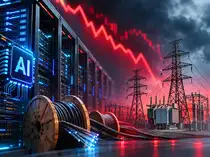
A global sell-off in Artificial Intelligence (AI) and Technology stocks has reached India’s power and infrastructure-linked companies, putting several shares that had benefited from expectations of rising data centre investment under pressure.
TD Power Systems, Thermax, HFCL and Sterlite Technologies were among the companies caught in the market weakness as investors reassessed the growth prospects of businesses connected to AI infrastructure. The sharpest reported declines reached around 15%, highlighting how quickly sentiment can change in sectors that have attracted strong investment on expectations of long-term technology-driven demand.
The selling pressure reflects concerns extending beyond India’s domestic economy. Investors are increasingly questioning whether the enormous capital expenditure planned by global technology companies will continue at the pace previously expected. Political uncertainty following the US midterm elections has added another layer of concern, particularly around the future approval and construction of large data centres.
For Indian companies supplying power equipment, optical fibre, telecom infrastructure and engineering solutions, the immediate issue is not necessarily a collapse in existing demand. Instead, the market is reassessing how much future growth depends on the continued expansion of AI infrastructure.
What Triggered the Sell-Off in Indian AI and Power Capex Stocks?
The immediate trigger was a sharp deterioration in global sentiment towards AI and data centre-related investments following the US midterm election results.
Investors are concerned that the political outcome could increase scrutiny of large data centre projects in the United States. Data centres require substantial electricity, water and supporting infrastructure. Their rapid expansion has also faced growing opposition in some communities because of concerns about resource consumption, local infrastructure pressure and environmental impact.
Democratic gains in the US midterm elections have raised expectations of stronger regulatory oversight and more difficult approval processes for some proposed projects. This has created uncertainty around the speed at which additional data centre capacity can be developed.
The concern matters because the global AI investment cycle depends heavily on expanding computing infrastructure. Technology companies need data centres, servers, advanced chips, cooling systems, electricity generation and transmission networks to support increasingly demanding AI workloads.
If new facilities face delays, the companies supplying equipment and infrastructure could experience slower order growth than investors had anticipated.
Why US election results matter to Indian companies
Indian power and telecom infrastructure companies may not be directly involved in US election politics, but their valuations can still be influenced by developments affecting global technology investment.
Several domestic companies are linked to the broader infrastructure ecosystem supporting digital networks and data centres. This includes businesses involved in power generation equipment, transmission and distribution, optical fibre, connectivity solutions and engineering products.
When investors expect global AI infrastructure spending to accelerate, companies connected to these activities can attract buying interest even if their direct exposure to AI is limited.
The reverse can also happen. When concerns emerge about future investment plans, investors may sell these stocks together, treating them as part of the same AI infrastructure trade.
Why TD Power, Thermax, HFCL and Sterlite Technologies Are Under Pressure
The companies affected by the sell-off operate in different parts of the industrial and technology infrastructure ecosystem. Their businesses are not identical, and their exposure to AI-related demand varies.
TD Power Systems
TD Power Systems operates in the electrical equipment segment, with a focus on manufacturing AC generators and related products used across industrial and power applications.
Its business is connected to the broader requirement for reliable electricity generation. As data centres expand, demand for dependable power infrastructure can create opportunities for companies supplying equipment used in industrial and energy applications.
However, expectations of stronger future demand can also influence stock valuations before the full financial benefits appear in company results. When investors become uncertain about the pace of data centre expansion, shares associated with the theme can face pressure.
Thermax
Thermax operates across energy and environment-related engineering solutions, including heating, cooling, water and waste management, and industrial energy systems.
Its business has exposure to industrial investment and infrastructure development rather than being exclusively dependent on AI. Nevertheless, expectations around data centre construction and rising electricity requirements can influence sentiment towards companies associated with energy systems and industrial infrastructure.
A sharp decline in its share price therefore reflects a broader reassessment of investment-linked stocks. It should not automatically be interpreted as evidence that the company’s underlying business has deteriorated by the same magnitude.
HFCL
HFCL operates in telecom infrastructure, optical fibre, optical fibre cables, connectivity solutions and related technology products. These capabilities are relevant to the expansion of digital networks and the connectivity requirements of data centres.
AI infrastructure depends not only on computing capacity but also on fast and reliable data transmission. Optical fibre networks help connect data centres, enterprises and telecom infrastructure, making connectivity suppliers part of the wider digital infrastructure investment cycle.
However, the company’s broader telecom and defence-related activities mean that its business should not be assessed solely through the performance of the AI sector.
Sterlite Technologies
Sterlite Technologies, also known as STL, is involved in optical fibre, optical connectivity and digital network solutions. Its products support broadband networks, enterprise connectivity and data centre interconnection.
The expansion of AI computing infrastructure can increase the need for high-capacity networks that transfer large volumes of data between facilities. This has made optical fibre and connectivity companies relevant to the global AI infrastructure theme.
But the investment outlook for these businesses also depends on telecom spending, broadband expansion, enterprise demand and the timing of network projects. A correction in AI-linked shares does not necessarily eliminate these other sources of demand.
Asian Technology Stocks Also Face Heavy Selling
The weakness in Indian infrastructure-linked shares is part of a wider global market correction. Asian technology stocks have also come under pressure as investors reassess valuations and the future growth outlook for the AI industry.
Technology-heavy markets are particularly sensitive to changes in expectations surrounding semiconductor demand, data centre construction and large technology companies’ capital expenditure plans.
South Korea and Japan are among the Asian markets with significant exposure to global technology supply chains. Their listed companies include semiconductor manufacturers, electronics businesses and suppliers that benefit from investment in advanced computing infrastructure.
When investors reduce exposure to the AI trade, selling can spread across different markets because many companies are connected through the same global investment cycle.
The pressure can also affect businesses that do not manufacture AI chips or operate data centres directly. Companies supplying electricity equipment, cooling systems, networking products and industrial components may experience selling because investors expect their future growth to depend partly on the pace of data centre investment.
This explains why the latest market weakness has extended beyond conventional technology companies. The AI investment theme has become closely connected to several industrial sectors, creating a wider group of stocks vulnerable to changes in technology market sentiment.
Is the AI Bubble Finally Bursting?
The sharp correction has renewed concerns about whether the AI investment boom has created excessive valuations across technology and infrastructure stocks.
Over the past few years, artificial intelligence has become one of the most important investment themes in global markets. The rapid adoption of generative AI, expansion of cloud computing and growing demand for advanced chips have encouraged technology companies to commit enormous amounts of capital to new infrastructure.
Investors have also extended this optimism to companies supplying the physical infrastructure required to support AI development. This has benefited businesses involved in power equipment, electricity transmission, cooling systems, optical fibre, telecom networks and data centre construction.
However, the scale of investment has created an important question: will the revenue generated by AI products and services be sufficient to justify the cost of building and operating the infrastructure?
High capital expenditure creates return expectations
Building an AI data centre requires substantial investment. Companies must secure land, electricity supply, cooling infrastructure, advanced computing equipment and high-speed connectivity.
These investments can take years to plan and complete. Even after a facility becomes operational, its financial performance depends on customer demand, utilisation rates, operating costs and the prices that companies can charge for computing services.
If investment grows faster than revenue, investors may become concerned about profitability and returns on capital. This can put pressure on the valuations of companies expected to benefit from the infrastructure expansion.
The market is therefore looking beyond announcements of large AI investments. It increasingly wants evidence that the spending will generate sustainable earnings and cash flows.
Political and regulatory uncertainty adds to the risk
Data centre construction also depends on local approvals, access to electricity, water availability and the ability to connect facilities to power and communication networks.
Political opposition or tighter regulatory requirements could make some projects more expensive or delay their completion. Such developments may affect future investment schedules, particularly for projects that have not yet secured the necessary approvals.
However, regulatory uncertainty does not mean that every planned data centre will be cancelled. Projects already under construction or supported by existing commitments may continue, while the impact could be greater on facilities still awaiting approvals.
Does the Sell-Off Mean AI Infrastructure Demand Is Disappearing?
A market correction should not be confused with the disappearance of the underlying demand for AI infrastructure.
Artificial intelligence applications continue to require computing capacity, data storage, electricity and connectivity. Businesses adopting AI tools also need reliable digital infrastructure to support their operations.
The longer-term expansion of AI could therefore continue even if the pace of investment changes. The distinction is between the long-term need for infrastructure and the speed at which companies are willing or able to build it.
For investors, this difference is important. A company may operate in a sector with strong long-term demand but still face a valuation correction if its share price has already incorporated aggressive growth expectations.
Similarly, companies with diversified businesses may have other sources of revenue that reduce their dependence on AI-related spending. Their performance will depend on their individual order books, execution, margins, financial position and exposure to different customer segments.
What the Correction Means for India’s Power and Digital Infrastructure Story
India’s power and digital infrastructure requirements are broader than the global AI investment cycle. The country needs electricity generation, transmission networks, industrial equipment, telecom connectivity and data centre capacity to support its expanding economy.
Domestic demand from manufacturing, commercial establishments, households and digital services can provide opportunities for companies operating in these sectors.
Data centres are an additional source of potential demand. As cloud services, digital platforms and AI applications expand, India may require more computing facilities and the supporting power and connectivity infrastructure.
However, the development of this industry also depends on the availability of reliable electricity, suitable land, water resources, transmission capacity and a predictable regulatory environment.
The latest sell-off highlights the risk of treating every company associated with power capex or digital infrastructure as a direct beneficiary of AI spending. Investors need to distinguish between companies with established business demand and those whose valuations depend heavily on expectations of future projects.
What Investors Should Watch After the AI-Linked Stock Crash
The next phase of the correction will depend on whether concerns about AI investment translate into actual changes in corporate spending and project execution.
Several factors could influence the performance of power capex and digital infrastructure stocks in the coming weeks and months.
- Global technology company spending: Updates on capital expenditure plans from major cloud and technology companies will help investors assess whether data centre investment is slowing or continuing.
- US regulatory developments: Changes in data centre approval rules, electricity requirements and local restrictions could influence the timing of future projects.
- Company order books: New orders, project execution and revenue visibility can help determine whether individual businesses are maintaining their growth momentum.
- Quarterly earnings: Revenue growth, operating margins, profitability and cash flow will be important indicators of whether high market expectations are supported by financial performance.
- Valuations: Investors will need to assess whether recent price declines have brought valuations closer to underlying business fundamentals.
- Domestic infrastructure demand: Orders from India’s power, telecom, manufacturing and data centre sectors may help reduce dependence on any single global investment theme.
These indicators can help separate a sentiment-driven correction from a more fundamental deterioration in business prospects.
AI Sell-Off: A Warning Against Overdependence on One Investment Theme
The sharp fall in TD Power Systems, Thermax, HFCL, Sterlite Technologies and other infrastructure-linked stocks demonstrates how closely India’s equity market has become connected to global technology investment trends.
Companies operating in different industries can experience simultaneous selling when investors group them under a popular market theme. This can create volatility even when their underlying businesses have different customers, revenue sources and growth drivers.
The immediate trigger is concern that political and regulatory developments in the United States could slow the expansion of AI data centres. But the broader correction also reflects questions about valuations, capital expenditure and the ability of technology companies to generate adequate returns from their investments.
For India’s power and digital infrastructure companies, the long-term opportunity has not necessarily disappeared. However, the market is becoming more selective about which businesses can convert infrastructure demand into sustainable earnings.
The coming earnings announcements, order-book updates and developments in global data centre investment will be important in determining whether the latest decline remains a temporary sentiment-driven correction or signals a more prolonged reassessment of the AI infrastructure trade.
For breaking news and live news updates, like us on Facebook or follow us on Twitter and Instagram. Read more on Latest Business on thefoxdaily.com.






COMMENTS 0