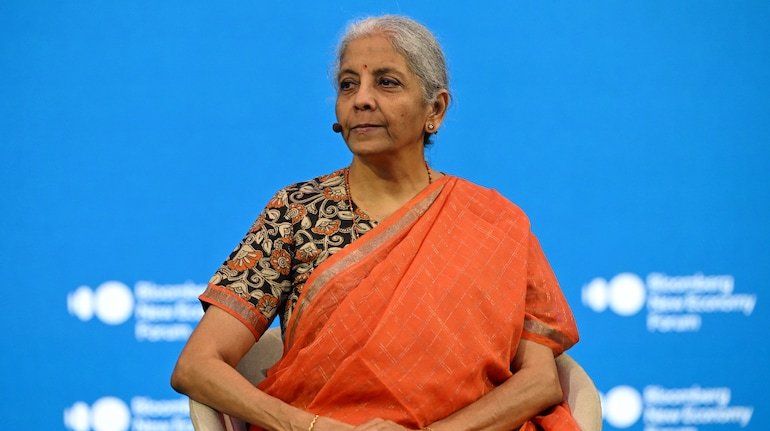
Finance Minister Nirmala Sitharaman has said India’s next phase of poverty reduction must focus not only on lifting people out of poverty but also on ensuring they do not fall back into it. She stressed that welfare protection needs to be supported by better access to finance, markets, technology and opportunities to earn a sustainable livelihood.
In a LinkedIn article titled The Decade India Turned the Tide on Poverty, published on November 23, Sitharaman said India’s approach to poverty alleviation had evolved over the past decade. According to her, the focus had shifted from providing temporary relief to addressing the structural barriers that keep households vulnerable to poverty.
Citing the World Bank’s Poverty and Equity Brief on India, released last month, the Finance Minister said nearly 50 crore Indians had moved out of poverty between 2011 and 2023, while extreme poverty had been almost eradicated.
“The next phase builds on this progress to lift the few people still at the bottom of the ladder out of poverty, while ensuring those who have already risen keep advancing and never slip back,” she wrote.
Her remarks highlight a challenge that can remain even after household incomes improve: families may still be vulnerable to financial shocks, illness, inadequate housing and limited access to essential services. The next stage, she suggested, must make poverty reduction more durable by combining social protection with economic opportunities.
Preventing Household Deprivation From Pushing Families Back Into Poverty
Sitharaman said poverty should not be measured only through income or wages. A household may earn more but remain vulnerable if it lacks secure housing, safe drinking water, sanitation and access to healthcare.
She highlighted the financial risks associated with such deprivation, particularly for families without sufficient savings or reliable access to essential services. “One illness can wipe out savings and push a family back into poverty,” she wrote.
According to the Finance Minister, government programmes have increasingly focused on addressing these household-level challenges through targeted interventions and measurable outcomes. The objective is to improve living conditions while reducing the risks that can reverse progress made by low-income families.
Sanitation, Drinking Water and Housing as Poverty Protection
Sitharaman cited the Swachh Bharat Mission as an example of how improvements in basic services can contribute to better living conditions. She said access to household toilets had improved sanitation and helped avert an estimated 60,000 to 70,000 infant deaths annually.
She also pointed to the Jal Jeevan Mission, under which rural household tap-water connections increased from approximately 3 crore in 2019 to nearly 16 crore. Improved access to drinking water has reduced the burden on women and girls who previously had to travel long distances to collect water.
Other initiatives have sought to address different dimensions of household vulnerability. The Pradhan Mantri Ujjwala Yojana has supported access to cleaner cooking facilities, while the Pradhan Mantri Awas Yojana has helped households obtain permanent, or pucca, homes.
Ayushman Bharat, through cashless hospital treatment, has also strengthened financial protection against healthcare expenses. Such support can help families avoid using their savings or taking on debt when they face medical emergencies.
The Finance Minister credited Prime Minister Narendra Modi with monitoring the implementation of welfare schemes, addressing delivery bottlenecks and encouraging the use of technology to track outcomes. She presented this approach as part of the government’s effort to make welfare delivery more targeted and effective.
Financial Inclusion Connects Welfare With Enterprise
Beyond basic services, Sitharaman said financial inclusion had become an important link between welfare support and economic opportunity. Access to bank accounts, savings facilities and formal credit can help households move beyond dependence on government assistance and participate more actively in the economy.
She recalled the earlier criticism that only 15 paise of every rupee allocated by the government reached the intended beneficiary. Direct Benefit Transfer (DBT), she said, had changed the way welfare payments were delivered by transferring benefits directly into recipients’ bank accounts.
More than 59 crore Jan Dhan accounts have enabled beneficiaries to receive payments directly, reducing the need for intermediaries. Sitharaman said these accounts also provide a secure place to save money and help individuals build a financial record, which can improve their access to formal credit.
This connection between banking access and credit is important for small entrepreneurs, particularly those who may not have property or other assets to offer as collateral. Formal financial access can help them establish or expand businesses and create employment.
MUDRA Loans Help Small Entrepreneurs Restart Businesses
To illustrate the role of credit in supporting livelihoods, Sitharaman shared the experience of Sushmita Gharai from West Bengal. She said she had met Gharai during an interaction with beneficiaries of the Pradhan Mantri MUDRA Yojana around two months earlier.
According to the Finance Minister, a collateral-free loan helped Gharai restart her family’s printing business after it collapsed following her father’s death during the COVID-19 pandemic. The business has since expanded, and Gharai now employs eight people, twice the size of her initial workforce.
She is also planning to expand into digital printing, Sitharaman said. The example illustrates how access to finance can help a household recover from an economic setback and create employment opportunities for others.
Sitharaman said 60 crore loan accounts had been sanctioned under the Pradhan Mantri MUDRA Yojana, with women accounting for approximately two-thirds of them.
She also highlighted the roles of PM SVANidhi and PM Vishwakarma. These programmes support street vendors and traditional artisans, respectively, by helping them access financial and other forms of assistance to sustain their livelihoods.
Women’s Self-Help Groups Expand Livelihood Opportunities
The Finance Minister identified women’s self-help groups as another important part of India’s poverty-reduction effort. She said around 10 crore rural women participate in these groups, which have developed into platforms for savings, skills training, access to credit and entrepreneurship.
Through the Deendayal Antyodaya Yojana-National Rural Livelihoods Mission and other programmes, self-help groups have helped women strengthen their economic participation. Their role extends beyond financial support to include business development, collective activity and access to wider markets.
Sitharaman said more than 3.7 crore women had become Lakhpati Didis, while some had progressed towards becoming Crorepati Didis. The initiatives seek to improve women’s incomes by supporting livelihood activities and encouraging them to expand their enterprises.
From Lakhpati Didis to Drone Services
She also referred to women trained as Namo Drone Didis, who provide drone-spraying services to farmers. Such services offer women an opportunity to participate in technology-enabled rural businesses while supporting agricultural activities.
The Finance Minister recalled meeting Esther, a Lakhpati Didi from Kiphire district in Nagaland, a year earlier. Esther had described how her millet-based products were reaching customers online beyond the state.
Sitharaman said she had encouraged the women to aim higher and aspire to become Crorepati Didis. The example also highlighted the importance of digital platforms in helping rural producers reach customers outside their immediate communities.
However, expanding these opportunities requires more than helping people start small businesses. Entrepreneurs also need reliable access to customers, suitable infrastructure, skills and finance if their activities are to grow into sustainable sources of income.
Digital Access and Market Opportunities Will Shape the Next Phase
Sitharaman’s remarks point to a broader shift in the government’s poverty-reduction priorities: welfare schemes must increasingly be connected with opportunities for people to earn, build enterprises and improve their livelihoods.
Access to finance can help individuals start businesses, but access to markets determines whether those businesses can grow. Digital platforms can widen the customer base for small producers, while better infrastructure can connect rural communities with employment, services and commercial opportunities.
The Finance Minister said the government was working to strengthen links between academia and industry through employment-linked incentives, internships and apprenticeships. These measures are intended to improve the connection between education, practical skills and workplace requirements.
Infrastructure investment is another part of this approach. Better connectivity can reduce the distance between people and economic opportunities, helping businesses reach markets and workers access employment in different locations.
She emphasised that economic opportunities should not remain limited to a small section of society. “Opportunity cannot remain the preserve of a few,” she wrote.
Why Preventing a Return to Poverty Matters
India’s reported progress in reducing poverty between 2011 and 2023 represents a significant change in the country’s development landscape. However, the Finance Minister’s message underlines that the number of people moving out of poverty is only one measure of progress. The ability of households to maintain and improve their living standards is equally important.
Families that lack savings, healthcare protection, secure housing or stable employment can remain exposed to sudden financial difficulties. An illness, loss of income or business setback can reverse years of progress, particularly when households have limited access to affordable credit and social protection.
This makes the relationship between welfare and economic opportunity central to the next stage of poverty reduction. Basic services can reduce household vulnerability, while banking access and targeted credit can support enterprise. Skills, infrastructure and digital connectivity can help people find better employment and reach larger markets.
Sitharaman’s argument is that these elements need to work together. Welfare support can provide a foundation, but lasting improvements depend on whether households can build stable incomes and withstand economic shocks.
As India moves into the next phase of its poverty-reduction effort, the challenge will be to ensure that people who have improved their living conditions can continue progressing. Preventing a return to poverty, while creating opportunities for those still at the bottom of the income ladder, is likely to remain an important measure of the country’s broader development progress.
For breaking news and live news updates, like us on Facebook or follow us on Twitter and Instagram. Read more on Latest Business on thefoxdaily.com.






COMMENTS 0