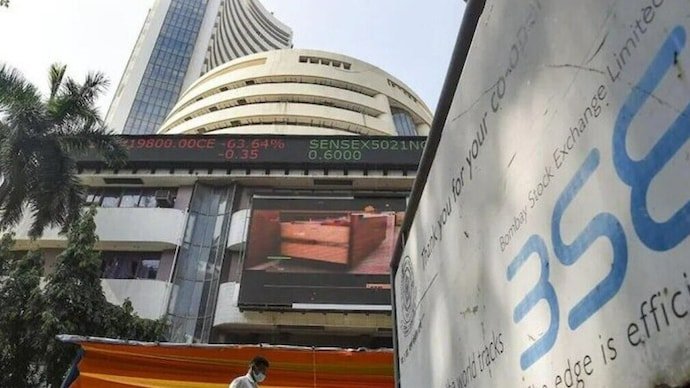
Investors heading into Monday’s trading session are facing a challenging mix of global and domestic factors that could put significant pressure on Indian stock markets. Early indicators suggest that benchmark indices may open sharply lower as concerns over the Middle East Conflict, rising Crude Oil Prices, foreign institutional investor (FII) selling and higher-for-longer US interest rates dampen risk appetite.
Market sentiment has shifted rapidly over the past few days. What was previously a market focused on economic growth, earnings recovery and Artificial Intelligence-driven global optimism is now grappling with geopolitical uncertainty and inflation risks. For a country like India, which imports the majority of its crude oil requirements, any sustained spike in energy prices can have far-reaching implications for inflation, fiscal stability, corporate profitability and investor confidence.
While short-term market movements are often driven by sentiment, the underlying reasons behind today’s expected weakness reveal larger economic themes that investors should closely monitor in the coming weeks.
Why Today’s Market Opening Matters
Stock markets do not operate in isolation. They react to a combination of economic data, corporate performance, monetary policy expectations and geopolitical developments. The current market environment is witnessing all four forces colliding simultaneously.
Pre-market indicators point toward a weak start, but the broader significance lies in understanding whether this is merely a temporary correction or the beginning of a deeper risk-off phase for Global Markets.
Several warning signs have emerged:
- Crude oil prices are approaching levels that historically pressure India’s economy.
- Global investors are becoming more cautious amid geopolitical instability.
- Expectations of higher US interest rates are strengthening.
- Foreign capital continues to leave emerging markets.
- Global equity markets are witnessing increased volatility.
Reason 1: Middle East Conflict Sends Oil Prices Higher
The biggest concern for Indian investors is the sharp rise in crude oil prices following renewed tensions in the Middle East.
The latest escalation involving Iran, Israel and Lebanon has reignited fears about energy supply disruptions. Oil traders are particularly worried about potential instability around the Strait of Hormuz, one of the world’s most critical maritime chokepoints through which a significant portion of global oil supplies passes.
Whenever geopolitical tensions threaten energy routes, oil prices tend to rise rapidly as traders factor in supply risks.
For India, this creates a serious challenge.
India imports more than 85% of its crude oil needs, making the economy highly sensitive to global energy prices. Every sustained increase in crude oil prices impacts multiple sectors:
- Transportation costs rise.
- Manufacturing expenses increase.
- Inflationary pressures intensify.
- Government subsidy burdens can grow.
- Corporate profit margins may shrink.
- The current account deficit may widen.
Historically, periods of elevated oil prices have often coincided with increased market volatility in India.
| Impact Area | Effect of Rising Crude Oil Prices |
|---|---|
| Inflation | Higher fuel and transportation costs push consumer prices upward |
| Corporate Earnings | Input costs increase across industries |
| Government Finances | Potential rise in subsidy and fiscal pressures |
| Rupee | Higher import bills can weaken the currency |
| Stock Markets | Investor sentiment often turns cautious |
Investors are therefore likely to react negatively until there is greater clarity regarding the geopolitical situation.
Reason 2: Global Markets Are Entering Risk-Off Mode
The weakness is not limited to India.
Markets across Asia and other regions have experienced significant selling pressure as investors reduce exposure to riskier assets.
A risk-off environment occurs when investors move money away from equities and emerging markets toward traditionally safer assets such as government bonds, gold and the US dollar.
Several factors are contributing to this shift:
- Geopolitical tensions are increasing uncertainty.
- Technology stocks that led recent rallies are experiencing profit booking.
- Investors are reassessing global growth expectations.
- Central banks remain cautious about inflation.
The sharp declines seen across major Asian markets suggest that investors are prioritising capital preservation over aggressive growth bets.
This matters because Indian equities have increasingly become integrated with global investment flows. Even when domestic fundamentals remain relatively strong, international risk aversion can trigger short-term selling pressure.
Global fund managers often reduce exposure across multiple markets simultaneously during periods of uncertainty. As a result, even fundamentally sound economies may experience stock market declines.
Reason 3: Higher US Interest Rate Expectations Are Hurting Sentiment
The third major reason behind today’s expected market weakness is the growing belief that the US Federal Reserve may keep interest rates elevated for longer than previously expected.
Recent economic data from the United States has indicated continued resilience in the labour market and broader economy. While economic strength is generally positive, it also raises concerns that inflation could remain stubbornly above central bank targets.
If inflation remains elevated, the Federal Reserve may delay rate cuts or even consider additional tightening measures.
Higher US interest rates create challenges for emerging markets because:
- US assets become more attractive to global investors.
- Capital flows back toward developed markets.
- Emerging market currencies can weaken.
- Funding costs increase globally.
- Valuations for growth stocks face pressure.
The relationship between interest rates and stock markets is often underestimated by retail investors. When borrowing costs rise, future corporate earnings become less valuable in present-value calculations, which can reduce equity valuations.
This is particularly relevant for high-growth sectors and technology companies.
Foreign Investor Outflows Continue to Concern Markets
One of the most important indicators for Indian equities remains foreign institutional investor activity.
FIIs play a crucial role in determining short-term market direction because of the scale of capital they manage. Sustained selling by foreign investors can create significant downward pressure on stock prices.
Recent trends indicate continued caution among international investors.
The combination of rising oil prices, stronger US yields and geopolitical uncertainty has reduced appetite for emerging-market risk.
While domestic institutional investors have provided support to Indian equities in recent years, persistent foreign selling can still weigh heavily on market sentiment.
Investors should monitor whether current outflows represent temporary caution or a broader shift in global capital allocation strategies.
RBI’s Position: Stability Amid Global Uncertainty
Despite global challenges, India’s central bank has attempted to maintain stability.
The Reserve Bank of India recently kept interest rates unchanged while balancing concerns about inflation and economic growth.
This decision reflects the RBI’s attempt to support growth without allowing inflation risks to become entrenched.
The central bank’s revised projections highlight an important reality:
- Economic growth remains relatively strong.
- Inflation risks have increased.
- Global uncertainty continues to cloud the outlook.
India’s economic resilience remains one of the strongest arguments supporting long-term optimism toward domestic equities.
Strong consumption, government infrastructure spending, manufacturing expansion and digital transformation continue to provide structural support to growth.
What Technical Indicators Are Signalling
Beyond fundamental factors, traders are closely watching technical indicators for clues about near-term market direction.
Several signals currently suggest caution:
- The Nifty remains below key moving averages.
- Momentum indicators remain weak.
- The market continues to form lower highs and lower lows.
- Selling pressure emerges during rallies.
- Options data points to strong resistance levels overhead.
Technical analysts often interpret such patterns as signs that sellers currently have greater control than buyers.
Until major resistance levels are reclaimed, market participants may remain defensive.
A Comparison With Previous Oil Shock Periods
One unique perspective often missing from daily market coverage is historical context.
Indian markets have faced oil shocks multiple times over the past two decades.
While sharp oil spikes frequently trigger short-term corrections, their long-term impact depends on how long elevated prices persist.
| Scenario | Likely Market Impact |
|---|---|
| Short-term oil spike | Temporary volatility and correction |
| Prolonged oil surge | Inflation pressure and slower growth |
| Geopolitical resolution | Market recovery and improved sentiment |
| Escalating regional conflict | Extended risk-off environment |
This historical perspective suggests investors should focus not merely on today’s headlines but on whether tensions become a prolonged crisis.
The Bigger Question: Is This a Correction or a Trend Reversal?
One of the most important questions facing investors is whether the current weakness represents a temporary correction or the beginning of a larger market downturn.
At present, evidence points more toward heightened volatility than a fundamental collapse.
Corporate earnings remain relatively stable. India’s economic growth remains among the strongest globally. Banking sector fundamentals continue to improve, and domestic investment activity remains healthy.
However, markets dislike uncertainty, and uncertainty is currently abundant.
If geopolitical tensions ease and oil prices stabilise, investor sentiment could recover quickly. Conversely, further escalation could trigger deeper corrections.
What Investors Should Watch Next
Several developments will likely determine market direction over the coming days:
- Movements in crude oil prices.
- Developments in the Middle East conflict.
- US Federal Reserve policy signals.
- Foreign investor buying or selling activity.
- Corporate earnings guidance.
- Inflation trends in India and globally.
These factors will provide important clues about whether current market weakness is temporary or more structural in nature.
Conclusion: Markets Face a Tough Start, but Long-Term Fundamentals Remain Important
Indian stock markets are likely to begin the week under pressure as investors react to a combination of rising crude oil prices, escalating Middle East Tensions, global market weakness and concerns about higher US interest rates.
The immediate outlook suggests caution, particularly as risk-off sentiment spreads across global financial markets. Higher energy costs, foreign investor outflows and uncertainty surrounding geopolitical developments could continue to create volatility in the near term.
However, investors should distinguish between short-term market reactions and long-term economic fundamentals. India’s growth story, expanding infrastructure, digital economy and domestic consumption remain powerful structural drivers.
The key variable now is whether geopolitical tensions ease or intensify. If diplomatic efforts succeed and oil prices stabilise, markets could recover quickly. If conflict expands and energy prices remain elevated, volatility may persist for longer.
For breaking news and live news updates, like us on Facebook or follow us on Twitter and Instagram. Read more on Latest Business on thefoxdaily.com.






COMMENTS 0