- Why the Russian Oil Waiver Was So Important for India
- Why Global Crude Oil Prices Are Rising Again
- Why Petrol and Diesel Prices Matter Beyond Fuel Stations
- Why Indian Oil Companies Are Under Pressure
- Could Petrol and Diesel Prices Rise Further?
- Why India Cannot Easily Replace Russian Oil
- The Hidden Impact on Inflation and Household Budgets
- Could the Government Reduce Taxes Instead?
- What Makes This Oil Crisis Different From Previous Ones?
- Could India Accelerate Its Energy Transition?
- Conclusion
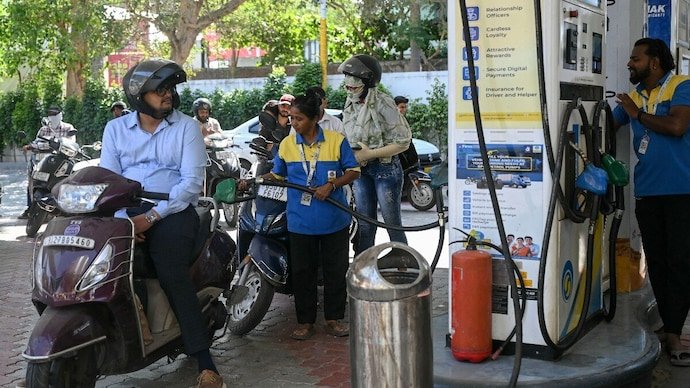
After nearly four years of relative stability, petrol and diesel prices in India have started moving upward again and the pressure may only be beginning.
The recent increase in fuel prices has coincided with a dangerous mix of global developments: escalating tensions in West Asia, crude oil prices crossing the psychologically important USD 100-per-barrel mark, and the expiration of a US sanctions waiver that had allowed smoother purchases of Russian oil.
For India, which imports roughly 85% of its crude oil needs, the timing could hardly be worse.
Over the last two years, discounted Russian crude became one of the biggest reasons India managed to shield consumers from sharp fuel price shocks despite global energy turmoil. Now, with the waiver ending and geopolitical tensions rising, economists and energy analysts are warning that Indian households, transport systems, and businesses may soon feel the impact.
The key question now is no longer whether fuel prices are under pressure but how long the government and oil companies can delay passing those costs to consumers.
Why the Russian Oil Waiver Was So Important for India
After Western sanctions on Russia intensified following the Ukraine war, Moscow began offering crude oil at heavy discounts to countries willing to continue buying.
India emerged as one of the largest beneficiaries.
Russian crude offered three major advantages:
- Lower purchase prices compared to Middle Eastern crude
- Reduced pressure on India’s trade deficit
- Protection against domestic fuel inflation
Indian refiners sharply increased purchases of Russian oil because the discounts often ranged between USD 10 and USD 25 per barrel compared to global benchmarks.
That price advantage became economically crucial.
Without Russian crude, India would likely have faced much higher petrol and diesel prices much earlier.
The US waiver had effectively provided breathing room by reducing immediate sanctions risks associated with these transactions.
Now that this waiver has expired, Indian refiners may face:
- Banking and payment complications
- Insurance hurdles
- Shipping restrictions
- Compliance risks
- Potential secondary sanctions exposure
Even if India technically continues buying Russian crude, the transaction environment becomes significantly more complicated and expensive.
Why Global Crude Oil Prices Are Rising Again
The Russian oil issue is only one part of the problem.
The larger concern comes from rapidly rising global crude prices driven by geopolitical instability in West Asia.
Oil markets are reacting nervously to fears surrounding:
- The Israel-Iran conflict
- Potential disruption near the Strait of Hormuz
- Attacks on regional energy infrastructure
- Shipping security risks
- Military escalation involving the US
The Strait of Hormuz is one of the world’s most important oil chokepoints.
A massive portion of global crude exports passes through this narrow maritime route.
Even the possibility of disruption can trigger sharp oil-price spikes because traders price in future supply risks immediately.
That is exactly what global markets are doing now.
| Key Oil Market Indicators | Current Situation |
|---|---|
| Brent Crude | Above USD 110 per barrel |
| WTI Crude | Above USD 107 per barrel |
| India’s Oil Import Dependence | Nearly 85% |
| Main Concern | Supply disruption and sanctions pressure |
| Major Risk Zone | Strait of Hormuz |
For oil-importing countries like India, sustained crude prices above USD 100 create serious macroeconomic stress.
Why Petrol and Diesel Prices Matter Beyond Fuel Stations
Many people think fuel-price hikes affect only vehicle owners.
In reality, petrol and diesel prices influence almost every part of the economy.
Higher fuel costs directly increase:
- Transportation expenses
- Food delivery costs
- Public transport fares
- Air ticket prices
- Freight and logistics costs
- Manufacturing expenses
- Agricultural transportation costs
Eventually, these higher operational costs feed into broader inflation.
That is why governments often try delaying fuel-price hikes as long as possible especially before elections or during periods of weak consumer demand.
But delaying increases creates another problem: mounting losses for oil marketing companies.
Why Indian Oil Companies Are Under Pressure
India’s state-run oil marketing companies have been absorbing a significant portion of rising global crude costs for months.
That strategy becomes increasingly difficult when:
- Crude prices stay elevated for long periods
- The rupee weakens against the dollar
- Discounted Russian oil becomes harder to access
- Refining and transportation costs increase
The recent fuel-price hike was widely viewed as a partial correction rather than a complete adjustment.
Industry estimates suggest current fuel prices may still not fully reflect actual global crude costs.
That means oil companies could continue facing under-recoveries if prices remain elevated.
In simple terms, they may still be selling fuel below economically sustainable levels.
Could Petrol and Diesel Prices Rise Further?
The short answer is: yes, further increases are possible.
The bigger question is how soon they might happen.
Several factors will determine that outcome:
- How long crude stays above USD 100
- Whether West Asia tensions escalate further
- India’s ability to continue sourcing Russian crude
- The rupee-dollar exchange rate
- Government willingness to absorb political costs
If crude remains near current levels for several months, experts believe additional fuel-price revisions may become difficult to avoid.
Some analysts estimate that significantly larger increases may eventually be needed if oil companies are expected to fully offset losses.
However, the government may attempt a calibrated approach instead of a sudden sharp increase.
Why India Cannot Easily Replace Russian Oil
One important detail often overlooked is that replacing Russian crude is not simply about finding another supplier.
Russian oil became attractive not only because it was available, but because it was discounted.
Alternative suppliers in the Middle East or elsewhere may charge significantly higher prices.
That creates multiple economic pressures:
- Higher import bills
- Increased current account deficit
- Pressure on forex reserves
- Potential rupee weakness
- Higher inflation risks
India also benefits strategically from diversifying oil imports.
Overdependence on any one region particularly the politically volatile Gulf region increases vulnerability during crises.
Russian crude helped India balance those risks.
The Hidden Impact on Inflation and Household Budgets
If fuel prices continue rising, the broader inflation impact could become politically sensitive.
Diesel prices are especially important because diesel powers much of India’s logistics and transport economy.
That means rising diesel prices can indirectly increase:
- Vegetable prices
- Milk transportation costs
- E-commerce delivery expenses
- Construction material costs
- Interstate freight charges
For middle-class households already managing higher food and utility costs, sustained fuel inflation could further squeeze disposable incomes.
Rural consumers may also face pressure through higher agricultural transport and irrigation costs.
Could the Government Reduce Taxes Instead?
Whenever fuel prices rise sharply, discussions quickly shift toward excise-duty reductions.
The government has previously reduced fuel taxes to ease pressure on consumers.
However, there is a major challenge.
Fuel taxes remain an important source of government revenue.
Reducing taxes significantly could affect:
- Fiscal deficit targets
- Infrastructure spending
- Welfare expenditures
- State government revenues
This creates a difficult balancing act.
The government must weigh:
- Inflation control
- Political costs
- Fiscal discipline
- Economic growth priorities
That is why fuel pricing decisions often become both economic and political calculations.
What Makes This Oil Crisis Different From Previous Ones?
One unique aspect of the current situation is that multiple global risks are overlapping simultaneously.
India is facing:
- Geopolitical instability in West Asia
- Sanctions-related uncertainty
- Shipping-route security concerns
- Global inflationary pressures
- Currency volatility
Unlike previous oil shocks driven mainly by supply-demand imbalance, this crisis involves strategic, military, and financial risks all at once.
That makes forecasting much more difficult.
Markets are now reacting not just to actual oil shortages, but also to fears of future disruption.
Could India Accelerate Its Energy Transition?
Ironically, periods of high oil prices often accelerate long-term energy transitions.
Rising fuel costs could increase policy focus on:
- Electric vehicles
- Biofuels
- Renewable energy
- Hydrogen fuel projects
- Public transport infrastructure
India has already been expanding investments in clean-energy infrastructure.
But fossil fuels will continue dominating transportation and industrial systems for years.
That means oil-price shocks still carry enormous economic significance.
Conclusion
The end of the US waiver on Russian oil purchases has introduced fresh uncertainty into India’s fuel and energy outlook at a particularly vulnerable moment.
With global crude prices already surging due to West Asia tensions, India now faces the possibility of higher import costs, renewed inflation pressure, and further petrol-diesel price hikes.
Discounted Russian oil had acted as a crucial economic buffer over the past two years. If access to that cushion becomes more difficult, the financial pressure on oil companies, consumers, and the broader economy could intensify significantly.
For now, much depends on Geopolitics.
If crude prices cool and tensions ease, India may avoid another major fuel-price shock. But if oil remains above USD 100 for an extended period and sanctions-related complications deepen, further increases at petrol pumps may become increasingly difficult to avoid.
And in an economy where fuel prices affect everything from vegetables to vacations, the impact would extend far beyond just filling a fuel tank.
For breaking news and live news updates, like us on Facebook or follow us on Twitter and Instagram. Read more on Latest India on thefoxdaily.com.






COMMENTS 0