- Why Are People Expecting a Fuel Price Hike?
- Why the Strait of Hormuz Matters So Much to India
- What India Today’s Ground Report Revealed
- Why Fuel Prices Are Politically Sensitive in India
- Oil Companies Are Under Growing Pressure
- Could Petrol Really Cross Rs 150 Per Litre?
- Inflation Fears Are Driving Public Anxiety
- The Psychology Behind Panic Buying
- The Government Faces a Difficult Economic Balancing Act
- India’s Energy Dependence Is the Bigger Long-Term Issue
- Conclusion: Fear of Fuel Inflation Is Now Spreading Faster Than Official Announcements
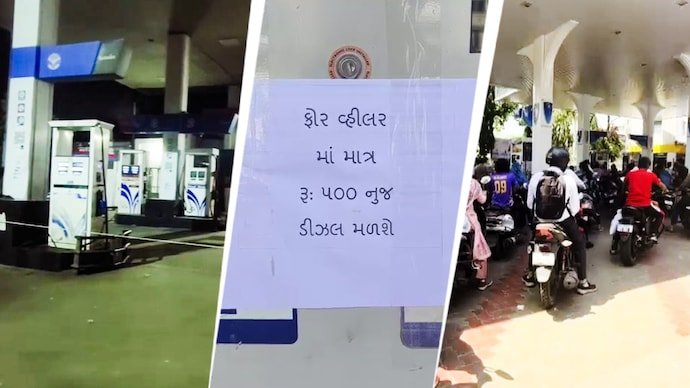
India witnessed scenes of panic buying at petrol pumps across multiple states after speculation spread that fuel prices could soon see a steep increase, with some estimates suggesting hikes of up to Rs 15–20 per litre.
From Delhi and Gurugram to Surat, Kanpur and Alwar, consumers rushed to refill tanks, while some petrol stations reported unusually high demand, temporary shortages and even “No Fuel” or “No Stock” signs.
The sudden anxiety reflects a deeper fear gripping consumers:
India may finally be heading toward a delayed fuel price correction after months of Global Oil-market stress.
Although there has been no official government announcement regarding a fuel price hike, the combination of rising Crude Oil prices, geopolitical instability in West Asia and pressure on India’s oil marketing companies (OMCs) has triggered widespread public concern.
The panic itself reveals how sensitive fuel prices remain in India’s economy, where petrol and diesel costs directly influence Inflation, transportation, household budgets and business activity.
Why Are People Expecting a Fuel Price Hike?
The fears are not emerging in isolation.
Global crude oil prices have been climbing sharply amid escalating tensions in West Asia, especially around the Strait of Hormuz — one of the world’s most important oil shipping routes.
India imports nearly 85% of its crude oil requirements, making the country highly vulnerable to global energy shocks.
Several developments have increased pressure simultaneously:
- Rising international crude oil prices
- Disruptions linked to the Iran conflict
- Higher shipping and insurance costs
- Weakening rupee against the US dollar
- Growing losses for oil marketing companies
All of these factors increase the landed cost of crude oil for India.
For months, retail fuel prices remained relatively stable despite global volatility, leading many analysts to believe that state-run fuel retailers were absorbing significant financial pressure.
That has now fueled speculation that a price correction may be unavoidable.
Why the Strait of Hormuz Matters So Much to India
The panic at Indian petrol pumps is directly linked to developments thousands of kilometers away in the Persian Gulf.
The Strait of Hormuz handles a massive share of global oil and LNG shipments.
Any disruption there immediately impacts global energy markets.
Since tensions escalated in the region, concerns have grown over:
- Supply disruptions
- Shipping delays
- Higher freight costs
- Energy security risks
For India, the stakes are especially high because Gulf nations remain among its largest energy suppliers.
Even if actual physical shortages do not occur immediately, the market reacts strongly to perceived risk.
That is exactly what consumers across Indian cities are now responding to.
What India Today’s Ground Report Revealed
A nationwide ground report across multiple cities showed remarkably similar public behavior:
- People opting for full-tank refills
- Long queues forming at fuel stations
- Consumers discussing possible hikes openly
- Fear of future shortages
- Concern over inflation
While some petrol pump operators dismissed the rumors as speculative, others acknowledged that crude oil trends and company losses could eventually force price increases.
The reactions varied by city, but the anxiety was visible almost everywhere.
| City | Ground Situation |
|---|---|
| Delhi | Mixed public opinion over possible hike |
| Alwar | “No Fuel” signs at some pumps |
| Gurugram | Dealers expect phased fuel hikes |
| Surat | Long queues at petrol stations |
| Kanpur | Heavy rush amid fears of Rs 150 petrol |
| Mahisagar | “No Stock” signs reported |
| Patna | Consumers worried but resigned |
| Bhubaneswar | Pump owners dismissed rumours |
Why Fuel Prices Are Politically Sensitive in India
Fuel prices in India are never just an economic issue — they are deeply political.
Petrol and diesel rates affect almost every sector of the economy, including:
- Transportation
- Food prices
- Manufacturing
- Logistics
- Agriculture
- Consumer inflation
Even moderate increases quickly become politically controversial because they directly affect daily household expenses.
That is one reason why governments often avoid sharp fuel-price hikes during politically sensitive periods such as elections.
Many consumers and analysts believe India delayed passing on global oil price increases because of the recently concluded assembly elections in five states.
Now that those elections are over, markets appear increasingly convinced that fuel price adjustments may finally happen.
Oil Companies Are Under Growing Pressure
India’s oil marketing companies face a difficult balancing act.
If retail prices remain artificially low while crude oil becomes more expensive, OMCs risk suffering mounting financial losses.
At the same time, sharp fuel-price hikes risk:
- Political backlash
- Inflation spikes
- Economic slowdown concerns
- Public anger
That is why some fuel dealers believe any increase may happen gradually rather than through a sudden massive jump.
In Gurugram, fuel association representatives suggested oil companies may phase in price hikes over time instead of imposing the entire burden at once.
Such gradual increases are often used to reduce public shock and inflationary impact.
Could Petrol Really Cross Rs 150 Per Litre?
Some consumers in cities like Kanpur openly feared Petrol Prices could eventually reach Rs 150 per litre if the Global Crisis worsens.
At present, such levels remain speculative.
However, several factors could push prices significantly higher if geopolitical tensions escalate further:
- Extended Hormuz disruption
- Major supply cuts
- Further rupee depreciation
- Sustained crude oil rally
- Higher global shipping costs
India’s final retail fuel prices depend not only on crude oil but also on:
- Central taxes
- State VAT
- Dealer commissions
- Refining margins
- Currency exchange rates
That complex pricing structure means even moderate increases in crude oil can eventually create noticeable retail impact.
Inflation Fears Are Driving Public Anxiety
The fear surrounding fuel prices goes beyond petrol pumps.
Consumers understand that costlier fuel affects almost everything else.
Higher fuel prices typically increase:
- Food delivery costs
- Public transport expenses
- Freight charges
- Cab fares
- Vegetable prices
- Online shopping logistics
Middle-class families are especially sensitive to fuel inflation because transportation forms a major part of monthly expenses.
Working professionals interviewed during the ground report repeatedly expressed concern that salaries are not rising fast enough to absorb another inflation shock.
The Psychology Behind Panic Buying
Interestingly, panic buying itself can worsen local supply pressures even before any actual shortage occurs.
When consumers rush simultaneously to fill tanks:
- Petrol pumps experience temporary stock strain
- Queues become longer
- Rumours spread faster
- Public anxiety increases further
This creates a self-reinforcing cycle.
The appearance of “No Stock” signs in some areas amplified fears even more, regardless of whether shortages were temporary or supply-chain related.
In India, fuel panic often spreads rapidly because petrol stations are highly visible public spaces where rumors circulate quickly.
The Government Faces a Difficult Economic Balancing Act
The current situation puts policymakers in a difficult position.
If India absorbs global oil shocks entirely through subsidies or price controls, it risks:
- Higher fiscal burden
- Pressure on government finances
- Stress on oil companies
- Wider economic imbalances
But if fuel prices rise sharply, inflation risks increase immediately.
This challenge becomes even more serious because India is simultaneously dealing with:
- Rupee weakness
- Imported inflation
- Global commodity volatility
- Higher energy costs
The government therefore appears focused on balancing:
- Economic stability
- Inflation control
- Energy security
- Political sensitivity
India’s Energy Dependence Is the Bigger Long-Term Issue
The fuel panic also highlights a structural vulnerability in India’s economy:
Heavy dependence on imported energy.
India remains one of the world’s largest crude oil importers.
That means geopolitical conflicts far from Indian borders can quickly affect domestic inflation and public sentiment.
This is one reason India has increasingly pushed:
- Ethanol blending
- Electric vehicles
- Renewable energy expansion
- Strategic oil reserves
- Energy diversification
Reducing exposure to imported oil remains a long-term strategic priority.
However, the transition will take years, meaning global oil shocks will continue affecting Indian consumers for the foreseeable future.
Conclusion: Fear of Fuel Inflation Is Now Spreading Faster Than Official Announcements
The long queues and panic buying at petrol pumps across India reveal how deeply fuel prices influence public psychology and economic confidence.
Even without an official announcement, speculation around a possible Rs 15 fuel-price hike was enough to trigger visible anxiety across multiple cities.
The fears are rooted in genuine economic pressures:
- Rising crude oil prices
- West Asia instability
- Strait of Hormuz tensions
- Pressure on oil companies
- Inflation concerns
Whether fuel prices rise immediately or gradually, the episode highlights how vulnerable India remains to global energy disruptions.
It also demonstrates the powerful role of public perception in fuel markets, where rumours alone can trigger panic buying, supply stress and widespread concern.
For now, consumers, oil companies and policymakers are all watching the same thing:
What happens next in global oil markets and the Middle East.
For breaking news and live news updates, like us on Facebook or follow us on Twitter and Instagram. Read more on Latest India on thefoxdaily.com.






COMMENTS 0