- Why the Strait of Hormuz Matters So Much
- Vizhinjam Port: From Long Shot to Strategic Asset
- What Makes Vizhinjam Different?
- Global Shipping Shift: A New Pattern Emerging
- India’s Opportunity: A Maritime Turning Point
- The Economics Behind the Surge
- Challenges Ahead: Can Vizhinjam Sustain the Momentum?
- The Bigger Picture: When Crisis Creates Opportunity
- Conclusion: The Birth of a Maritime Contender
global trade rarely stands still but when a critical chokepoint like the Strait of Hormuz faces disruption, the ripple effects can reshape Shipping patterns overnight. That’s exactly what’s unfolding in 2026, as rising tensions in the region push cargo vessels to rethink their routes.
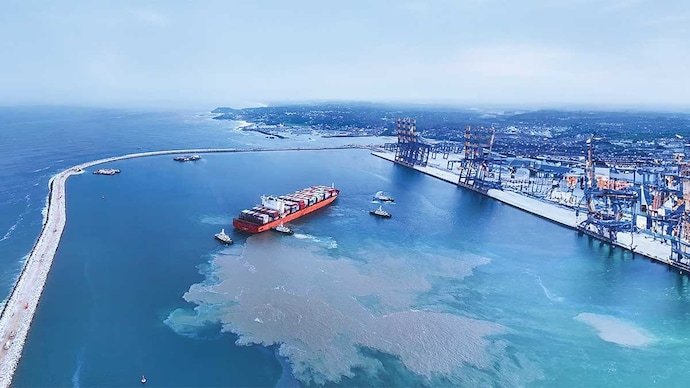
Amid this uncertainty, an unexpected beneficiary has emerged: Vizhinjam Port in Kerala. What was once seen as an ambitious infrastructure bet is now witnessing a surge in global attention and traffic.
Political leader Shashi Tharoor recently highlighted this shift, noting that nearly 100 vessels are either queued or seeking berthing at the port. But beyond the headline numbers lies a deeper story about Geopolitics, Logistics, and India’s long-term maritime ambitions.
Why the Strait of Hormuz Matters So Much
The Strait of Hormuz is one of the most critical maritime chokepoints in the world. A significant portion of Global Oil and cargo shipments passes through this narrow corridor.
When tensions rise in the region, shipping companies face multiple risks:
- Security threats to vessels and crew
- Rising insurance costs
- Potential delays or rerouting
Insight: In Global Shipping, reliability often matters more than speed. Even a small disruption can trigger large-scale route adjustments.
This is precisely why alternative Ports especially those positioned along major trade routes suddenly gain importance.
Vizhinjam Port: From Long Shot to Strategic Asset
Located near Thiruvananthapuram, Vizhinjam Port was once viewed with skepticism. Building a deep-water transshipment hub in India required not just investment, but also confidence that global shipping lines would actually use it.
That confidence is now being validated.
The port has rapidly scaled operations, achieving milestones that signal its readiness for global competition:
- Handled 1 million TEUs in record time
- Processed 61 vessels in March 2026 alone
- Currently seeing around 100 vessels awaiting berthing
Unique Angle: Vizhinjam’s success is not accidental it’s the result of strategic positioning near international Shipping Lanes, reducing deviation time for vessels.
What Makes Vizhinjam Different?
Not all ports are created equal. Vizhinjam has several structural advantages that are now coming into focus:
1. Natural Deep-Water Advantage
The port can handle large “motherships” without extensive dredging, reducing operational costs.
2. Proximity to Global Shipping Routes
Ships passing through major east-west trade corridors can dock with minimal diversion.
3. Transshipment Capability
It serves as a hub where cargo is transferred between large and smaller vessels critical for global logistics efficiency.
4. Expansion Readiness
Phase II development aims to allow simultaneous berthing of up to five motherships, significantly boosting capacity.
Global Shipping Shift: A New Pattern Emerging
The surge in traffic at Vizhinjam is not just about one port it reflects a broader shift in global maritime behavior.
Shipping companies are increasingly prioritizing:
- Route diversification to reduce geopolitical risk
- Alternative hubs outside traditional chokepoints
- Operational flexibility in uncertain conditions
| Traditional Model | Emerging Model (2026) |
|---|---|
| Dependence on fixed routes | Flexible, risk-adjusted routing |
| Limited hub options | Multiple strategic hubs |
| Cost-driven decisions | Reliability + risk balance |
Insight: The Hormuz situation is accelerating a trend that was already underway decentralization of global shipping hubs.
India’s Opportunity: A Maritime Turning Point
For decades, India has relied heavily on foreign ports like Colombo and Singapore for transshipment. This has meant:
- Higher logistics costs
- Longer transit times
- Dependence on external infrastructure
Vizhinjam changes that equation.
Why it matters:
- Reduces reliance on foreign hubs
- Strengthens India’s position in global trade networks
- Boosts local economic activity and employment
Comparison Insight: While Colombo and Singapore remain dominant, Vizhinjam’s rise introduces competition and potentially shifts regional dynamics.
The Economics Behind the Surge
Increased vessel traffic translates into multiple economic benefits:
- Higher port revenues
- Growth in logistics and warehousing sectors
- Increased foreign investment interest
But there’s also a strategic layer: ports are not just commercial assets they are geopolitical tools.
Insight: Control over key logistics nodes can influence trade flows, pricing, and even diplomatic leverage.
Challenges Ahead: Can Vizhinjam Sustain the Momentum?
While the current surge is promising, sustaining growth will require overcoming several challenges:
- Scaling infrastructure to handle increased demand
- Maintaining operational efficiency under pressure
- Competing with established global hubs
- Ensuring consistent policy and regulatory support
Reality Check: Temporary geopolitical advantages must translate into long-term competitiveness.
The Bigger Picture: When Crisis Creates Opportunity
The rise of Vizhinjam highlights a broader principle in global economics: disruption often creates new winners.
As tensions reshape trade routes, countries with the right infrastructure and strategic vision can capitalize on shifting dynamics.
Prediction: If current trends continue, India could emerge as a major transshipment hub within the next decade reducing its dependence on foreign ports and strengthening its role in global trade.
Conclusion: The Birth of a Maritime Contender
The surge in traffic at Vizhinjam Port is more than a temporary spike it’s a signal of changing global realities.
geopolitical tensions in the Strait of Hormuz have exposed vulnerabilities in existing trade routes. In doing so, they have also created opportunities for new players to step in.
Vizhinjam’s rapid rise shows what happens when Strategic Infrastructure meets the right moment.
Final Insight: In global trade, geography is destiny but timing is everything.
And right now, Vizhinjam has both on its side.
For breaking news and live news updates, like us on Facebook or follow us on Twitter and Instagram. Read more on Latest India on thefoxdaily.com.






COMMENTS 0