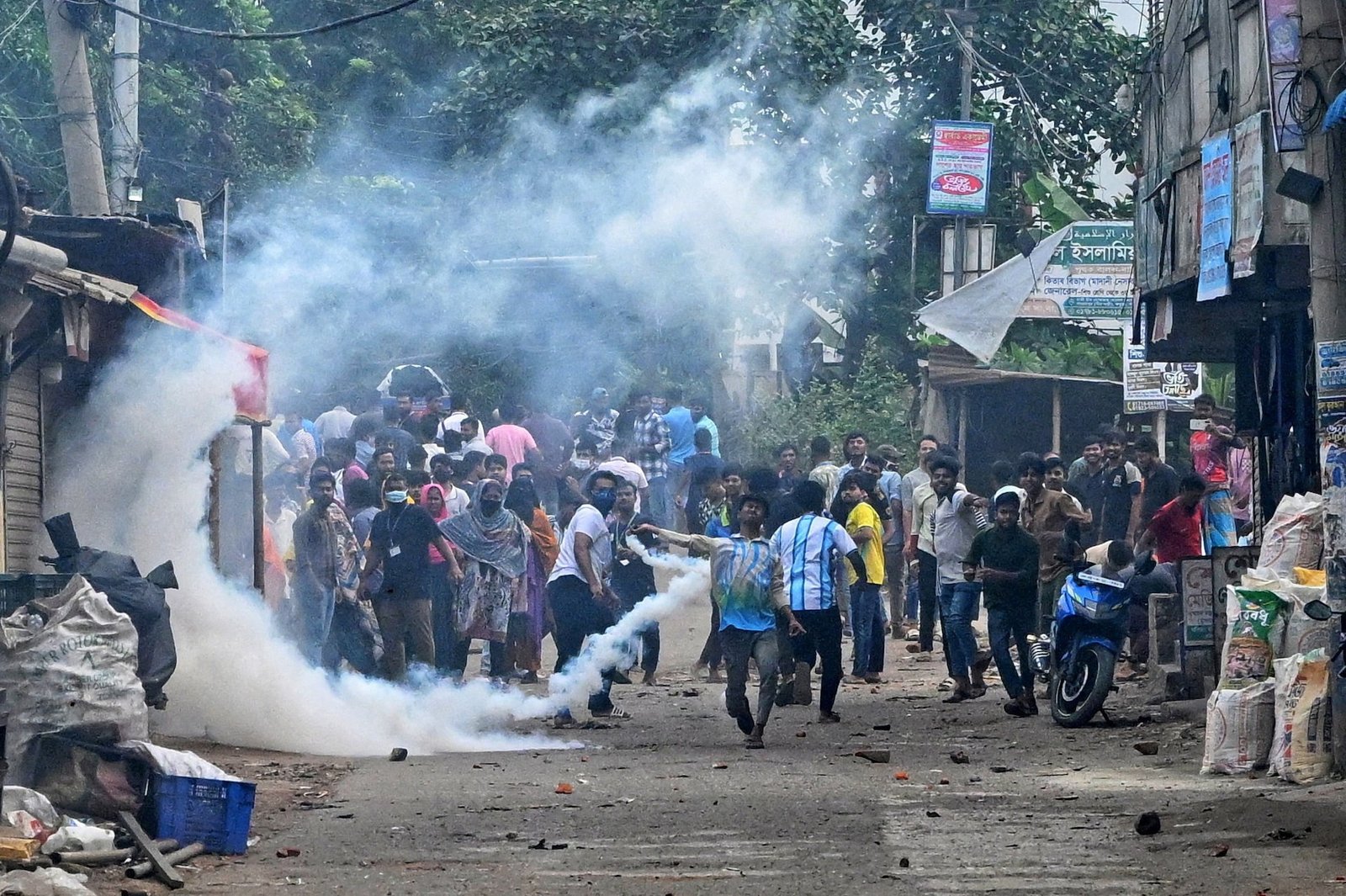
Bangladesh’s readymade garment industry is facing renewed pressure as thousands of workers demand higher wages amid rising living costs. Protests across major industrial centres, including Gazipur and Ashulia, have disrupted factory operations and brought attention to the economic challenges facing one of the country’s most important industries.
The dispute matters far beyond factory gates. Garments are central to Bangladesh’s export earnings, employment and foreign-exchange inflows. A prolonged interruption in production could affect manufacturers, international clothing brands, transport companies and the wider economy.
For India, the disruption presents a potential opportunity. Global fashion companies that depend on Bangladeshi suppliers may consider diversifying their sourcing if production delays, labour disputes or rising costs become persistent. India has an established textile base, a large workforce and access to key export markets, although it will need to address its own cost, productivity and delivery challenges to convert that opportunity into lasting gains.
Why Have Bangladesh’s Garment Workers Taken to the Streets?
The immediate trigger for the latest protests is a demand to increase the minimum monthly wage from 12,500 taka to 30,000 taka, equivalent to approximately $245. Workers argue that the existing wage no longer covers essential expenses, including food, housing, transport and healthcare.
The proposed increase would be more than double the current minimum. Factory owners and industry representatives have raised concerns about whether businesses can absorb such a sharp increase while dealing with higher energy, financing and production costs.
The demonstrations began in industrial areas around Dhaka and spread to Gazipur, Savar, Ashulia, Mirpur and Narayanganj. Workers blocked roads and highways, while clashes with police and incidents of vandalism disrupted factory operations. During the peak of the unrest, more than 500 factories reportedly declared holidays or suspended production.
The government responded by establishing a new minimum wage board on November 1, 2026, with representatives from employers, workers and neutral members. The board has been tasked with reviewing the existing pay structure and recommending revised wages.
However, forming a wage board has not immediately resolved the dispute. Workers have continued to demand a substantial increase, alongside action against blacklisting and layoffs. The unrest has also highlighted a broader disagreement over how the costs of Bangladesh’s garment industry should be distributed between workers, manufacturers and international buyers.
How Bangladesh Became a Global Garment Manufacturing Hub
Bangladesh’s transformation into a major clothing exporter began after its independence in 1971. Its economy was initially heavily dependent on agriculture, jute and other traditional industries. The country had a relatively limited industrial base, but garment manufacturing offered an opportunity to develop an export-oriented manufacturing sector.
The industry’s expansion was supported by international trade arrangements and the movement of production from established Asian manufacturing centres. Under the Multi-Fibre Arrangement (MFA), which governed international textile and clothing trade from 1974 to 2004, importing countries imposed quotas on textile exports from several major producing economies.
Bangladesh initially benefited because it was not subject to the same restrictive quotas as some established exporters. This encouraged manufacturers and investors to shift production to the country. A technology and business partnership between South Korean company Daewoo and Bangladeshi firm Desh Garments in 1978 is widely regarded as an important milestone in the industry’s development.
Bangladesh subsequently developed a large manufacturing base, supported by relatively low labour costs and an expanding workforce. The European Union’s trade preferences also helped the country establish itself as a major supplier to international clothing brands.
The end of the MFA quota system in 2005 did not stop the industry’s expansion. Instead, Bangladesh continued to compete through production costs, manufacturing capacity and established relationships with international buyers.
Over time, the country became one of the world’s largest apparel exporters, with factories producing products ranging from basic T-shirts and trousers to sweaters, shirts and more complex clothing orders.
Why the Garment Industry Is So Important to Bangladesh’s Economy
Bangladesh’s readymade garment industry is much more than a manufacturing sector. It is one of the main sources of foreign exchange, industrial employment and export revenue for the country.
According to the Bangladesh Garment Manufacturers and Exporters Association (BGMEA), readymade garment exports reached approximately $38.7 billion in the 2025-26 financial year. The sector accounted for more than 80% of Bangladesh’s total export earnings.
The industry employs around four million people, a large proportion of whom are women. Its importance extends beyond factory workers to suppliers, transport operators, packaging companies, textile mills, logistics providers and businesses that serve industrial communities.
Its contribution to the wider economy can be understood through several interconnected channels:
- Foreign exchange: International clothing orders bring in dollars and other foreign currencies, helping Bangladesh pay for imports and meet external financial obligations.
- Employment: Millions of workers depend directly or indirectly on garment manufacturing for their livelihoods.
- Industrial development: The sector supports spinning mills, dyeing units, textile processing, packaging and other manufacturing activities.
- Women’s economic participation: Garment factories have provided employment opportunities to millions of women, particularly in urban and industrial areas.
- Domestic consumption: Wages earned by workers support spending on food, housing, education, healthcare and local services.
This explains why factory closures can quickly become a national economic concern. A disruption that begins with a wage dispute can affect export shipments, foreign currency earnings, household incomes and confidence among international buyers.
For Bangladesh, the issue is especially important because its export economy remains heavily concentrated in clothing. Any sustained loss of orders or production capacity could have consequences for the country’s ability to withstand external economic shocks.
Rising Inflation Is Increasing Pressure on Workers
The wage dispute has developed against a difficult cost-of-living backdrop. Bangladesh’s inflation rate reached 8.34% in September 2026, compared with 8.26% in August, according to the Bangladesh Bureau of Statistics.
Food inflation increased to 7.22%, while non-food inflation stood at 9.30%. The non-food figure is particularly relevant for workers who must pay for rent, transport, electricity, clothing and other essential services.
At the same time, wage growth has struggled to keep pace with rising prices. The national wage rate index grew by approximately 7.9% in September, remaining below headline inflation.
This gap means that even when workers receive nominal wage increases, their purchasing power can decline if the cost of essential goods and services rises more quickly.
For workers earning the minimum wage, the pressure can be particularly severe. Housing costs, food expenses and transport payments consume a significant portion of monthly income, leaving little room for savings or unexpected expenses.
The demand for 30,000 taka is therefore not simply a request for higher salaries. It reflects a wider debate about whether Bangladesh’s garment industry can continue to rely on low labour costs while workers face higher household expenses.
Why Factory Owners Say a Large Wage Increase Is Difficult
Garment manufacturers operate in a highly competitive international market. Their customers are global fashion brands and retailers that negotiate prices, delivery schedules and product specifications well in advance.
Factories often receive orders months before the finished products must be shipped. They purchase raw materials, arrange production capacity and plan staffing based on contracts negotiated earlier. This limits their ability to pass sudden increases in labour, energy or transport costs directly to buyers.
Manufacturers also operate under pressure to deliver large quantities within tight deadlines. Missing a shipment window can create financial penalties, damage a supplier’s relationship with a buyer or force a factory to arrange expensive air freight instead of conventional shipping.
Air freight can be particularly damaging for low-margin clothing orders because transport costs may consume much of the profit remaining on a shipment.
Industry representatives have also pointed to the narrow margins in garment manufacturing. Reuters reported that some manufacturers operate with profit margins of only around 2% to 3%, leaving limited room to absorb unexpected increases in operating costs.
However, the pressure on manufacturers does not eliminate workers’ concerns. A business model that depends heavily on keeping wages low can become increasingly difficult to sustain when inflation reduces household purchasing power and employees demand better compensation.
The challenge for Bangladesh is to find a wage structure that improves workers’ living standards without making factories financially unviable or encouraging international buyers to shift orders elsewhere.
Energy Shortages Are Adding to Bangladesh’s Manufacturing Costs
Labour costs are only one part of the problem. Bangladesh’s garment manufacturers are also dealing with energy constraints, higher fuel expenses and uncertainty over the availability of industrial power.
Garment production involves several energy-intensive processes. Spinning, knitting, dyeing, washing, finishing and operating factory machinery require reliable electricity and, in many cases, natural gas.
Energy shortages can reduce production capacity even when factories have sufficient workers and orders. Unreliable electricity supplies may force manufacturers to use generators, increasing fuel consumption and operating expenses.
Bangladesh’s domestic natural gas production has also declined over the years. Energy Institute data puts average production at approximately 1.74 billion cubic feet per day in 2025, down from around 2.04 billion cubic feet per day in 2023.
The country has increasingly relied on imported liquefied natural gas (LNG) to supplement domestic supplies. However, imported energy exposes manufacturers and the wider economy to international prices, currency movements and supply disruptions.
For factories working with international buyers on fixed-price contracts, higher energy costs can further reduce already limited profit margins.
This creates a difficult combination: workers want higher wages to cope with inflation, while manufacturers are trying to manage higher labour, energy and logistics expenses without losing orders.
Why the November-December Period Matters for Garment Factories
The timing of the protests is another important factor. November and December are significant months for many garment manufacturers because international fashion brands are preparing products for upcoming retail seasons.
Factories work against tightly planned production calendars. Fabric procurement, cutting, stitching, finishing, quality inspections and shipment arrangements must be completed in a specific sequence.
When workers stop production during a busy ordering period, factories may struggle to recover lost time. Even a temporary interruption can affect the delivery of orders scheduled for international markets.
Global retailers are particularly sensitive to delays because clothing collections are linked to seasonal demand, promotional schedules and store inventory planning. A shipment that arrives after its intended selling period may have reduced commercial value.
International buyers may sympathise with workers’ demands for improved wages, but they also expect suppliers to meet contractual delivery dates. This puts factory owners in a difficult position when labour disputes interrupt production.
Repeated disruptions could influence future sourcing decisions. Buyers generally value suppliers that offer competitive prices, consistent quality and reliable delivery. If a factory cannot guarantee production schedules, a lower manufacturing cost may no longer be enough to retain an order.
How Prolonged Factory Closures Could Affect Bangladesh’s Wider Economy
A sustained disruption in garment production would affect Bangladesh through several economic channels. The first would be export earnings. If factories cannot complete orders on schedule, shipments may be delayed, cancelled or transferred to suppliers in other countries.
Lower exports would reduce the inflow of foreign currency. This matters because Bangladesh needs dollars to pay for imported fuel, machinery, raw materials and other essential goods.
The country has faced pressure on its foreign-exchange reserves in recent years. A weaker export performance could make it more difficult to stabilise the currency and manage external payments.
Factory closures would also affect workers and their families. Employees who lose working days may receive lower earnings, while prolonged shutdowns could threaten jobs. Businesses that supply factories or depend on spending by industrial workers could also experience weaker demand.
There is an additional risk to Bangladesh’s reputation as a dependable manufacturing destination. International brands typically build sourcing networks around suppliers that can maintain quality, meet deadlines and respond to changes in demand.
If labour unrest becomes frequent and unpredictable, some buyers may reduce their dependence on Bangladesh by dividing orders between factories in different countries.
That would not necessarily mean an immediate or permanent departure from Bangladesh. Large-scale sourcing changes take time because buyers must assess suppliers, inspect factories, negotiate contracts and ensure that products meet their standards. Nevertheless, repeated disruption could accelerate diversification plans already being considered by international brands.
Why India Could Benefit From Bangladesh’s Garment Industry Disruption
India is among the countries that could attract additional apparel orders if international buyers seek alternatives to Bangladesh. It has an established textile industry, a large domestic market and a manufacturing base that covers several stages of the textile value chain.
According to India’s Economic Survey and government industry assessments, the country is the world’s sixth-largest exporter of textiles and apparel. The sector employs more than 45 million people directly and supports millions of additional livelihoods through related activities.
India’s textile industry includes cotton cultivation, spinning, yarn production, fabric manufacturing, dyeing, processing and garment production. This broad industrial base gives Indian manufacturers access to a range of domestic inputs and reduces dependence on imported materials in some product categories.
Bangladesh, by contrast, has developed a particularly strong position in large-scale garment assembly and export manufacturing. Its factories have established relationships with major international brands and developed expertise in high-volume clothing orders.
India’s opportunity is therefore not limited to replacing individual Bangladeshi factories. It could also attract buyers looking to diversify their supply chains across several countries.
Potential advantages for India include:
- Domestic raw materials: India is a major producer of cotton and has a substantial spinning and yarn manufacturing industry.
- Broad manufacturing base: Its textile clusters cover different stages of production, from fibre and fabric to finished clothing.
- Large workforce: A substantial labour pool provides scope to expand manufacturing capacity, subject to skills, productivity and working conditions.
- Established export relationships: Indian textile companies already supply major markets in Europe, the United States and other regions.
- Trade agreements: Preferential access under the India-UK trade agreement and the prospect of the India-EU agreement could improve export competitiveness.
However, India cannot assume that orders will automatically move across the border. Buyers will compare production costs, factory capacity, product quality, lead times and the ability to handle large orders. Indian manufacturers must demonstrate that they can meet these requirements consistently.
India’s Trade Agreements Could Strengthen Its Position
Trade access is an important part of the competition between garment-exporting countries. Import duties influence the final price of clothing, especially in a market where manufacturers compete closely on cost.
India’s trade agreement with the United Kingdom entered into force on July 15, 2026. The Comprehensive Economic and Trade Agreement provides preferential access for Indian exports, with the Indian government stating that nearly 99% of India’s exports by value receive zero-duty access to the UK market.
Textiles and apparel are among the labour-intensive sectors expected to benefit from improved market access. Lower duties can make Indian products more competitive for British importers, although manufacturers must still satisfy the agreement’s rules of origin and other requirements to claim the preferences.
India and the European Union also concluded negotiations on a free trade agreement in January 2026. The published agreement text was still subject to legal revision and the necessary procedures before it could become binding and enter into force.
If implemented, the agreement could provide Indian textile and apparel exporters with improved access to one of the world’s largest consumer markets. The final benefits will depend on the agreed tariff schedules, rules of origin and implementation arrangements.
These developments matter because Bangladesh has historically benefited from preferential access to European markets as a least developed country. India, which has not enjoyed the same Everything But Arms preferences, has faced a different tariff environment in several product categories.
Improved Indian market access could therefore narrow some of the price disadvantages faced by its garment exporters.
Bangladesh’s LDC Graduation Has Been Delayed Until 2029
Another important development concerns Bangladesh’s scheduled graduation from the United Nations’ least developed country (LDC) category.
Bangladesh was originally scheduled to graduate on November 24, 2026. However, following a request from the government and an assessment of the country’s economic vulnerabilities, the United Nations General Assembly extended its preparatory period until November 24, 2029.
The extension gives Bangladesh additional time to prepare for the gradual withdrawal of certain international support measures and trade preferences associated with its LDC status.
This matters particularly for the garment industry because Bangladesh has benefited from duty-free and quota-free access to the European Union under the Everything But Arms arrangement.
Without such preferences, Bangladeshi clothing exports could face the standard import duties applicable to products from countries without equivalent trade arrangements. That could increase the final cost of garments for European buyers and reduce one of Bangladesh’s longstanding competitive advantages.
However, the transition is not immediate. The European Commission has stated that Bangladesh and other countries graduating from LDC status in 2026 will continue receiving EBA preferences for three additional years under the new EU Generalised Scheme of Preferences, at least until the end of 2029.
The extension gives Bangladesh more time to negotiate and prepare for the post-graduation trade environment. It also means that India’s opportunity should not be exaggerated as an immediate tariff advantage over Bangladeshi suppliers.
Over the longer term, the competitive balance will depend on the trade arrangements available to both countries, production costs and the ability of manufacturers to meet international sourcing requirements.
India Must Address Its Own Textile Industry Challenges
Despite its advantages, India faces several obstacles that could limit its ability to capture orders moving away from Bangladesh.
One challenge is the fragmented structure of parts of India’s textile industry. Many manufacturers operate through small and medium-sized businesses, which can face difficulties in financing expansion, adopting advanced technology and handling very large international orders.
India also has to compete with countries such as Vietnam, China, Cambodia and Indonesia. Vietnam, in particular, has developed a strong export manufacturing ecosystem and established extensive relationships with international brands.
Competition is not based on labour costs alone. Buyers also consider production speed, access to fabric, factory compliance, product quality, shipping infrastructure and the ability to respond to changing fashion trends.
Another issue is the need to strengthen India’s position in man-made fibre-based clothing. Cotton remains an important strength, but global apparel demand includes substantial quantities of polyester, nylon and blended fabrics. Expanding the production and processing of man-made fibres could help India compete across a wider range of products.
Indian manufacturers will also need to invest in automation, worker training, efficient water use, renewable energy and modern production systems. These investments can improve productivity and reduce operating costs over time.
Without improvements in these areas, additional orders may go to other competitors rather than India, even if Bangladesh experiences temporary disruptions.
Why Global Fashion Brands May Diversify Their Supply Chains
International fashion companies have increasingly focused on supply-chain resilience. Relying too heavily on one manufacturing country can expose brands to labour disputes, political uncertainty, natural disasters, energy shortages and transport disruptions.
Bangladesh’s current protests may encourage some buyers to review their sourcing arrangements, particularly if factory closures continue or delivery schedules become difficult to guarantee.
However, global brands are unlikely to abandon an established supplier base simply because of a short period of unrest. Moving production requires factory audits, product testing, negotiations, worker-compliance assessments and arrangements for raw materials.
Large orders also require sufficient manufacturing capacity. A country may have competitive labour costs but still be unable to absorb additional demand immediately if its factories are already operating near capacity.
For this reason, the more likely response to persistent disruption is supply-chain diversification rather than a complete shift away from Bangladesh. Buyers could allocate some orders to India while retaining production in Bangladesh and other manufacturing centres.
This approach would allow brands to reduce dependence on a single country without losing access to the established expertise and production capacity of existing suppliers.
Can India Turn the Opportunity Into Long-Term Export Growth?
The latest protests have created an opening for India, but the opportunity will depend on whether the country can offer international buyers a reliable alternative at competitive prices.
Indian textile manufacturers could benefit if they use the current uncertainty to strengthen relationships with global retailers, expand factory capacity and improve the speed of order fulfilment. Government support for manufacturing clusters, logistics infrastructure, technology upgrades and access to finance could also play an important role.
Trade agreements may improve India’s position in the UK and European markets, but tariff advantages alone will not guarantee new business. Buyers will continue to examine total sourcing costs, including raw materials, labour, energy, shipping and compliance expenses.
There is also a longer-term lesson in Bangladesh’s wage dispute. Competing primarily through low wages can create economic vulnerabilities when workers’ living costs rise faster than their earnings. A sustainable garment industry needs to combine fair compensation with higher productivity, reliable infrastructure and greater value addition.
India can learn from both Bangladesh’s export success and the pressures now facing its manufacturing model. Improving wages and working conditions while raising productivity could help Indian factories build a more resilient position in international markets.
What Happens Next for Bangladesh and India?
Bangladesh’s new wage board will be central to the immediate dispute. Its recommendations will need to address workers’ demands while considering the financial position of manufacturers and the expectations of international buyers.
If the government and industry reach an agreement that restores confidence and production stability, Bangladesh could retain much of its existing export business. Its established supplier relationships, manufacturing scale and trade preferences remain important advantages.
If unrest continues, however, international brands may accelerate efforts to diversify their sourcing. India is well placed to compete for part of that business, particularly as its trade arrangements with major markets evolve.
The most important opportunity for India is not simply to benefit from factory closures in Bangladesh. It is to build a textile and apparel industry that can compete through scale, productivity, quality, delivery reliability and market access.
Bangladesh’s garment workers are demanding wages that better reflect the cost of living, while manufacturers are trying to protect an industry built around competitive production costs. How the country resolves this tension could influence regional apparel supply chains for years to come.
For India, the protests offer a chance to strengthen its position in global garment manufacturing. Whether that chance becomes a lasting export advantage will depend on the industry’s ability to turn trade opportunities into dependable production capacity.
For breaking news and live news updates, like us on Facebook or follow us on Twitter and Instagram. Read more on Latest India on thefoxdaily.com.






COMMENTS 0