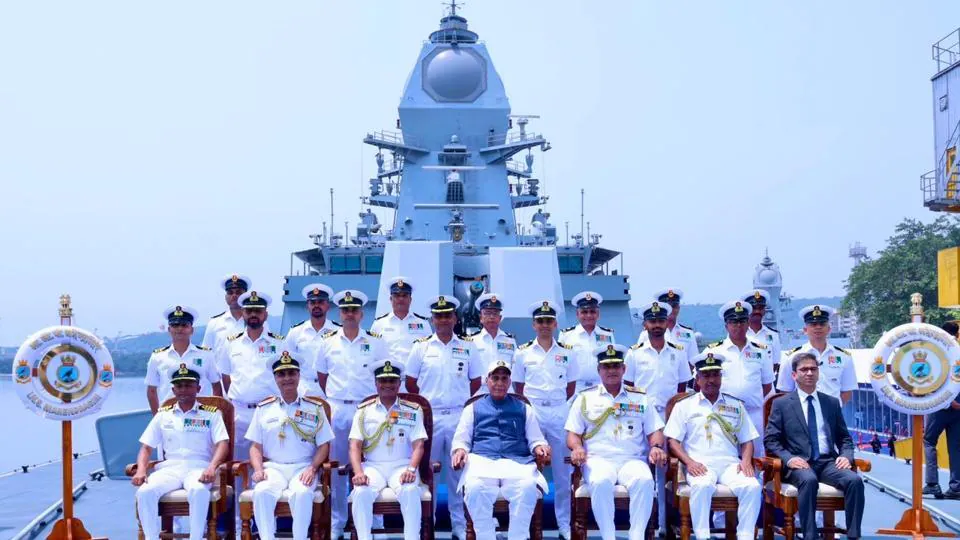
The Indian Navy has taken delivery of Vindhyagiri, the third and final guided-missile stealth frigate constructed by Garden Reach Shipbuilders & Engineers Ltd (GRSE) under the Navy’s P17A programme. The delivery, announced on Friday, marks the completion of GRSE’s contribution to the seven-warship project, valued at approximately ₹45,000 crore, and adds another advanced combat platform to India’s expanding naval fleet.
Built at GRSE’s Kolkata shipyard, Vindhyagiri is expected to be formally commissioned into the Navy within two months. Its induction will further strengthen India’s ability to conduct complex maritime operations, including air defence, anti-submarine warfare and protection of critical sea routes across the Indian Ocean Region.
The delivery is also significant for India’s domestic defence manufacturing sector. The P17A programme combines advanced stealth technology, modern weapons and sensors, and a high level of indigenous content, reflecting the country’s growing capacity to design and construct sophisticated frontline warships.
Vindhyagiri Completes GRSE’s P17A Frigate-Building Programme
GRSE confirmed that it handed over Vindhyagiri to the Indian Navy on Friday, completing the construction and delivery of all three P17A frigates assigned to the Kolkata-based public sector shipyard.
The company described the handover as an important milestone for both the shipyard and India’s maritime capabilities. With the delivery, GRSE has fulfilled its responsibility under the programme, having constructed three of the seven guided-missile stealth frigates planned under Project 17A.
Vindhyagiri is the final warship in GRSE’s P17A series. The other two frigates built by the shipyard are Himgiri and Dunagiri. Their construction represents a major contribution by an Indian public sector defence shipbuilder to the Navy’s modernisation programme.
The warship will undergo the remaining formalities before entering operational service. The Navy is expected to commission it within approximately two months, after which it will become part of India’s frontline fleet.
Delivery and commissioning are separate milestones in naval shipbuilding. Delivery transfers the completed vessel to the Navy, while commissioning formally inducts it into active service following the required preparations and procedures.
What Is India’s ₹45,000-Crore Project 17A Programme?
Project 17A is a seven-warship programme designed to provide the Indian Navy with a new generation of stealth guided-missile frigates. The programme, valued at around ₹45,000 crore, is intended to replace older platforms with more capable vessels equipped for modern maritime combat.
The ships are being constructed by two major Indian public sector shipyards: Mazagon Dock Shipbuilders Ltd (MDL), based in Mumbai, and GRSE, headquartered in Kolkata.
Under the programme, MDL constructed four frigates: Nilgiri, Udaygiri, Taragiri and Mahendragiri. GRSE built the remaining three: Himgiri, Dunagiri and Vindhyagiri.
The seven-ship programme distributes advanced warship construction across two major domestic shipyards, supporting India’s defence manufacturing ecosystem while expanding the Navy’s ability to deploy modern surface combatants.
The completion of GRSE’s final delivery is particularly important because it demonstrates the shipyard’s ability to execute a complex warship-building programme involving advanced stealth features, integrated weapons and sophisticated electronic systems.
How P17A Stealth Frigates Strengthen India’s Naval Capabilities
The P17A frigates, also known as the Nilgiri class, are designed to perform multiple combat and support missions. Unlike specialised vessels that focus on a narrow operational role, these frigates can operate across several dimensions of naval warfare.
Their capabilities include:
- Fleet air defence: Protecting naval formations against hostile aircraft and incoming aerial threats.
- Anti-surface warfare: Detecting, tracking and engaging enemy surface vessels.
- Anti-submarine warfare: Identifying and responding to underwater threats from hostile submarines.
- Maritime interdiction: Supporting operations to intercept suspicious vessels and enforce maritime security measures.
- Surveillance: Monitoring maritime activity and improving situational awareness across operational areas.
- Humanitarian assistance and disaster relief: Supporting emergency response, evacuation and relief operations during natural disasters and other crises.
This combination of capabilities makes the frigates valuable assets for both high-intensity naval operations and routine maritime security missions. They can operate independently or as part of larger naval formations, depending on the operational requirements.
Their multi-role design is particularly relevant in the Indian Ocean, where the Navy must protect commercial shipping routes, monitor strategic maritime areas and respond to different types of security challenges.
BrahMos Missiles, Barak-8 and Advanced Radar Systems
One of the most important features of the P17A class is its combination of modern weapons and surveillance systems. The frigates are equipped with advanced technologies intended to improve their ability to detect threats, defend themselves and engage hostile targets.
The weapons and sensor systems identified for the class include the BrahMos supersonic cruise missile, the Barak-8 surface-to-air missile system and the MF-STAR surveillance radar.
BrahMos Supersonic Cruise Missile
The BrahMos missile provides the frigates with a powerful anti-ship strike capability. Its supersonic speed is intended to reduce the time available for an adversary to detect, track and respond to an incoming missile.
For the Navy, the integration of BrahMos strengthens the offensive capabilities of its surface fleet. It gives the frigates the ability to threaten hostile surface vessels at significant distances, supporting their role in maritime strike operations.
Barak-8 Surface-to-Air Missile System
The Barak-8 system provides an air-defence capability against aerial threats. Modern warships face risks from aircraft, anti-ship missiles and other airborne threats, making layered air defence essential for protecting both individual vessels and larger naval formations.
Its presence strengthens the frigates’ ability to defend themselves and contribute to the protection of other ships operating alongside them.
MF-STAR Surveillance Radar
The MF-STAR radar is an advanced surveillance and tracking system that supports the detection of aerial and surface threats. Modern naval combat depends heavily on identifying potential threats early and maintaining an accurate picture of activity around a warship.
Combined with the frigates’ weapons and other sensors, the radar contributes to their ability to monitor the operational environment and respond to emerging threats.
The integration of these systems gives the P17A frigates a combination of offensive strike power, air defence and surveillance capabilities. Their effectiveness, however, depends on how these systems operate together as part of the Navy’s wider combat network.
Key Specifications of the P17A Stealth Frigates
The P17A frigates are large surface combatants designed to combine operational endurance with advanced combat systems. Their physical specifications provide an indication of the scale and capabilities of the vessels.
| Specification | Details |
|---|---|
| Class | P17A / Nilgiri class |
| Warship type | Guided-missile stealth frigate |
| Displacement | Approximately 6,670 tonnes |
| Length | 149 metres |
| Maximum speed | 28 knots |
| Personnel capacity | 225 personnel |
| Indigenous content | Approximately 75% |
| Key weapons and sensors | BrahMos, Barak-8 and MF-STAR radar |
| Primary operational roles | Air defence, anti-surface warfare, anti-submarine warfare, surveillance and maritime security |
With a displacement of around 6,670 tonnes and a length of 149 metres, the frigates are designed to accommodate a substantial weapons and sensor package while carrying up to 225 personnel.
Their reported top speed of 28 knots also gives them the mobility required for a range of naval operations. Together, these characteristics make the P17A ships significant additions to the Navy’s surface combat fleet.
Why Stealth Technology Matters in Modern Naval Warfare
The P17A programme builds on the earlier P17 Shivalik-class stealth frigates, introducing improvements in design, systems integration and combat capability. The objective is to make the new generation of vessels more capable in an increasingly complex maritime environment.
Stealth technology is an important part of this approach. In naval warfare, reducing a ship’s detectability can make it more difficult for an adversary to identify, track and target the vessel. Warship design can incorporate features intended to reduce radar signatures and improve survivability in hostile environments.
However, stealth does not make a warship invisible. It is one element of a broader survivability strategy that also depends on sensors, electronic warfare, defensive weapons, operational tactics and coordination with other naval assets.
The P17A frigates are designed to combine these modern design principles with advanced weapons and surveillance equipment. This gives the Navy platforms better suited to the changing demands of maritime operations than older generations of frigates.
Why the Indian Ocean Region Makes These Frigates Important
The delivery of Vindhyagiri comes at a time when the Indian Ocean Region remains strategically important for India and other major powers. The region connects key international trade routes and carries a substantial volume of global commercial shipping and energy supplies.
India’s geographic position gives the Navy a central role in maintaining maritime security across these waters. Protecting shipping routes, monitoring strategic waterways, responding to security threats and supporting regional partners are among the responsibilities that shape its operational requirements.
China’s expanding maritime presence and efforts to increase its influence across the wider Indian Ocean region have added to the strategic complexity. The Indian Navy must maintain the ability to monitor developments, protect national interests and contribute to a stable maritime environment.
Modern frigates are particularly useful in this setting because they can perform several missions without being restricted to a single operational role. Their combination of air defence, anti-submarine warfare, surface strike and surveillance capabilities allows them to support a range of deployments.
They can also operate alongside destroyers, aircraft carriers, submarines, patrol vessels and maritime surveillance aircraft. This flexibility makes frigates an important component of a balanced naval force.
75% Indigenous Content Reflects India’s Defence Manufacturing Push
One of the defining features of the P17A programme is its reported 75% indigenous content. The figure highlights the role of domestic manufacturing and engineering in the construction of India’s latest generation of stealth frigates.
Building modern warships requires expertise across a wide range of industries, including ship design, metallurgy, propulsion, electronics, radar technology, weapons integration and precision engineering. A large indigenous component creates opportunities for Indian manufacturers and suppliers to participate in these specialised areas.
It also supports the government’s broader objective of reducing dependence on foreign suppliers for critical defence equipment. Greater domestic manufacturing capacity can improve supply-chain resilience, support maintenance and upgrades, and strengthen India’s ability to sustain military platforms over their operational lifetimes.
However, indigenous content is not simply a measure of the number of components manufactured within the country. The development of advanced systems, integration capabilities and specialised engineering knowledge is equally important for building long-term technological independence.
The P17A programme therefore represents more than the delivery of seven warships. It is also an example of how large defence projects can contribute to the development of domestic industrial capabilities.
Indian Navy’s Target of Self-Reliance by 2047
The Indian Navy is working towards becoming fully self-reliant by 2047, the year India will mark 100 years of Independence. The objective involves expanding domestic capabilities in warship construction, weapons development, sensors, propulsion and other critical defence technologies.
The scale of the ongoing shipbuilding effort reflects the importance of this goal. Around 60 warships are currently under construction at various Indian shipyards, providing a substantial pipeline of work for the country’s defence manufacturing industry.
Continued construction at domestic shipyards can help develop skilled employment, strengthen industrial supply chains and improve the Navy’s ability to acquire new platforms without relying entirely on overseas production.
Projects such as P17A also create opportunities for Indian shipyards to gain experience in integrating increasingly complex systems. That experience can support future programmes involving more advanced surface combatants and other naval platforms.
Achieving complete self-reliance by 2047 will require sustained investment, research and development, reliable domestic suppliers and the ability to manufacture critical technologies at scale. The delivery of Vindhyagiri represents one milestone within that much larger effort.
What Vindhyagiri’s Delivery Means for the Indian Navy
The handover of Vindhyagiri completes GRSE’s three-ship contribution to the P17A programme and moves the warship closer to formal induction into the Indian Navy. Once commissioned, it will add another modern guided-missile frigate to the country’s surface fleet.
The importance of the delivery extends beyond the addition of a single vessel. The P17A programme brings together advanced stealth design, long-range strike weapons, air-defence systems and anti-submarine capabilities in a class of warships built largely through India’s domestic shipbuilding industry.
For the Navy, the frigates offer greater flexibility in responding to maritime threats and supporting operations across the Indian Ocean Region. For India’s defence industry, the programme demonstrates the growing capacity of domestic shipyards to deliver sophisticated frontline platforms.
Vindhyagiri’s expected commissioning within two months will mark the next stage of its journey from a completed shipyard project to an operational naval asset. As India continues its drive towards a self-reliant defence sector by 2047, the delivery stands as another significant step in expanding the country’s indigenous maritime capabilities.
For breaking news and live news updates, like us on Facebook or follow us on Twitter and Instagram. Read more on Latest India on thefoxdaily.com.






COMMENTS 0