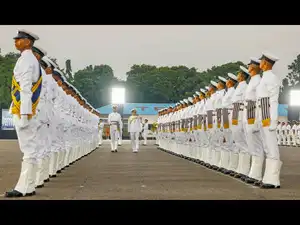
The Indian Navy has relaxed its marriage restrictions for Agniveers who complete their initial four-year service and choose to continue for an additional two years. Under the revised policy, eligible personnel opting for the extension can get married after completing their training, marking a change in the service conditions governing their extended tenure.
The decision is linked to the Union Cabinet’s approval of the Agnipath Scheme‘s ‘Second Tour of Duty’ provision, which allows selected Agniveers to serve beyond their initial four-year engagement. Those continuing for the additional two years will also receive increased remuneration during the extended period.
The relaxation addresses an important personal consideration for young personnel deciding whether to continue in the armed forces beyond their initial service. Marriage restrictions have been among the conditions associated with Agniveer service, and the revised provision offers greater flexibility to those entering the extension phase.
What Are the New Marriage Rules for Agniveers?
Under the revised Indian Navy arrangement, Agniveers who complete their initial four-year service and opt for the additional two-year engagement will be allowed to marry after successfully completing the mandatory training required at the beginning of the extension period.
The training will be professional and trade-specific, according to details reported about the Navy’s decision. Once they complete it, eligible personnel can take their entitled leave for marriage purposes.
The relaxation does not mean Agniveers can marry at any point during their initial four-year tenure. The existing restriction remains applicable during the first phase of service. The change concerns personnel who move into the Second Tour of Duty and fulfil the conditions prescribed for the extended engagement.
The Navy has issued orders implementing the marriage-related relaxation, making it an important change for the first batches completing their original four-year commitment. The provision is expected to make the extended service option more attractive by allowing personnel to plan important personal milestones alongside their military careers.
What Is the Second Tour of Duty for Agniveers?
The Second Tour of Duty is part of the revised Agnipath framework approved by the Union Cabinet on November 4, 2026. It provides an additional two-year engagement opportunity to Agniveers who are not selected for regular enrolment after completing their initial four-year service.
Under the revised arrangement, 25 per cent of each Agniveer batch will be offered regular employment in the armed forces based on merit and organisational requirements. The remaining 75 per cent will be offered another two-year engagement, subject to their willingness.
After completing the additional two years, these personnel will also have an opportunity to be considered for enrolment as regular soldiers. However, this will depend on their willingness and their ability to meet the selection criteria prescribed by the armed forces. The extension does not guarantee permanent employment to everyone.
The revised framework creates a longer pathway for Agniveers who want to continue serving in the military. Instead of completing their service after four years without another opportunity within the armed forces, eligible personnel can now continue for two more years and subsequently seek regular enrolment.
Higher Salary and Benefits During the Two-Year Extension
Financial incentives are another important part of the revised arrangement. The Union Cabinet has approved higher remuneration for Agniveers serving during the additional two years, along with an enhanced Seva Nidhi package and seniority benefits.
These improvements are intended to make the extended engagement more attractive and recognise the additional period of service. The changes also address concerns about the financial uncertainty faced by personnel approaching the end of their original four-year tenure.
For Agniveers considering the Second Tour of Duty, the decision will therefore involve more than simply extending their time in uniform. The revised framework combines additional service opportunities with improved financial terms and greater flexibility on personal matters such as marriage.
Will the Indian Army and Air Force Also Relax Marriage Rules?
The Indian Navy’s decision could be followed by similar changes in the Indian Army and Indian Air Force. However, the three services may issue their own instructions according to their respective operational requirements and service conditions.
The marriage relaxation is particularly relevant as the first Agniveer batches approach the completion of their initial four-year engagement. The armed forces need to communicate the available options clearly so that personnel can make informed decisions about regular enrolment, the two-year extension and their future responsibilities.
For now, the confirmed relaxation concerns the Indian Navy. Similar provisions in the Army and Air Force should not be treated as final until the respective services issue their instructions.
Why Is the Marriage Rule Change Important?
The Agnipath scheme recruits young men and women into the armed forces for an initial four-year period. Since recruits generally join at a young age, restrictions on marriage during the engagement can influence personal and family decisions as they approach the end of their initial service.
Allowing eligible personnel to marry during the additional two-year period gives them greater flexibility while continuing their military responsibilities. It also recognises that those who choose to serve beyond four years may have different personal circumstances and long-term plans.
The change is also part of a broader effort to make the revised Agnipath framework more sustainable for personnel. Longer service opportunities, improved remuneration, an enhanced Seva Nidhi package and changes to personal service conditions could influence how Agniveers assess their future in the armed forces.
What Agniveers Should Know Before Opting for the Extension
Agniveers considering the additional two-year service period should carefully review the instructions issued by their respective services. The marriage relaxation is linked to the Second Tour of Duty and does not automatically remove every condition associated with the initial four-year engagement.
- Initial service: The original Agnipath engagement lasts four years, during which the existing marriage restriction remains applicable.
- Two-year extension: Eligible Agniveers may opt for an additional two years under the Second Tour of Duty.
- Marriage permission: Indian Navy personnel opting for the extension can marry after completing the mandatory professional and trade-specific training.
- Financial benefits: The extended tenure carries higher remuneration, an enhanced Seva Nidhi package and seniority benefits.
- Regular enrolment: Personnel completing the extended period may be considered for regular service, subject to willingness and prescribed selection criteria.
- Other services: The Army and Air Force may introduce similar provisions, but their respective instructions will determine the final rules.
The Indian Navy’s decision marks a significant adjustment to the personal service conditions of Agniveers choosing to continue beyond their initial engagement. By allowing marriage after the required training, the Navy has introduced greater flexibility while retaining the initial four-year restriction. As the revised Agnipath framework takes shape, further service-specific clarifications will determine how the changes apply across the Army, Navy and Air Force.
For breaking news and live news updates, like us on Facebook or follow us on Twitter and Instagram. Read more on Latest India on thefoxdaily.com.






COMMENTS 0