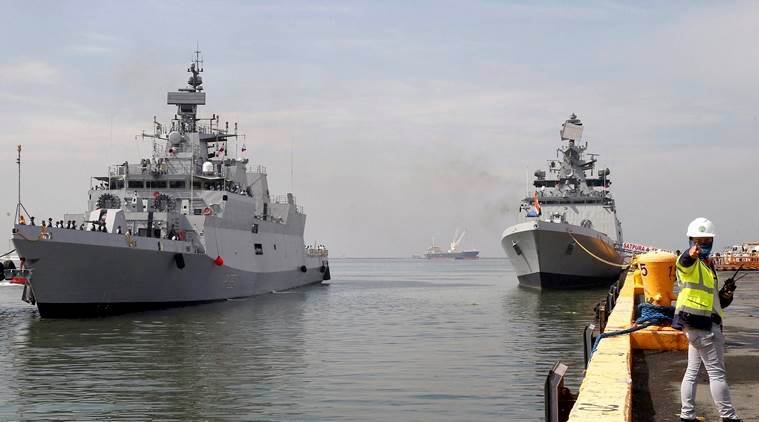
India has launched the fifth edition of its nationwide coastal defence exercise, Sea Vigil-26, to evaluate the country’s Maritime Security arrangements and strengthen coordination among agencies responsible for protecting its coastline. The exercise began on Wednesday, November 11, and is being coordinated by the Indian Navy as the lead agency.
According to the Defence Ministry’s release, the exercise involves 21 agencies operating across six ministries. It will cover India’s entire coastline and Exclusive Economic Zone (EEZ), bringing together coastal states, Union Territories, maritime security organisations and other stakeholders.
Sea Vigil-26 is being conducted in two phases. The first will evaluate coastal defence and security readiness from November 11 to 17, while the second will involve maritime activities during the Sea Phase on November 18 and 19.
The exercise is designed to provide a realistic assessment of India’s coastal and maritime security arrangements. It will also examine coordination between different agencies, including the Indian Navy, Indian Coast Guard, Coastal Security Police, Customs and other maritime organisations.
Sea Vigil-26 to cover India’s entire coastline and Exclusive Economic Zone
One of the defining features of Sea Vigil-26 is its geographical scale. Unlike exercises limited to a particular coastal region or maritime zone, the nationwide operation will span the entire Indian coastline and the country’s Exclusive Economic Zone.
The participation of all coastal states and Union Territories is intended to provide a broad assessment of security preparedness across India’s maritime boundaries. The exercise will also involve fishing and coastal communities, recognising their role in the wider coastal security framework.
Coastal communities are an important part of maritime awareness because people working and living near the shoreline regularly interact with coastal waters and maritime activity. Their involvement can support communication between local stakeholders and security agencies.
The exercise will bring together multiple organisations that have different responsibilities in coastal and maritime security. Coordinating their activities across such a large geographical area is central to evaluating how effectively the country can respond to potential security challenges.
Two phases of Sea Vigil-26: Readiness evaluation and Sea Phase
Sea Vigil-26 will take place in two distinct phases, allowing participating agencies to assess preparedness on the coast before moving into the maritime component of the exercise.
Phase 1: Coastal Defence and Security Readiness Evaluation
The first phase will run from November 11 to November 17. It is focused on evaluating coastal defence arrangements and the readiness of agencies responsible for maritime security.
This phase will involve the organisations operating along the coastline, including security forces and other maritime stakeholders. Its purpose is to assess the existing security framework and the coordination required to protect coastal areas.
The readiness evaluation is particularly important because coastal security involves multiple layers of responsibility. Local police, maritime agencies and central security organisations must be able to share information and coordinate their responses when required.
Phase 2: Sea Phase on November 18 and 19
The second phase, scheduled for November 18 and 19, will take place at sea. It will involve maritime assets from the participating organisations and form the operational component of the nationwide exercise.
The Sea Phase will follow the coastal readiness evaluation, allowing the exercise to address security preparedness across both coastal areas and maritime spaces.
Together, the two phases are intended to provide a wider assessment of India’s ability to coordinate coastal defence and maritime security operations.
Indian Navy, Coast Guard and other agencies to participate
The Indian Navy is coordinating Sea Vigil-26 as the lead agency. Assets from several organisations will participate, including the Indian Navy, Indian Coast Guard, Coastal Security Police, Customs and other maritime agencies.
Each organisation has a distinct role within India’s maritime security framework. The Navy is responsible for military operations at sea, while the Coast Guard has important maritime law-enforcement, surveillance and coastal security responsibilities. Coastal police and Customs also contribute to security and enforcement activities along the shoreline and at maritime entry points.
The involvement of multiple agencies is intended to test how these organisations work together rather than assess their capabilities in isolation.
Maritime security responsibilities extend beyond patrolling. They also involve information-sharing, monitoring suspicious activity, protecting infrastructure and coordinating responses across different jurisdictions. A nationwide exercise provides an opportunity to assess these arrangements on a larger scale.
Six ministries supporting the nationwide coastal security exercise
Sea Vigil-26 is being facilitated by six ministries, reflecting the fact that coastal security involves responsibilities beyond the armed forces and dedicated maritime agencies.
The ministries identified in the Defence Ministry’s release are:
- Ministry of Defence: Supporting the exercise through the country’s defence and maritime security framework.
- Ministry of Home Affairs: Facilitating coordination related to internal security and coastal policing.
- Ministry of Ports, Shipping and Waterways: Bringing the maritime transport and port-related sector into the exercise.
- Ministry of Petroleum and Natural Gas: Supporting attention to offshore energy infrastructure and related security concerns.
- Ministry of Fisheries: Connecting the exercise with fishing activities and coastal stakeholders.
- Ministry of Animal Husbandry and Dairying: Participating as part of the wider inter-ministerial coordination framework.
The involvement of these ministries demonstrates the cross-sector nature of coastal security. Maritime threats can affect ports, shipping, offshore energy facilities, fishing activities and coastal communities. Addressing these risks requires coordination between organisations responsible for different parts of the maritime economy and security system.
Why Sea Vigil was launched after the 26/11 Mumbai terror attacks
Sea Vigil was conceptualised in 2018 to validate the coastal security measures introduced after the November 2008 Mumbai terror attacks.
The 26/11 attacks exposed serious vulnerabilities in India’s coastal security arrangements. The attackers reached Mumbai by sea, highlighting the importance of monitoring maritime approaches and improving coordination between agencies responsible for protecting the coastline.
The attacks became a turning point in India’s approach to coastal security. Strengthening surveillance, improving coordination and developing a more comprehensive maritime security framework became important priorities in the years that followed.
Sea Vigil was designed as a nationwide exercise to assess whether the measures introduced after the attacks were functioning effectively. Rather than focusing on a single coastal location, the exercise was conceived to test preparedness across India’s maritime geography.
Since its conceptualisation, the exercise has provided a framework for bringing together central agencies, state-level organisations and other maritime stakeholders. The fifth edition continues this approach, with participation from 21 agencies across six ministries.
Protection of offshore oil platforms and critical maritime infrastructure
Another important focus of Sea Vigil-26 is the security of critical offshore assets, including oil platforms.
Offshore energy infrastructure is strategically important because it supports the country’s energy supply and economic activity. Facilities located in coastal waters can face security risks that require coordination between maritime forces, government departments and operators.
Protecting these installations involves more than securing the immediate facility. It also requires awareness of surrounding maritime activity, communication between relevant authorities and the ability to respond to potential threats.
By including offshore assets in the exercise, Sea Vigil-26 will assess maritime security beyond beaches, ports and coastal settlements. The focus reflects the wider responsibilities involved in protecting India’s maritime interests.
The participation of the Petroleum and Natural Gas Ministry further connects the exercise with the security of offshore energy infrastructure.
Sea Vigil-26 and TROPEX: How the two exercises work together
Sea Vigil is also a preparatory build-up to the Indian Navy’s biennial Theatre Level Readiness Operational Exercise (TROPEX).
While Sea Vigil focuses on coastal defence and maritime security coordination, TROPEX addresses operational readiness across a wider maritime environment. The two exercises are intended to cover different but connected parts of India’s maritime security requirements.
According to the Defence Ministry, Sea Vigil and TROPEX together address the full spectrum of maritime security challenges, extending from coastal defence to operations on the high seas.
This relationship is important because maritime security cannot be treated as a single operational responsibility. Protecting coastal areas, monitoring offshore infrastructure and maintaining readiness for operations farther out at sea require different capabilities and levels of coordination.
Sea Vigil provides an opportunity to assess the coastal security framework, while TROPEX forms part of the Navy’s broader operational readiness activities.
Why Sea Vigil-26 matters for India’s maritime security
India has a long coastline and an extensive maritime zone, making coastal security a significant national responsibility. Ports, shipping routes, offshore energy installations and fishing communities all depend on a secure maritime environment.
The scale of Sea Vigil-26 is intended to test how effectively different agencies can work together across this environment. Its participation structure also reflects the importance of involving state governments, central ministries and communities rather than relying exclusively on military organisations.
Several areas make the exercise significant:
- Nationwide preparedness: Covering the entire coastline and Exclusive Economic Zone provides a broad assessment of maritime security arrangements.
- Inter-agency coordination: Participation by 21 agencies allows authorities to evaluate cooperation between organisations with different responsibilities.
- Coastal community involvement: Including fishing and coastal communities recognises their role in the wider security network.
- Offshore infrastructure protection: The focus on oil platforms highlights the need to secure critical installations at sea.
- Operational readiness: The exercise contributes to the wider maritime preparedness framework alongside TROPEX.
The exercise is also an opportunity to identify gaps in communication, coordination and preparedness. A realistic evaluation can help authorities understand where existing arrangements need improvement.
What Sea Vigil-26 aims to achieve
The Defence Ministry has described Sea Vigil-26 as an exercise intended to provide a realistic assessment of India’s maritime and National Security. Its broad participation and geographical coverage are designed to test the country’s coastal defence framework across multiple levels.
By bringing together the Navy, Coast Guard, police, Customs, central ministries and coastal stakeholders, the exercise will assess how different parts of the security system operate together.
Its importance also lies in the connection between coastal preparedness and wider maritime operations. The exercise is not limited to checking the readiness of individual forces; it is intended to evaluate the coordination required to protect India’s maritime interests.
As the fifth edition begins, Sea Vigil-26 continues the nationwide coastal security assessment first conceptualised in 2018 in response to the lessons of the 26/11 Mumbai attacks. The November 11–19 exercise will provide authorities with an opportunity to evaluate existing arrangements and identify areas where India’s maritime security framework can be strengthened further.
For breaking news and live news updates, like us on Facebook or follow us on Twitter and Instagram. Read more on Latest India on thefoxdaily.com.






COMMENTS 0