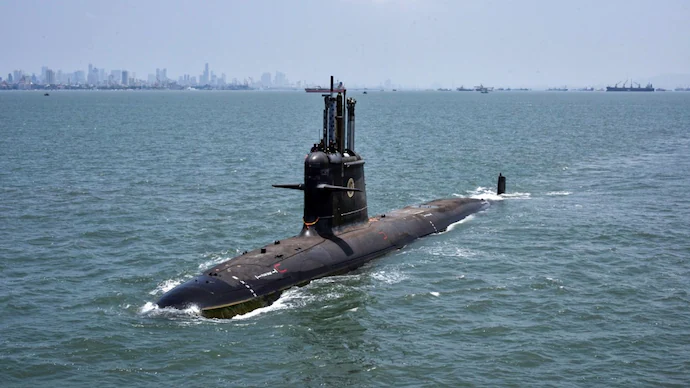
India has taken another step towards strengthening its underwater naval capabilities with the launch of the second phase of work on an indigenously developed air-independent propulsion (AIP) system designed to help diesel-electric submarines remain submerged for longer periods.
The milestone marks progress in developing a domestic propulsion technology intended to reduce submarines’ dependence on atmospheric oxygen. According to the Defence Ministry, the system’s energy module will undergo further activation, power-generation and testing activities before it is handed over for integration into a Kalvari-class submarine, planned for early 2027.
The second phase, officially described as the “Setting to Work Phase-2” activity, was inaugurated on Saturday at Larsen & Toubro’s AM Naik Heavy Engineering Complex in Hazira, Gujarat. The energy module was developed by the Naval Materials Research Laboratory (NMRL), which operates under the Defence Research and Development Organisation (DRDO).
The next stage will focus on activating the module for power production and subjecting it to rigorous testing under Indian Navy protocols. The system will then be handed over to Mazagon Dock Shipbuilders Limited (MDL) for integration into the submarine, according to the report by news agency Press Trust of India, citing the Defence Ministry.
India Advances Indigenous Air-Independent Propulsion Technology
The indigenous AIP programme is intended to improve the underwater endurance of India’s diesel-electric submarines. Conventional diesel-electric submarines rely on batteries for underwater operations and need access to atmospheric oxygen to operate their diesel engines and recharge those batteries.
An air-independent propulsion system is designed to reduce that dependence by allowing a submarine to generate power underwater without regularly surfacing or using a snorkel to draw in atmospheric air. This can help a submarine remain submerged for longer than it could while relying solely on conventional battery-powered underwater operations.
Longer submerged endurance can be important for submarine operations because remaining underwater can reduce the need to expose the vessel while replenishing its energy reserves. The technology can therefore contribute to operational flexibility, although actual endurance depends on the submarine’s design, energy capacity, operating conditions and mission requirements.
For India, developing the system domestically also represents an effort to strengthen indigenous defence research and engineering capabilities. The programme brings together DRDO’s scientific development work, industrial engineering support and the Navy’s role in testing and validation.
The latest milestone does not mean that the system has completed all testing or entered operational service. Instead, the second phase is an intermediate step in the process of activating, validating and preparing the energy module for eventual installation aboard a submarine.
What Happened at the Hazira Facility?
The second-phase activity was inaugurated at Larsen & Toubro’s AM Naik Heavy Engineering Complex in Hazira, Gujarat, on Saturday. The event brought together senior defence officials and representatives involved in the programme.
Defence Secretary Rajesh Kumar Singh attended the ceremony virtually. Singh also holds additional charge as DRDO chairman and Secretary of the Department of Defence Research and Development.
Indian Navy Chief of Materiel Vice Admiral B Sivakumar and DRDO Director General for Naval Systems and Materials R Balamuralikrishnan attended the event in Hazira.
The Defence Ministry said Singh congratulated DRDO and its industry partners on the progress achieved through the indigenous programme. He praised the scientific perseverance and industrial cooperation that had helped move the project from development work towards practical implementation.
Describing the progress, Singh referred to the programme as a “productive reality on the shop floor”, according to the ministry. His remarks highlighted the role of industrial collaboration in translating defence research into a system that can proceed through the next stages of engineering and testing.
The event also underscored the importance of cooperation between the Navy, DRDO and industry. Each has a distinct role in moving the energy module towards submarine integration, from research and development to testing, engineering support and eventual installation.
Why the Next Testing Phase Matters
The upcoming phase will focus on activating the energy module for power production and conducting rigorous tests under the Navy’s protocols. These activities are intended to assess the system before it is handed over for integration into a submarine.
Testing is a critical stage for propulsion-related equipment because the system must operate reliably within the demanding conditions of underwater deployment. The module’s performance and safety must be assessed before it can be considered ready for installation and subsequent naval evaluation.
Singh stressed the need to complete the next stages in line with the Navy’s induction schedule while maintaining strict safety standards. The ministry specifically highlighted the safety requirements associated with hydrogen and fuel-cell systems.
“Maintaining the exacting safety culture that hydrogen and fuel cell systems require without compromise” was among the priorities Singh emphasised, according to the Defence Ministry.
The reference to hydrogen and fuel-cell safety reflects the technical demands involved in preparing the energy module for power production. Such systems require careful handling, engineering controls and validation before their use in an operational environment.
The ministry’s emphasis on safety indicates that the programme must balance progress against its planned schedule with the completion of the required technical checks. The supplied information does not detail the specific tests, performance benchmarks or results expected during this phase.
Indian Navy, DRDO and Industry Cooperation
The indigenous AIP programme depends on coordination between research institutions, industrial partners and the Navy. DRDO’s Naval Materials Research Laboratory developed the energy module, while Larsen & Toubro’s Hazira facility hosted the second-phase activity.
Once the module completes the planned power-production and testing work, it is expected to be handed over to Mazagon Dock Shipbuilders Limited for integration into a Kalvari-class submarine.
The Navy’s role extends beyond receiving the system for installation. Singh acknowledged the service’s cooperation with DRDO throughout the programme, including its participation in testing and validation at different stages.
This cooperation is important because equipment developed in a research environment must ultimately satisfy the requirements of the service expected to operate it. Testing and validation help determine whether a system is ready to proceed through the stages leading to integration.
The programme also illustrates the industrial contribution required for complex Defence Technology. Research and development alone are not sufficient: a system must also progress through engineering, activation, testing and integration before it can be used aboard a naval platform.
The latest milestone therefore represents progress across a broader development process rather than a single completed procurement or induction event.
Kalvari-Class Submarine Integration Planned for Early 2027
The Defence Ministry’s reported plan is to integrate the indigenous AIP system into a Kalvari-class submarine in early 2027. Before that can happen, the energy module must be activated for power production, tested under Navy protocols and handed over to Mazagon Dock Shipbuilders Limited.
The planned integration is a significant next step for the programme because it would move the system from module-level development and testing towards installation aboard a naval platform.
However, the early-2027 timeline should be understood as the stated integration plan, not confirmation that the system has already been installed or entered service. The supplied account does not provide a final installation date, identify the particular submarine selected for integration or outline the full sequence of trials expected after installation.
Integration into a submarine is also distinct from completing the entire process of evaluation and operational acceptance. The current announcement concerns the second phase of work on the energy module and the testing required before the planned handover.
The next stages will therefore be important in determining whether the system progresses according to the Navy’s induction schedule.
How AIP Can Improve Submarine Underwater Endurance
Diesel-electric submarines use diesel engines when they can access atmospheric oxygen, including when operating on the surface or using a snorkel. Underwater, they depend on stored electrical energy to power their systems and propulsion.
Because conventional batteries have finite energy capacity, submarines must periodically recharge them. Depending on operating conditions and the submarine’s requirements, this can require surfacing or using a snorkel, activities that can expose the vessel to detection.
AIP technology is designed to reduce the need for these interruptions by enabling power generation without drawing atmospheric oxygen. By extending the period a submarine can remain underwater, it can offer greater flexibility in planning and carrying out missions.
Longer underwater endurance does not mean that a submarine can remain submerged indefinitely. Operational limits still depend on factors such as available energy, onboard supplies, crew requirements and the conditions of a particular mission.
The indigenous energy module is intended to give India’s diesel-electric submarine fleet access to this capability once the development, testing and integration process is completed. The supplied announcement does not specify the expected additional submerged endurance, power output or other performance figures for the Indian system.
Indigenous Defence Development and India’s Naval Capabilities
The programme reflects India’s effort to develop and mature advanced defence technologies through domestic research and industrial cooperation. Building an indigenous AIP system involves scientific development as well as the engineering work needed to prepare the module for testing and eventual installation.
Developing such technology domestically can strengthen local expertise in naval systems and support cooperation between public research institutions and Indian industry. It can also give the Navy a system developed through a programme in which it has participated in testing and validation.
At the same time, the practical significance of the technology will depend on successful testing, safe operation and integration with the selected submarine. The current announcement confirms progress into the second phase of work but does not establish the system’s final performance or operational readiness.
The early-2027 integration plan provides the next major reference point for the programme. Completing the required technical work within the Navy’s schedule, while maintaining the safety standards emphasised by the Defence Ministry, will be central to moving the indigenous system towards deployment.
What Comes Next for India’s Indigenous AIP System?
The immediate priority is to activate the energy module for power production and conduct the prescribed testing under Indian Navy protocols. After those activities, the module is expected to be transferred to Mazagon Dock Shipbuilders Limited for integration into a Kalvari-class submarine in early 2027.
Defence Secretary Rajesh Kumar Singh has stressed the importance of meeting the induction schedule without compromising the safety requirements associated with hydrogen and fuel-cell technology. The Navy’s continued involvement in testing and validation will remain an important part of the process described by the ministry.
The second phase is a technical milestone, not the conclusion of the programme. The system must progress through the remaining testing and integration stages before its contribution to submarine operations can be assessed.
If the planned integration proceeds, the indigenous AIP system could help India’s diesel-electric submarines remain underwater for longer by reducing their dependence on atmospheric oxygen. For now, the focus remains on completing the next phase safely and preparing the energy module for the planned handover and installation.
For breaking news and live news updates, like us on Facebook or follow us on Twitter and Instagram. Read more on Latest India on thefoxdaily.com.






COMMENTS 0