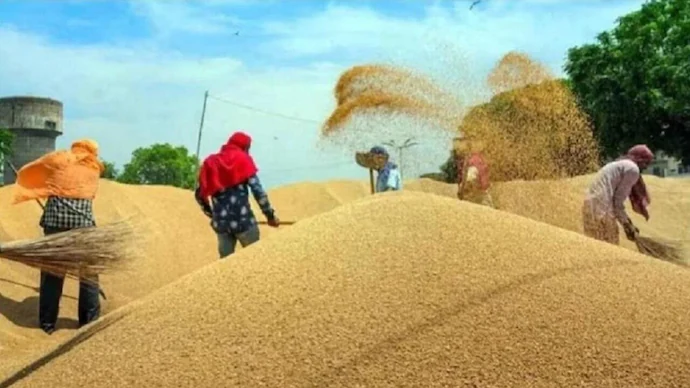
The Tamil Nadu government has imposed stock limits on paddy, rice, tur dal and urad dal under the Essential Commodities Act, 1955, in an effort to prevent hoarding, improve market availability and control rising Food Prices. The restrictions apply to wholesalers, retailers, millers, rice processors and importers, with different ceilings prescribed for each category of business.
The decision comes amid concerns over increasing prices of essential food commodities in the state. Opposition leaders have criticised the TVK government over the rise in rice prices, alleging that the cost of rice has increased from Rs 67 to Rs 100 per kilogram. The new measures are intended to ensure that traders do not accumulate excessive stocks while consumers face higher prices.
The orders were issued with the prior concurrence of the Centre. While the stock limits for tur dal and urad dal will remain in force for three months, restrictions on paddy and rice will continue until January 31, 2027.
Why Tamil Nadu Introduced Stock Limits on Essential Food Commodities
Stock limits are regulatory restrictions that determine how much of a particular commodity a business or trader can hold at a given time. Governments can introduce such measures when concerns arise over excessive stock accumulation, artificial shortages or rising prices.
In Tamil Nadu, the latest restrictions cover four important food commodities: paddy, rice, tur dal and urad dal. These products are widely consumed across households and form an important part of everyday food spending.
The government’s decision follows concerns about rising prices and the possibility that excessive stockholding could affect the availability of essential commodities in the market. By setting maximum permissible stock levels, the authorities aim to discourage hoarding and encourage the movement of available supplies through the distribution system.
The measures also introduce reporting requirements, requiring covered businesses to disclose their inventory positions through the Department of Consumer Affairs portal. This will allow authorities to monitor stock levels and identify businesses that exceed the prescribed limits.
Tamil Nadu Paddy and Rice Stock Limits for Wholesalers and Retailers
Under the Tamil Nadu Paddy/Rice (Stock Limit) Control Order, 2026, the government has established separate stock ceilings for wholesalers, retailers, large retail chains, millers and rice processors.
Wholesalers are permitted to hold a maximum of 2,000 metric tonnes of paddy or rice. This limit applies to businesses operating at the wholesale level and is intended to prevent excessive accumulation of stocks within the supply chain.
For retailers, the maximum permitted stock is eight metric tonnes at each outlet. The same per-outlet ceiling applies to large chain retail shops.
However, large retail chains can hold a higher combined quantity across their businesses. Their overall permissible stock is calculated by multiplying eight metric tonnes by the total number of retail outlets they operate. This provision recognises that businesses with multiple outlets require stock distributed across different locations.
Stock Limits for Rice Millers and Processors
The government has also introduced specific rules for rice millers and processors, taking their production capacities into account rather than applying a single fixed stock ceiling.
Rice millers can hold paddy or rice stocks equivalent to no more than one month’s production capacity. The limit is linked to their operational capacity, allowing businesses of different sizes to retain quantities corresponding to their production requirements.
Rice processors face a separate calculation. Their permissible stock is limited to 60 per cent of their monthly installed capacity multiplied by the number of months remaining until January 2027.
This formula links the quantity that processors can retain to their installed production capacity and the remaining period covered by the restrictions. It is designed to regulate inventory while accounting for differences in processing operations.
These provisions mean that rice businesses will need to review their existing inventories and ensure that their holdings remain within the applicable limits. Companies operating multiple facilities or outlets will also need to understand how the prescribed calculations apply to their individual business categories.
Tur Dal and Urad Dal Stock Limits in Tamil Nadu
The new restrictions also cover tur dal and urad dal, two commonly consumed pulses. The government has introduced separate ceilings for wholesalers, retailers, large retail chains and millers dealing in these commodities.
Wholesalers are allowed to hold a maximum of 200 metric tonnes of tur dal and 200 metric tonnes of urad dal. These limits are intended to prevent excessive stock accumulation at the wholesale level.
Retailers and large chain retail shops can hold up to five metric tonnes of each variety at every retail outlet. Large chain retailers are additionally permitted to maintain up to 200 metric tonnes of each pulse at every depot.
The depot provision allows large retail businesses to maintain centralised inventories while keeping their stocks within the specified regulatory ceiling. However, retailers must still comply with the separate limits applicable to individual outlets.
Stock Rules for Tur Dal and Urad Dal Millers
Millers dealing in tur dal and urad dal will have their permissible stock calculated using their production history and installed capacity.
Under the order, the permitted quantity is equivalent to the production of the preceding three months or 25 per cent of annual installed capacity, whichever is higher.
This approach provides a capacity-based framework for determining how much stock pulse millers can retain. It also distinguishes their requirements from those of wholesalers and retailers, whose limits are based on fixed quantities.
For businesses involved in pulse processing, compliance will require careful tracking of production levels, installed capacity and existing inventory. The rules may also require companies to review how they manage procurement and storage during the period in which the restrictions remain active.
Importers Cannot Hold Imported Rice and Pulses Beyond 45 Days
The Tamil Nadu orders also place restrictions on importers of rice and pulses. Importers cannot retain imported stocks of these commodities for more than 45 days from the date of customs clearance.
The time-based restriction is different from the fixed stock ceilings imposed on wholesalers and retailers. Instead of allowing importers to hold imported commodities indefinitely, it establishes a maximum period for retaining such stocks after clearance.
This requirement means importers will need to monitor the customs clearance dates of their consignments and plan the movement or sale of imported commodities within the prescribed period.
The provision also forms part of the broader effort to prevent excessive stockholding across different stages of the supply chain, including imported supplies.
Mandatory Stock Declaration on Department of Consumer Affairs Portal
Stock limits will be supported by mandatory reporting requirements. All entities covered by the orders must declare their stock positions on the Department of Consumer Affairs portal and regularly update the information.
The reporting requirement applies to wholesalers, retailers, large retail chains, millers, rice processors and importers. Businesses will therefore need to provide details of their holdings and keep the information updated in accordance with the government directions.
Regular declarations are important because stock limits cannot be effectively monitored through fixed rules alone. Authorities need information about how much of each commodity is being held by different businesses to identify potential violations and assess whether stocks are being distributed through the market.
The government is expected to use these declarations and periodic updates to monitor compliance. Businesses that fail to maintain accurate stock information or continue holding quantities above the prescribed ceilings could face regulatory action under the applicable provisions.
November 16 Deadline for Businesses Holding Excess Stocks
Businesses that currently hold stocks above the newly prescribed limits have been directed to bring their inventories within the permitted ceilings by November 16, 2026.
The deadline gives affected traders and other businesses a short period to adjust their holdings. Wholesalers, retailers, millers, processors and importers will need to review their inventories and take the necessary steps to comply with the relevant restrictions.
For businesses holding excess quantities, this could involve accelerating sales, changing procurement plans or adjusting stock movements. The appropriate steps will depend on the type of business and the specific ceiling applicable to it.
After the deadline, compliance will be monitored through stock declarations and periodic updates. Businesses will need to ensure that their reported inventories accurately reflect their actual holdings.
How the Stock Limits Could Affect Rice and Pulse Prices
The primary objective of the restrictions is to improve the availability of essential food commodities and prevent stock accumulation from contributing to price pressures. By limiting the quantities that businesses can retain, the government aims to encourage supplies to reach the market rather than remain concentrated in storage.
If excessive stockholding is contributing to supply constraints, tighter monitoring could help improve the movement of rice and pulses through wholesale and retail channels. Greater visibility into inventories may also make it easier for authorities to identify unusual stock concentrations.
However, stock limits alone cannot guarantee an immediate reduction in retail prices. The final price consumers pay is influenced by several factors, including procurement costs, production, transportation, storage, seasonal supply conditions and demand.
The effectiveness of the new restrictions will therefore depend on implementation, enforcement and the broader availability of commodities. If supplies remain limited or other costs continue to rise, consumers may not see an immediate decline in prices.
The measures should also be viewed as a market-management intervention rather than a direct price-control mechanism. The orders restrict how much stock certain businesses can hold, but the supplied government directions do not establish a new fixed retail selling price for rice or pulses.
Opposition Criticism Over Rising Rice Prices
The stock-control decision comes against the backdrop of political criticism over the cost of essential food items in Tamil Nadu. Opposition leaders have raised concerns about the increase in rice prices, alleging that the price per kilogram has risen from Rs 67 to Rs 100.
The reported increase has become a point of criticism against the TVK government, particularly because rice is a staple food for households across the state. Higher prices can place additional pressure on family budgets, especially for consumers who purchase rice regularly in large quantities.
The government’s latest action is aimed at addressing concerns about availability and possible hoarding. However, the actual impact on household spending will depend on whether the measures improve market supplies and help moderate prices over time.
Stock declarations and enforcement will be important in determining whether the restrictions achieve their intended purpose. The government will also need to monitor market conditions during the period covered by the orders.
How Long Will the New Stock Restrictions Remain in Force?
The restrictions have different validity periods depending on the commodities covered by the orders.
The stock limits on tur dal and urad dal will remain in force for three months. The restrictions on paddy and rice will continue until January 31, 2027.
Businesses dealing in these commodities will need to follow the applicable rules throughout the respective periods. They must also comply with stock declaration requirements and ensure that their inventories do not exceed the prescribed ceilings.
The different timelines mean that traders handling multiple commodities will need to track separate compliance periods. Businesses dealing in both rice and pulses should pay particular attention to the distinct stock limits and reporting requirements for each category.
What the New Rules Mean for Consumers and Traders
For consumers, the government expects the restrictions to improve the availability of rice and pulses and reduce the possibility of artificial shortages caused by excessive stock accumulation. Better market availability could help ease supply-related price pressures, although the extent of any benefit remains uncertain.
For traders, the orders introduce stricter inventory management and reporting responsibilities. Wholesalers and retailers must remain within fixed stock ceilings, while millers and processors must calculate their permissible holdings using production-related formulas.
Importers will also need to monitor the 45-day limit following customs clearance. All covered businesses must declare their inventories through the Department of Consumer Affairs portal and update the information periodically.
The November 16, 2026, deadline is particularly important for businesses whose current holdings exceed the newly prescribed limits. They must reduce their stocks to the permitted levels by that date.
Will Tamil Nadu’s Stock Limits Bring Down Food Prices?
The new restrictions represent an attempt by the Tamil Nadu government to address rising food prices through tighter control over commodity inventories. By covering wholesalers, retailers, millers, processors and importers, the orders extend stock monitoring across several stages of the supply chain.
The government hopes that preventing excessive accumulation will improve the availability of paddy, rice, tur dal and urad dal. Mandatory declarations could also help authorities identify businesses holding quantities above the permitted limits.
Whether these measures translate into lower prices will depend on how effectively they are enforced and whether sufficient supplies are available in the market. The restrictions may help address hoarding-related pressures, but production costs, transportation expenses and wider market conditions will continue to influence prices.
For now, traders must comply with the new stock ceilings, reporting requirements and deadlines. Consumers will be watching whether the government’s intervention improves the availability of essential food commodities and eases the pressure on household budgets in the coming months.
For breaking news and live news updates, like us on Facebook or follow us on Twitter and Instagram. Read more on Latest India on thefoxdaily.com.






COMMENTS 0