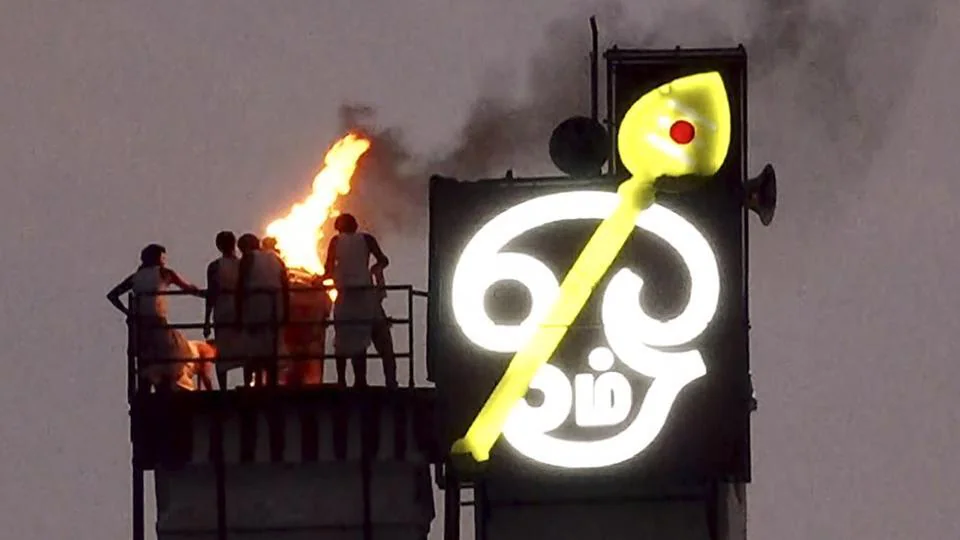
The Tamil Nadu government has told the Supreme Court that it “sincerely apologises” for the failure to light the ceremonial Karthigai Deepam lamp at the Deepathoon, a stone pillar on Thirupparankundram Hill in Madurai. In a status report submitted on Wednesday, November 25, 2026, Madurai District Collector Nishant Krishna said the district administration had completed the necessary arrangements but could not proceed because the temple’s Board of Trustees did not authorise the designated team.
The dispute follows a November 20 order by a Supreme Court bench permitting the lamp to be lit at the disputed stone pillar as a restricted, one-time measure for the Karthigai Deepam festival. However, the temple board decided to continue the customary practice of lighting the flame at the Deepa Mandapam, rather than at the Deepathoon.
The disagreement has turned a religious ritual into a legal and administrative dispute involving the district administration, temple authorities, Hindu groups and competing claims about longstanding religious customs. The Supreme Court has declined to initiate suo motu contempt proceedings at this stage but indicated that applications, including contempt petitions, would be considered shortly.
What the Madurai Collector Told the Supreme Court
In his preliminary status report, Nishant Krishna said the district administration had taken steps between November 21 and November 24 to secure the temple administration’s approval for a team to light the lamp at the Deepathoon. He maintained that officials had completed the arrangements, including coordination with the police and other departments, but could not proceed without the temple authorities formally authorising the people selected for the ritual.
The Collector stated that the Board of Trustees passed a resolution on November 24 directing that the lamp be lit at the customary location. He said he was informed of this decision only after the flame had been lit at the Deepa Mandapam at approximately 8:30 p.m., according to the account in his report.
He also said that he had sent an email reminder to the temple’s Executive Officer at 3:47 p.m., requesting the names of the authorised team members without further delay. However, the required authorisation was not communicated to the district administration.
Krishna argued that the district administration could not independently nominate or authorise a replacement team because the Supreme Court’s directions had placed that responsibility with the Devasthanam, the temple administration. He maintained that officials had addressed the logistical and security requirements but could not complete the final step without the temple board’s approval.
The Collector also indicated that he would submit an additional status report containing supporting documents. This could provide the court with a more detailed account of the communications between the district administration and the temple authorities before the scheduled ceremony.
What Did the Supreme Court Order on November 20?
The dispute escalated after the Supreme Court passed an interim order on November 20, 2026, allowing the ceremonial Karthigai Deepam lamp to be lit at the Deepathoon on November 24. The bench comprised Justices Aravind Kumar and Vipul M Pancholi.
The court permitted the ritual as a restricted, one-time measure, with a limited team authorised by the temple administration and government officials involved in coordinating the arrangements. Madurai Collector Nishant Krishna was designated as the nodal officer responsible for coordination and supervision.
The order was significant because it allowed the lamp to be lit at the disputed pillar for the 2026 festival despite objections raised during the proceedings. However, the court was careful to distinguish the temporary permission from a final ruling on the competing claims about religious custom, the status of the location or the rights associated with the site.
The Supreme Court also made clear that the broader legal questions would remain open for consideration. These include the nature and extent of religious freedom, the enforceability of an asserted religious practice, the authority of temple administrations over religious observances and the limits of judicial intervention in such matters.
In other words, the one-time permission did not establish that lighting the lamp at the Deepathoon was an existing or legally recognised customary right. Nor did it finally settle the temple administration’s objections. The court allowed a specific arrangement for one festival while leaving the wider dispute for further judicial examination.
Why the Temple Board Refused to Authorise the Team
The temple’s Board of Trustees maintained that the Karthigai Deepam should be lit at the location where the ritual had traditionally been performed. In a statement signed by its chairperson, V Shanmugasundaram, the board said it had unanimously resolved to continue the practice of lighting the lamp at the Deepa Mandapam.
The board referred to the temple’s longstanding religious practices, rituals and Agama rules, arguing that these formed an important part of its religious identity. It said the established tradition should be protected rather than altered for the disputed ceremony.
The board’s position is based on the claim that the Deepa Mandapam, located near the Uchipillaiyar temple on the hill, has been the customary place for lighting the Karthigai Deepam. Its decision effectively prevented the team proposed for the Deepathoon ceremony from receiving the required authorisation.
This created a direct disagreement between the temple administration and the district authorities over how the Supreme Court’s interim directions should be implemented. While the Collector said the administration had completed its responsibilities and was waiting for authorisation, the temple board insisted on following its established ritual practice.
The disagreement also raises an important legal question: how should an interim judicial direction be implemented when the institution responsible for authorising a religious ceremony takes a position that conflicts with the proposed arrangement? That question is now part of the wider dispute before the courts.
Deepathoon vs Deepa Mandapam: Where Is the Disputed Lamp Location?
The controversy centres on two separate locations on Thirupparankundram Hill in Madurai. The first is the Deepa Mandapam, where the temple has traditionally lit the Karthigai Deepam. The second is the Deepathoon, an ancient stone pillar situated higher up the hill.
For decades, the ceremonial lamp has been lit at the Deepa Mandapam near the Uchipillaiyar temple. Hindu groups have sought permission to move the ritual to the Deepathoon, arguing that the stone pillar should also be used for the traditional festival ceremony.
The Deepathoon is located approximately 50 metres from the Hazrat Sultan Sikandar Badusha Auliya Dargah, a Muslim shrine on the hill. Its proximity to the dargah has added a sensitive religious and administrative dimension to the disagreement.
The competing positions are not simply about the physical location of a flame. They involve questions about historical practice, religious observance, institutional authority and the legal status of the disputed area.
For the temple board, continuing the Deepa Mandapam ritual protects an established tradition. For the groups seeking the Deepathoon ceremony, permission to light the lamp at the stone pillar is an important religious demand. The courts have been asked to examine these competing claims within the framework of existing legal proceedings.
What Happened on Karthigai Deepam Day?
November 24 was the day fixed for the one-time Deepathoon lighting permitted by the Supreme Court. According to the Collector’s report, the district administration had worked on the arrangements in the days leading up to the festival.
Officials from the Revenue Department, police, the Hindu Religious and Charitable Endowments Department and the Archaeological Survey of India were involved in coordination meetings. The arrangements covered the proposed team’s composition, timing, route, security and other logistical requirements.
The temple administration had also submitted a proposal outlining a team of around 10 people, including two temple Sthanikars, or priests, to conduct the ceremony. The proposed timing was approximately 6 p.m. on November 24, after the Paladeepam had been lit inside the sanctum sanctorum.
However, the Collector said the required authorisation was not granted. The Board of Trustees instead resolved to continue the customary Deepa Mandapam ceremony. The Karthigai Deepam was subsequently lit at the traditional location rather than at the disputed stone pillar.
The failure to conduct the Deepathoon ritual triggered renewed legal arguments over whether the Supreme Court’s interim directions had been properly implemented. The Collector’s apology and status report are part of the authorities’ response to those questions.
Supreme Court Declines to Initiate Suo Motu Contempt Proceedings
During Wednesday’s hearing, the Supreme Court declined to initiate contempt proceedings on its own motion after the issue was raised before the bench. However, it did not close the door to further legal action.
The bench indicated that parties seeking contempt action should file formal applications. It said it would examine the applications and the government’s status report before passing appropriate orders. The court was therefore not making a final determination on whether any official had deliberately disobeyed its earlier directions.
The distinction between refusing immediate suo motu action and deciding a formal contempt petition is important. Contempt proceedings require the court to examine the relevant directions, the conduct of the parties and whether any alleged non-compliance was deliberate or wilful.
The Collector’s report presents the district administration’s explanation, while those challenging the failure to light the lamp at the Deepathoon may advance a different interpretation of the events. The Supreme Court will have to consider the material placed before it before reaching any conclusion.
Accordingly, the court’s decision not to initiate proceedings immediately should not be interpreted as a finding that the November 20 order was fully complied with. Equally, the filing of a contempt application would not automatically establish that contempt had occurred.
Could the Tamil Nadu Government and Temple Officials Face Contempt Action?
The possibility of contempt proceedings remains one of the most important developments in the Thirupparankundram lamp dispute. Those challenging the non-lighting of the Deepathoon have questioned why the Supreme Court’s interim permission was not implemented on the scheduled date.
The Collector, however, has denied wilful disobedience. His explanation is that the district administration completed the arrangements within its authority but could not independently authorise the team because the Supreme Court’s order required the temple administration to do so.
The temple board’s resolution and its decision to light the lamp at the customary location are therefore central to the dispute. The court may need to examine whether the temple administration’s actions were consistent with the precise terms of the November 20 order and whether the district authorities took all reasonable steps to secure compliance.
Any contempt proceedings would require a judicial assessment of the evidence rather than an assumption based only on the fact that the lamp was not lit at the disputed pillar. The Collector’s proposed supplementary report could become relevant to that assessment.
The Supreme Court’s next steps will also matter for the temple administration and the Tamil Nadu government, as the case concerns the implementation of an interim judicial direction involving multiple public authorities and a religious institution.
Why the Thirupparankundram Deepam Dispute Is Legally Significant
The controversy extends beyond the annual Karthigai Deepam ceremony because it raises broader questions about the relationship between religious freedom, established customs and the authority of institutions responsible for managing places of worship.
Article 25 of the Constitution protects freedom of conscience and the right to freely profess, practise and propagate religion, subject to constitutional limitations. Article 26 provides religious denominations with certain rights to manage their religious affairs, also subject to the Constitution and applicable law.
The dispute requires the courts to consider how these protections apply when different parties make competing claims about a religious practice and the authority to conduct it at a particular location.
Another important issue is the distinction between an asserted religious practice and a custom that has been legally established. A temporary judicial permission to conduct a ceremony does not necessarily settle whether that ceremony forms part of a longstanding tradition or whether a particular group has an enforceable right to perform it.
The Supreme Court’s November 20 order acknowledged these wider questions without finally deciding them. The court kept the competing contentions open, allowing the immediate festival arrangement to be addressed separately from the more complex legal issues.
The case is also sensitive because the Deepathoon is close to the Hazrat Sultan Sikandar Badusha Auliya Dargah. Any decision concerning religious observances at the location must be considered alongside the rights and claims raised by the different parties, as well as the responsibility of public authorities to maintain law and order.
What Happens Next in the Thirupparankundram Temple Lamp Row?
The immediate legal focus is expected to remain on the Collector’s status report and any formal applications seeking contempt action. The Supreme Court has indicated that it will examine such applications rather than initiate proceedings solely on the basis of oral requests.
The Collector has also said he will submit a supplementary report with supporting documents. This could help clarify when the district administration contacted the temple authorities, what arrangements were completed and how the Board of Trustees communicated its final decision.
The broader challenge to the earlier directions concerning the Deepathoon is separate from the question of whether the November 24 ceremony was carried out. The Supreme Court’s interim order kept the larger legal questions open, and the main proceedings are expected to continue in January 2027.
Until the court examines those issues, neither the temple board’s position nor the claims of the groups seeking the Deepathoon ritual should be treated as having received a final judicial endorsement.
A Religious Tradition Dispute Now Before the Supreme Court
The Thirupparankundram Karthigai Deepam controversy has developed into a significant legal dispute over the implementation of a Supreme Court order, the authority of temple trustees and competing claims about religious tradition.
Madurai Collector Nishant Krishna has apologised for the lamp not being lit at the Deepathoon, while maintaining that the district administration completed its preparations and was prevented from proceeding by the absence of temple authorisation. The Board of Trustees, meanwhile, has defended its decision to follow the customary Deepa Mandapam ritual.
The Supreme Court has not yet ruled on whether the failure to conduct the ceremony amounts to contempt. Its decision to consider formal applications leaves the question open, while the larger dispute over the location and nature of the religious practice remains unresolved.
The next stage of the proceedings will be crucial in determining how the court interprets the actions of the temple administration and district officials. For now, the central issue remains whether the November 20 interim directions were adequately implemented and what legal consequences, if any, should follow from the Deepathoon lamp not being lit on November 24.
For breaking news and live news updates, like us on Facebook or follow us on Twitter and Instagram. Read more on Latest India on thefoxdaily.com.




COMMENTS 0