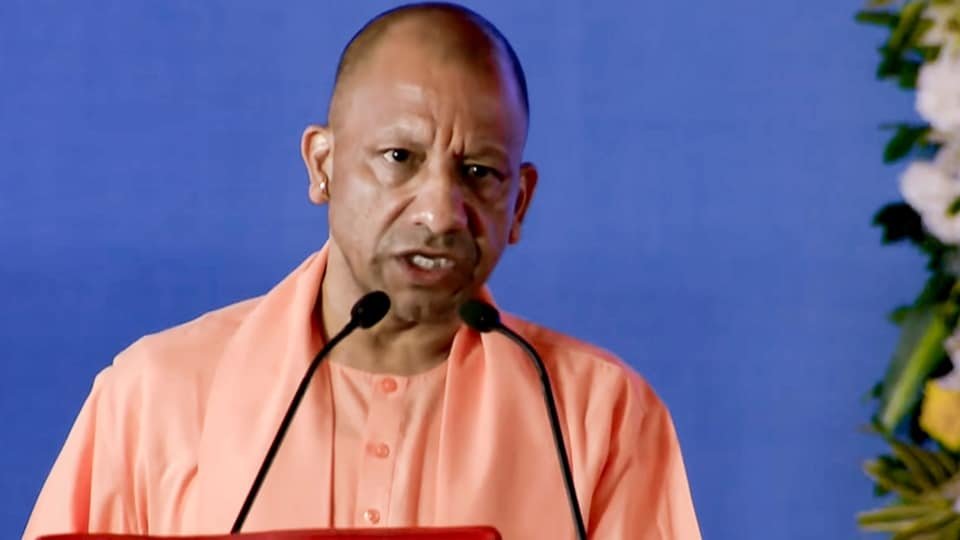
Uttar Pradesh Chief Minister Yogi Adityanath has offered a pointed response to questions about the Bharatiya Janata Party’s (BJP) chief ministerial face for the 2027 Assembly elections, saying that everyone knows the importance of individual leaders while emphasising that the party’s lotus symbol comes first.
Speaking at an ABP News conclave on Wednesday, November 25, Adityanath said every BJP candidate, including himself, would contest the election under the party’s lotus symbol. When asked whether he would be projected as the chief ministerial candidate again, he avoided making a direct announcement but said that the political identities and positions of leaders were already known.
“Everyone has to fight on the lotus symbol. I will also fight on the Lotus symbol. The lotus flower is everything for us. Who is who and who is not, that is known to all,” the chief minister said.
His remarks come amid a discussion within the BJP over whether the party will campaign around Adityanath’s leadership or emphasise its organisation, election symbol and collective leadership. Deputy Chief Minister Keshav Prasad Maurya has also made statements highlighting the lotus as the party’s central identity ahead of the next Assembly election.
What did Yogi Adityanath say about the BJP’s CM face in 2027?
Adityanath’s response placed the BJP’s election symbol at the centre of the party’s campaign strategy rather than explicitly confirming his own candidature for another term as chief minister.
By saying that he would also contest under the lotus symbol, the chief minister presented himself as part of the party’s wider electoral organisation. His remark that “everyone knows who is who” was widely interpreted in the context of questions about his political position and the leadership debate ahead of the 2027 polls.
However, he did not formally declare himself the BJP’s chief ministerial candidate. Nor did he announce that another leader would replace him. The party’s final decision on its leadership strategy remains a matter for its organisational and legislative leadership.
The distinction is important because contesting an Assembly election under a party symbol and being officially projected as its chief ministerial candidate are two separate political decisions. A party can campaign around its organisation and leadership collectively without announcing a single candidate for the top government position before voting.
Adityanath has been Uttar Pradesh’s chief minister since March 2017 and led the BJP government after the party returned to power in the 2022 Assembly elections. Whether he will lead the party into the 2027 contest as its declared chief ministerial face has not been formally settled by the statements made at the conclave.
Keshav Prasad Maurya’s lotus remark adds to the leadership discussion
Adityanath’s comments followed remarks by Deputy Chief Minister Keshav Prasad Maurya, who said on November 23 that the BJP would seek votes in the 2027 Uttar Pradesh Assembly elections on the party’s lotus symbol rather than on the face of an individual leader.
Maurya made the statement after a BJP core committee meeting at the party’s state headquarters in Lucknow. The meeting was chaired by Adityanath and attended by senior leaders, including state BJP president Pankaj Chaudhary, Deputy Chief Minister Brajesh Pathak and other organisational representatives.
Asked whether the BJP would seek votes on Adityanath’s leadership or on the strength of its organisation, Maurya said the party would campaign under its symbol.
His statement attracted attention because Adityanath remains the BJP’s most prominent leader in Uttar Pradesh and has been central to the party’s government and political messaging in the state. The question of whether the BJP will formally project him again has therefore become an important subject in discussions about the next election.
On Wednesday, Maurya offered a further clarification at the ABP News conclave. He said the BJP generally does not announce its chief ministerial candidate in advance in every state and that the decision would be taken after the election. According to Maurya, the party’s elected legislators would choose their leader in consultation with the central leadership and parliamentary board.
He also said the next chief minister could be Adityanath or someone else, making clear that the lotus symbol was the party’s immediate electoral identity rather than a formal announcement about who would occupy the chief minister’s office after the election.
Will Yogi Adityanath contest the 2027 election from Gorakhpur?
Adityanath also addressed a question about the constituency from which he intends to contest the next Assembly election. He indicated that Gorakhpur would remain his preferred seat, subject to the BJP’s final decision.
“I fight from Gorakhpur; I have been fighting from that seat. Whatever the party decides, I will fight from there,” he said.
Adityanath contested the 2022 Uttar Pradesh Assembly election from Gorakhpur Urban and won by a substantial margin. Before that election, he had served as a member of the Legislative Council rather than as an elected MLA from an Assembly constituency.
Gorakhpur has long been associated with Adityanath’s political career. He represented the Gorakhpur Lok Sabha constituency for five consecutive terms before becoming chief minister in 2017. His association with the region also extends to his role at the Gorakhnath Math, which has been an important centre of his public and political activity.
Although his latest comments suggest that Gorakhpur remains his preferred constituency, the BJP has not formally announced its candidate list for the 2027 election. The final selection of candidates will depend on the party’s internal decision-making process.
Yogi dismisses speculation over differences among NDA allies
Beyond the question of the BJP’s chief ministerial face, Adityanath also rejected speculation about disagreements among National Democratic Alliance (NDA) partners in Uttar Pradesh ahead of the 2027 election.
Questions have been raised about coordination between the BJP and its regional allies, including the Nishad Party and the Suheldev Bharatiya Samaj Party (SBSP). Both parties have their own political bases and leadership interests, making seat-sharing and constituency-level arrangements important issues as election preparations advance.
Adityanath dismissed suggestions that the alliance was divided or that its partners were pulling in different directions. He described the NDA as a coordinated team in which parties would sit together, discuss their differences and reach decisions collectively.
“The NDA is not a crowd of separate parties pulling in different directions but one team that will sit across the table, talk face-to-face, and decide together,” he said.
He also used the opportunity to target the Samajwadi Party (SP) and Congress, whose discussions over a possible seat-sharing arrangement for the 2027 election have attracted political attention.
Adityanath suggested that alliance partners should resolve their differences through direct discussions rather than public disagreements. His remarks were an apparent reference to reports of difficulties in the SP-Congress negotiations over the distribution of constituencies.
However, the BJP’s own seat-sharing arrangements with its allies will also require discussions. The chief minister’s statement indicates the party’s public position that such decisions should be handled through negotiations rather than treated as evidence of an alliance breakdown.
Why the SP-Congress seat-sharing issue matters ahead of 2027
The relationship between the Samajwadi Party and Congress is likely to remain an important part of Uttar Pradesh’s opposition politics as the next Assembly election approaches.
The two parties contested the 2024 Lok Sabha election in Uttar Pradesh as allies, coordinating their campaigns against the BJP. Their performance gave the opposition alliance a significant presence in the state’s parliamentary results and increased attention on whether the partnership could continue into the Assembly election.
However, an understanding at the parliamentary level does not automatically settle the distribution of 403 Assembly constituencies. The parties must consider their respective organisational strengths, local leadership, existing legislators and the electoral prospects of potential candidates.
Adityanath’s comments were aimed at presenting the NDA as a united alliance while drawing attention to the challenges facing the opposition. Whether the SP and Congress reach a workable arrangement will depend on the outcome of their negotiations, not simply on statements made by political opponents.
For the BJP, maintaining coordination with regional allies will also be important. Parties such as the Nishad Party and SBSP can bring local networks and support bases into the alliance, but negotiations over seats and political representation can become complicated when several partners seek influence in the same constituencies.
Yogi Adityanath targets Akhilesh Yadav over proposed Ayodhya visit
Adityanath also criticised Samajwadi Party president Akhilesh Yadav over his proposed visit to Ayodhya, bringing the Ram temple movement and the events of the 1990s into the political discussion.
Referring to the police firing on Ram devotees during the movement for a Ram temple in Ayodhya in October 1990, Adityanath said the SP leadership should apologise to devotees and Hindus.
“If the SP leadership had shown some wisdom in the 1990s, bullets would not have been fired at Ram devotees. They should now apologise to Ram devotees and Hindus,” he said.
The reference relates to the period when the then Uttar Pradesh government, led by Mulayam Singh Yadav, ordered police action against kar sevaks who had gathered in Ayodhya during the Ram Janmabhoomi movement. The firing became a major political issue and has continued to feature in debates between the BJP and the Samajwadi Party.
Adityanath also used religious language to attack the opposition party, saying, “Radhe Radhe is just the beginning; the time for Ram Naam Satya is approaching for the SP.”
The remarks reflect the continued importance of religious and historical issues in Uttar Pradesh’s political debate. Ayodhya remains a significant centre of the BJP’s political messaging following the consecration of the Ram temple in January 2024.
For the Samajwadi Party, the challenge is to respond to the BJP’s political messaging while maintaining its focus on governance, social coalitions and electoral organisation. Akhilesh Yadav’s proposed visit to Ayodhya has therefore become another point of political confrontation between the two parties.
What the BJP’s lotus-first strategy means for the 2027 UP elections
The repeated emphasis on the lotus symbol by Adityanath and Maurya points to a campaign approach in which the BJP wants to place the party’s identity and organisation above individual leadership claims.
The lotus is the BJP’s reserved election symbol and a central feature of its campaign machinery. Its use allows the party to maintain a consistent identity across constituencies, even when candidates and local political circumstances differ.
That approach does not mean the BJP’s leading figures will be absent from the campaign. Adityanath, Prime Minister Narendra Modi and other senior leaders are likely to remain important to the party’s public messaging. The distinction is that the party has not yet formally settled whether it will designate Adityanath as its chief ministerial candidate before the election.
The BJP’s 2027 preparations will involve several connected decisions, including candidate selection, alliance coordination, campaign messaging and the presentation of the state government’s record. The party will also have to assess its performance in the 2022 Assembly election and the political changes that have taken place since then.
Uttar Pradesh has 403 Assembly seats, making alliance management and constituency-level organisation particularly important. A party’s overall campaign message must ultimately translate into local candidates, voter outreach and support across a large and politically diverse state.
Has the BJP officially announced Yogi Adityanath as its 2027 CM candidate?
No formal announcement has been made in the statements discussed at the ABP News conclave. Adityanath emphasised the BJP’s lotus symbol and said that every candidate, including himself, would contest under it. Maurya subsequently clarified that the party’s chief ministerial leader would be selected after the election through its established legislative and organisational process.
Adityanath’s reference to Gorakhpur indicates where he would prefer to contest, but it does not amount to a formal announcement of his candidature or another term as chief minister.
The comments have brought the leadership question back into focus, particularly because Maurya’s remarks have been followed by Adityanath’s own emphasis on the party symbol. However, neither statement confirms a change in the BJP’s state leadership or establishes that the two leaders are involved in a political dispute.
For now, the BJP’s publicly stated position is that the lotus symbol and the party organisation will remain central to its 2027 campaign. The decision about who will lead the next government, if the party wins the election, is expected to follow the electoral process and the party’s internal deliberations.
For breaking news and live news updates, like us on Facebook or follow us on Twitter and Instagram. Read more on Latest India on thefoxdaily.com.




COMMENTS 0