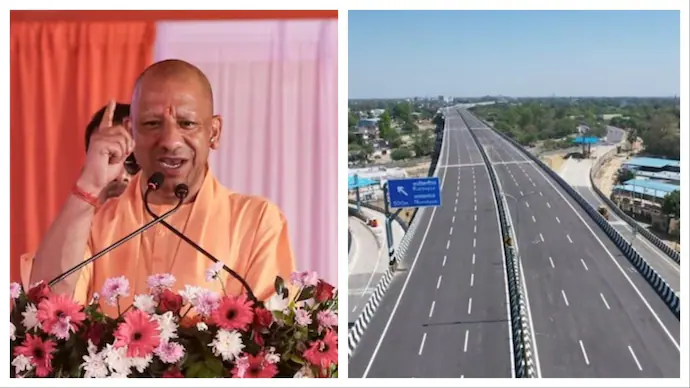
Uttar Pradesh Chief Minister Yogi Adityanath on Thursday highlighted the expansion of road, rail, metro and air connectivity across the state since 2017. He said improvements in transport infrastructure had opened up new opportunities for businesses, tourism, employment and economic activity.
In a post on X, Adityanath cited the growth in the state’s expressway network, the number of domestic and international airports, and the expansion of metro services. According to the chief minister, Uttar Pradesh has moved from having what he described as “one and a half expressways” before the Bharatiya Janata Party (BJP) government came to power to 10 operational expressways today.
He also highlighted the presence of 12 domestic airports and five international airports, alongside metro services operating in seven cities. Adityanath presented these developments as part of the state’s broader infrastructure expansion since 2017.
Yogi Adityanath Highlights Growth in Transport Infrastructure
Adityanath said improvements in connectivity were about more than reducing travel distances. He argued that better transport links could save time, make journeys more convenient and create new possibilities for economic development.
“Road, rail and air connectivity do not merely reduce distances; they also bring convenience, save time and open up new possibilities for prosperity,” he said.
The chief minister also described the transport infrastructure situation before 2017 as poor and credited the subsequent expansion to the BJP’s double-engine government under Prime Minister Narendra Modi.
The term “double-engine government” is commonly used by the BJP to describe situations in which the same party governs at both the state and central levels. In his remarks, Adityanath linked the infrastructure expansion in Uttar Pradesh to cooperation between the state government and the Centre.
However, his post focused primarily on the infrastructure figures and the potential benefits of improved connectivity. It did not provide a detailed breakdown of project-wise investment, passenger traffic or the economic gains directly attributed to the developments.
Uttar Pradesh’s Expressway Network Expands
One of the central points in Adityanath’s statement was the expansion of the state’s expressway network. He said Uttar Pradesh had gone from having “one and a half expressways” before 2017 to 10 operational expressways at present.
Expressways can improve connections between cities, industrial centres, agricultural areas and other economic hubs by providing faster road travel. Better road links can also make it easier for businesses to transport goods and for people to access employment, education and services.
Adityanath argued that the expansion of transport infrastructure was creating opportunities across several sectors. However, the statement did not identify each expressway or provide individual details about construction costs, traffic volumes, completion dates or the economic impact of the roads.
The figure of 10 operational expressways was presented by the chief minister as evidence of the scale of the state’s Infrastructure Development since 2017.
Air Connectivity: 12 Domestic and Five International Airports
Adityanath also highlighted Uttar Pradesh’s aviation infrastructure, citing 12 domestic airports and five international airports.
Air connectivity can support tourism, business travel and the movement of passengers between regions. Airports can also improve access to destinations that would otherwise require longer journeys by road or rail.
For a state as large as Uttar Pradesh, expanded air links can provide additional travel options for residents, visitors and businesses. International connectivity can also support links with overseas destinations, although the availability of routes and the number of passengers using them can vary.
The chief minister’s post did not include airport-wise passenger statistics, details of international routes or figures showing how air traffic had changed since 2017. His remarks instead focused on the number of domestic and international airports as an indicator of the expansion of transport infrastructure.
Metro Services Now Cover Seven Cities, Says CM
Urban transport was another major element of Adityanath’s statement. He said metro services were operating in seven cities in Uttar Pradesh, pointing to the expansion of mass-transit options in urban areas.
Metro systems can provide an alternative to private vehicles and road-based public transport, particularly in busy urban centres. Depending on their coverage and integration with other transport services, they can help passengers travel between residential areas, commercial districts and employment hubs.
Adityanath presented the expansion of metro services alongside expressways and airports as part of a wider improvement in the state’s connectivity. His post, however, did not specify the cities included in the figure or provide information about route lengths, ridership, operating capacity or future expansion plans.
How Better Connectivity Could Benefit Farmers and Businesses
According to Adityanath, improved transport links are helping farmers reach larger markets with their produce. Better roads and connections between agricultural areas and commercial centres can make it easier to transport goods, potentially widening the markets available to producers.
For farmers, access to transport infrastructure can influence how quickly agricultural products reach buyers. The actual benefits can depend on factors such as transport costs, storage facilities, market prices and access to distribution networks.
The chief minister also said improved connectivity was creating opportunities for businesses. Transport links can help companies move raw materials and finished goods, connect with suppliers and customers, and facilitate travel for workers and business owners.
Uttar Pradesh’s expressways, airports and urban transport systems were cited as part of this broader development agenda. However, Adityanath’s statement did not include data quantifying changes in freight movement, business investment, operating costs or employment attributable to these projects.
Education, Employment and Tourism Among the Potential Benefits
Adityanath said improved connectivity was making education and employment more accessible to young people. Transport links can expand the range of educational institutions and workplaces that people can reach, particularly when services connect smaller towns with larger urban centres.
Better connections can also support tourism by making destinations easier to access. Visitors may benefit from improved road, rail and air links, while tourism-related businesses can gain access to a wider pool of potential customers.
The chief minister said the growth of tourism was supporting local livelihoods. Businesses involved in accommodation, food, transport, retail and other visitor services can benefit when more people travel to a destination. The scale of those benefits, however, depends on visitor numbers, spending patterns and the distribution of tourism activity.
Although Adityanath linked infrastructure expansion with opportunities in education, employment, business and tourism, his post did not provide separate figures to measure the contribution of transport projects to these sectors.
‘New Uttar Pradesh’ Is the State’s Development Vision, Says Yogi
Adityanath described the development of infrastructure and economic opportunities as part of the state’s broader identity under the BJP government. He said improved connectivity was intended to support growth across different sectors and create opportunities for families and businesses.
“Opportunities for every sector, capacity for every enterprise and growing prosperity in the life of every family are the new identity of ‘New Uttar Pradesh’ in ‘New India’,” the chief minister said.
The remarks reflect the state government’s emphasis on infrastructure development as a component of its economic growth agenda. Expressways, airports and metro systems are among the types of transport projects that governments use to improve mobility and connect economic centres.
Assessing the wider effects of these developments requires more than counting infrastructure projects. Data on investment, passenger traffic, freight movement, employment, tourism and regional economic activity can help establish how improvements in connectivity translate into measurable outcomes.
Infrastructure Development Remains Central to Uttar Pradesh’s Growth Agenda
Adityanath’s statement placed transport connectivity at the centre of the state government’s development narrative, highlighting 10 operational expressways, 12 domestic airports, five international airports and metro services in seven cities.
He said the expansion of road, rail and air links was creating opportunities for farmers, young people, businesses and tourism-related livelihoods. The chief minister also credited the BJP’s double-engine government under Prime Minister Narendra Modi for the infrastructure expansion since 2017.
The figures and benefits cited in the post were not accompanied by a detailed assessment of project investments or measurable economic outcomes. As a result, the statement outlines the government’s claims about infrastructure growth and its intended benefits, while leaving the scale of the resulting economic impact to be established through further data.
Tighten repetitive infrastructure explanations Separate reported claims from analysis Reduce unsupported causal implications
For breaking news and live news updates, like us on Facebook or follow us on Twitter and Instagram. Read more on Latest India on thefoxdaily.com.






COMMENTS 0