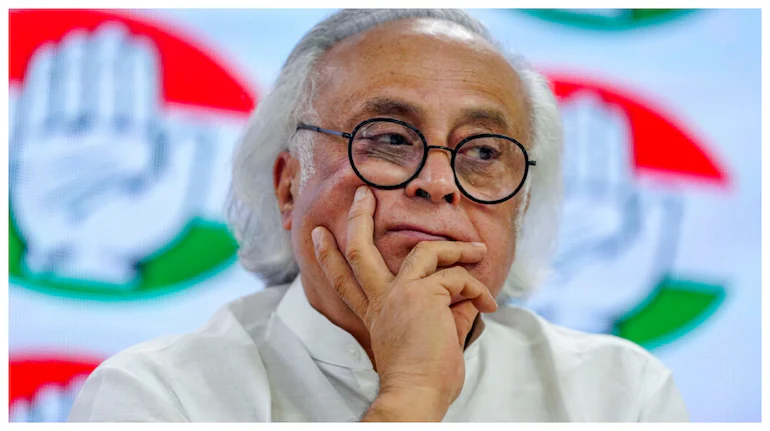
The Congress has blamed Prime Minister Narendra Modi‘s economic policies and style of governance for persistent inflation, inadequate job creation and subdued private investment, arguing that businesses are operating in an environment that is weakening competition and investor confidence. The criticism followed Modi’s remarks to industry leaders at the Federation of Indian Chambers of Commerce and Industry (FICCI) annual general meeting, where he questioned why tax concessions and other government measures had not translated into stronger investment, higher salaries and more employment.
Congress general secretary Jairam Ramesh said the Prime Minister was right to question the gap between government concessions and economic outcomes but argued that his own policies had contributed to the problems he highlighted. He accused the government of allowing economic power to become concentrated in a few large business groups, weakening competition and creating an atmosphere of fear that has discouraged investment.
The exchange brings the debate over India’s economic performance into focus, particularly the relationship between corporate tax relief, consumption, private investment and employment. While the government has pointed to tax reductions and business reforms as measures to support economic activity, the Congress argues that these steps have not delivered sufficiently broad-based gains for workers, smaller businesses and investors.
What Did PM Modi Say to Industry Leaders at the FICCI Meeting?
Addressing the FICCI annual general meeting, Modi questioned business leaders over the limited improvement in employment and salary growth despite several government measures intended to make business operations easier and increase consumers’ purchasing power.
The Prime Minister highlighted changes to the tax system and the broader business environment, arguing that the government had taken steps to support companies and encourage economic activity. He pointed to the reduction in the basic corporate tax rate from 30% in 2014 to 22%, alongside changes to tax return and refund processes.
He also referred to reductions in Goods and Services Tax (GST) rates on several products. The underlying message was that government measures intended to reduce the tax burden and improve the business environment should lead to stronger economic outcomes.
Modi challenged industry leaders to translate the benefits of these measures into greater employment, better salary growth and higher investment. His remarks placed responsibility on businesses to ensure that tax concessions and improved consumer purchasing power generate wider economic benefits.
The intervention also highlighted a key question in India’s economic debate: why have government efforts to support businesses not produced the scale of private investment and job creation that policymakers and industry leaders would like to see?
Jairam Ramesh Says Modi Is Ignoring the Causes of Economic Weakness
Responding to the Prime Minister’s remarks, Congress general secretary Jairam Ramesh said Modi was acknowledging problems that the opposition had been raising for a long time. He argued that stagnant wages, insufficient job creation and weak private investment could not be separated from the government’s economic and governance decisions.
In a post on X, Ramesh said, “For the first time in 12 years, a nervous and rattled PM has pulled up the captains of industry.”
He suggested that industry leaders would have been surprised by the Prime Minister’s criticism because the issues he raised were already part of the Congress’s criticism of the government’s economic record.
Ramesh argued that the Prime Minister was placing responsibility on businesses without adequately acknowledging the policy environment created by his administration. According to the Congress leader, the government’s approach has contributed to weak investment sentiment and an economy in which employment and wage growth have not expanded at the desired pace.
The Congress’s response therefore shifted the debate from the responsibility of corporate India to the broader relationship between government policy, market competition and business confidence.
Congress Alleges Concentration of Economic Power Is Weakening Competition
One of Ramesh’s central allegations was that economic power has become concentrated in a small number of large companies across multiple industries. He argued that the growing influence of dominant business groups was weakening competition and limiting opportunities for other market participants.
Describing the situation as an expansion of oligopoly, Ramesh said the concentration of economic power was damaging competitive conditions. An oligopoly refers to a market structure in which a small number of companies hold a substantial share of an industry’s business. Such concentration can reduce competitive pressure and make it harder for smaller companies to challenge established players.
The Congress leader also accused the government of allowing regulatory institutions to be captured by a chosen few. He alleged that investigative agencies had been used in ways that favoured one conglomerate.
These are political allegations made by the Congress and were not independently established by the remarks or material provided about the FICCI meeting. Nevertheless, they form a significant part of the opposition’s argument that India’s investment environment is influenced not only by tax rates but also by perceptions of fairness, regulatory independence and access to economic opportunities.
For investors, the distinction matters. Tax concessions can improve the financial attractiveness of business expansion, but companies also consider regulatory predictability, competition, access to markets and the risk of policy uncertainty when deciding whether to commit capital.
Fear and Intimidation: Congress Questions the Investment Climate
Ramesh also claimed that the government’s style of governance had created an atmosphere of fear and intimidation, which he said had weakened investor sentiment. His argument was that businesses need more than favourable tax rates to make long-term investment decisions.
Private investment generally depends on expectations about future demand, operating costs, regulatory stability and the ability to compete. If businesses believe that policy decisions or regulatory action may be unpredictable, they may delay expansion or take a more cautious approach to committing capital.
The Congress has attempted to connect these concerns with what it describes as excessive concentration of economic power and the alleged use of government institutions to favour selected business interests.
Modi’s remarks at the FICCI meeting, meanwhile, focused on the gap between government support and the response from industry. His challenge to business leaders suggests that the government expects companies to play a more active role in converting policy incentives into jobs, higher wages and investment.
The contrasting positions expose a disagreement over the main causes of weak private investment: the Prime Minister has questioned the industry’s response to government measures, while the Congress says the policy and governance environment itself is discouraging businesses.
Congress Links India’s China Trade Deficit to Pressure on MSMEs
Ramesh also raised concerns about India’s trade deficit with China, claiming that it had reached record levels and contributed to the destruction of lakhs of micro, small and medium enterprises (MSMEs).
India’s trade deficit with China reflects the gap between the value of goods imported from China and the value of Indian goods exported to that market. A widening deficit can raise concerns about dependence on imported products, domestic manufacturing competitiveness and the ability of Indian businesses to compete with overseas suppliers.
MSMEs are particularly important to this debate because smaller manufacturers often operate with limited financial resources and may find it difficult to compete with large-scale producers on price, technology and supply-chain efficiency.
However, the relationship between the trade deficit and the financial difficulties of individual MSMEs is complex. The Congress’s claim that the deficit has destroyed lakhs of such businesses is an allegation that would require separate evidence to establish the scale and direct causes of business closures.
Ramesh’s argument reflects the opposition’s broader criticism that the government’s economic policies have not sufficiently protected domestic small businesses or created conditions for them to expand.
Demonetisation and GST Remain Central to Congress’s Economic Criticism
The Congress leader also revisited two major economic decisions taken during Modi’s tenure: demonetisation in 2016 and the introduction of GST in 2017.
Ramesh described demonetisation as “suicidal” and accused the government of subsequently burdening businesses with a complicated GST system. His criticism reflects the Congress’s long-standing position that these policy decisions placed pressure on economic activity, particularly among smaller businesses.
Demonetisation involved the withdrawal of specified high-value currency notes from circulation. The decision was presented by the government as an effort to address issues including unaccounted wealth and counterfeit currency. Critics, including the Congress, have argued that the sudden disruption affected cash-dependent businesses and workers.
GST was introduced to bring multiple indirect taxes under a common national framework. The reform was intended to simplify India’s indirect taxation system and create a more unified market. However, businesses have raised concerns over compliance requirements, filing procedures and the administrative burden involved in meeting GST obligations.
Ramesh’s criticism connects these earlier decisions with the current debate over investment and employment. His position is that the government cannot focus only on tax concessions while overlooking the wider effects of its policy choices on businesses and economic activity.
Why Tax Cuts Do Not Automatically Create Jobs or Higher Salaries
The disagreement between Modi and the Congress highlights an important distinction in economic policy: reducing the tax burden on companies does not automatically guarantee that businesses will invest more, hire additional workers or increase salaries.
A lower corporate tax rate can leave companies with more money after tax, potentially improving their capacity to invest, repay debt or strengthen their balance sheets. But the decision to expand operations depends on several other factors, including expected demand, existing production capacity, borrowing costs and confidence in future economic conditions.
If a company does not expect sufficient demand for additional products or services, a tax reduction alone may not persuade it to build new facilities or recruit more employees. Businesses may instead use the additional financial flexibility for other purposes.
Employment growth also depends on the type of investment being made. Capital-intensive industries may expand production through machinery and automation without creating a proportionate number of jobs. Labour-intensive sectors, by contrast, can generate more employment when demand and investment increase.
Salary growth presents another challenge. Companies generally consider productivity, revenue, profitability and competition for skilled workers when deciding whether to raise wages. Tax concessions may support profitability, but they do not directly determine how much employers pay their staff.
This is why the Prime Minister’s challenge to industry leaders and the Congress’s criticism of government policy address different parts of the same economic problem. One focuses on how companies use the benefits provided by the government; the other questions whether the wider economic environment is encouraging them to expand.
Private Investment and Employment Become the Main Political Flashpoints
Private investment is an important indicator of whether businesses are confident enough to commit money to new factories, infrastructure, equipment and services. When companies expand, they can create demand for suppliers, increase production capacity and generate employment across different parts of the economy.
Weak investment can therefore affect more than the companies making the decisions. It can also influence the growth prospects of suppliers, contractors, small businesses and workers who depend on expanding industries.
Employment is equally important because economic growth does not necessarily translate into improved living standards for every household. The number and quality of jobs, wage levels and the ability of workers to find stable employment all influence how widely the benefits of growth are shared.
Modi’s remarks at the FICCI meeting placed these outcomes at the centre of his message to corporate India. By questioning the relationship between tax concessions and job creation, he signalled that the government expects industry to deliver more visible economic benefits.
The Congress, however, argues that the government must also examine the effects of its own decisions on competition, small businesses and investor confidence. Ramesh’s response was that the Prime Minister should look at the consequences of his administration’s policies rather than place the burden of responsibility entirely on industry.
What the Exchange Reveals About India’s Economic Debate
The public disagreement reflects a broader debate over how India can convert economic growth and business incentives into more jobs, stronger wages and investment across industries. Both sides have focused on the gap between policy measures and the outcomes experienced by businesses and workers, but they differ sharply over who bears responsibility.
The government has highlighted lower corporate taxes, simplified tax processes and GST rate reductions as steps intended to improve the business environment. Modi’s challenge to industry leaders suggests that the administration wants companies to respond more decisively through investment and employment.
The Congress has argued that these measures are insufficient if market competition is weakened, regulatory institutions are perceived as favouring selected interests and businesses lack confidence in the policy environment. Its allegations about economic concentration, investigative agencies and the trade deficit with China remain political claims that require evidence to assess individually.
Ultimately, the debate cannot be settled by tax rates or political accusations alone. The key indicators will be whether businesses increase productive investment, whether that investment creates employment, whether wages improve and whether smaller companies can compete in the market.
Modi’s remarks have placed industry under pressure to explain why government concessions have not produced stronger employment and salary growth. Ramesh’s response has turned that challenge back towards the government, arguing that its economic and governance choices are part of the problem. The disagreement highlights the central question facing India’s economic policy debate: how to ensure that business incentives translate into wider opportunities for companies, workers and households.
For breaking news and live news updates, like us on Facebook or follow us on Twitter and Instagram. Read more on Latest India on thefoxdaily.com.






COMMENTS 0