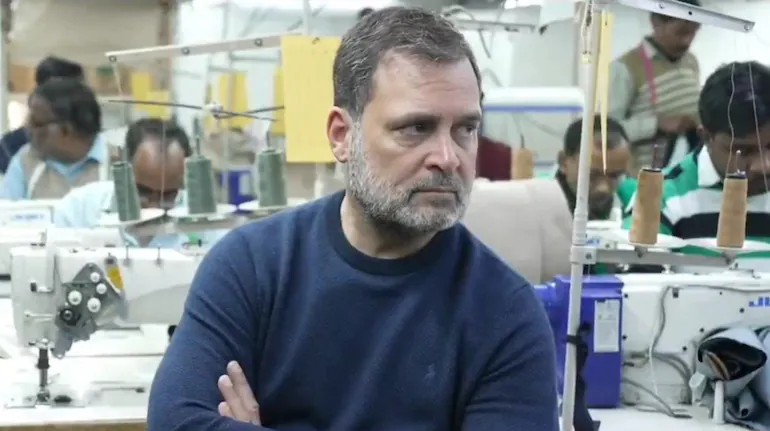
Congress leader and Leader of Opposition in the Lok Sabha Rahul Gandhi is scheduled to visit the United States next week, where he will participate in two fireside conversations at Columbia University and the University of Chicago. The discussions will focus on global student movements, democracy, education, employment, geopolitics and international affairs.
Indian Overseas Congress chief Sam Pitroda confirmed the engagements in an interview with PTI from Chicago. He said the two university programmes had been planned well in advance and would be the main reasons for Gandhi’s visit.
The first conversation is scheduled for November 17 at Columbia University in New York, where Gandhi will discuss the growing influence of student movements around the world. The second event will take place on November 18 at the University of Chicago, where he is expected to discuss geopolitics and global affairs with Professor Robert Pape.
The visit has also drawn political attention in India, with the BJP criticising Gandhi’s practice of raising domestic issues during overseas engagements. Pitroda rejected that criticism, arguing that political and social developments cannot be separated into strictly domestic and international conversations in an increasingly connected world.
Rahul Gandhi’s Columbia University Event on November 17
Gandhi’s first scheduled engagement will be a fireside chat at Columbia University on November 17. According to Pitroda, the discussion will examine the global rise of student movements and their growing role in political, social and democratic debates.
The conversation is expected to cover several issues affecting young people, including access to education, employment opportunities, economic conditions and environmental concerns. It will also explore how student movements are viewed in different countries, including India, and what their demands mean for democratic institutions.
Student movements have historically played an important role in shaping public debates, influencing political developments and bringing attention to issues affecting younger generations. Their demands can extend beyond university campuses to questions involving employment, economic opportunity, social justice and government accountability.
Gandhi’s discussion at Columbia is expected to examine these wider connections rather than focus exclusively on campus-level protests. The programme will provide an opportunity to discuss how young people organise around shared concerns and how their participation influences democratic conversations.
Pitroda said the event would be broadcast at an appropriate time, although he did not provide further details about the broadcast arrangements.
University of Chicago Conversation to Focus on Geopolitics
The second major engagement is scheduled for November 18 at the University of Chicago. Gandhi will participate in a conversation with Professor Robert Pape, an academic known for his work on international security, political violence and geopolitics.
Unlike the Columbia discussion, which will concentrate on student movements and democracy, the Chicago event will focus on international developments and global affairs.
Pitroda indicated that the discussion could cover geopolitical tensions, developments in the Middle East and the Iran conflict. He described Pape as having a distinctive perspective on the region and its wider international implications.
Geopolitical developments in the Middle East have consequences beyond the countries directly involved. Conflicts and diplomatic tensions can influence energy markets, international security, trade relationships and the foreign policy calculations of countries around the world.
India also has important interests in regional stability because of its economic relationships, energy requirements and the presence of Indian citizens in different parts of the region. These wider connections make international developments relevant to domestic policy discussions.
However, Pitroda did not disclose a detailed agenda or specific questions that Gandhi and Pape would address during the conversation.
Sam Pitroda Defends Rahul Gandhi’s Overseas Engagements
Gandhi’s US visit has prompted criticism from the BJP, which has repeatedly accused him of raising India’s domestic political issues during overseas engagements. The party has argued that comments about internal matters made outside the country can damage India’s image internationally.
Pitroda dismissed this criticism, describing the argument as unfounded. He said information and public debates increasingly cross national boundaries, making it difficult to treat domestic and international issues as completely separate subjects.
He argued that developments within India can have international relevance, just as global events can influence domestic political and economic conditions. According to him, political leaders should be able to discuss facts and public issues both inside and outside their countries.
Pitroda also maintained that the standard of factual accuracy should remain consistent regardless of the location in which a political discussion takes place. He said it would be inappropriate for a leader to present different versions of facts to domestic and international audiences.
Responding to allegations that Gandhi humiliates India through his overseas remarks, Pitroda argued that a few statements made abroad cannot undermine the standing of a country with a population of around 1.5 billion people.
He described open discussion and the exchange of information as necessary elements of democratic engagement, saying that conversations about public issues should be possible both nationally and internationally.
Why the BJP Has Criticised Gandhi’s Foreign Visits
The political disagreement over Gandhi’s overseas engagements reflects a broader debate about how Indian political leaders should discuss domestic affairs on international platforms.
The BJP has previously criticised Gandhi for comments made during visits abroad, arguing that opposition leaders should avoid statements that could be interpreted as questioning India’s democratic institutions or national interests before foreign audiences.
The Congress, meanwhile, has defended Gandhi’s international interactions as part of the role played by opposition leaders in presenting their perspectives and engaging with global institutions, academics and communities.
Pitroda’s latest remarks follow this broader Congress position. He argued that India cannot remain disconnected from international discussions, particularly when subjects such as democracy, education, employment and geopolitics affect countries across the world.
The disagreement is political in nature, and the two parties have different interpretations of the purpose and impact of Gandhi’s overseas comments. His upcoming university engagements are expected to provide another opportunity for these competing positions to feature in public debate.
Pitroda Calls Gandhi a Global Leader
Defending the importance of Gandhi’s international engagements, Pitroda described the Congress leader as a global leader and argued that India needs political figures who can maintain connections with the wider world.
He said there were relatively few young leaders internationally who could participate in global discussions on major political and social issues. He also highlighted India’s position as the world’s largest democracy, arguing that its democratic experience has significance beyond its borders.
Pitroda described engagement with the international community as a responsibility, particularly when discussions involve democracy, political participation and global developments.
His remarks suggest that the Congress views Gandhi’s university appearances as more than routine political events. The party is presenting them as opportunities to engage with students, academics and international audiences on subjects that extend beyond Indian domestic politics.
What Rahul Gandhi’s US Visit Could Mean for Congress’s International Outreach
The two scheduled university conversations place education, youth participation and international affairs at the centre of Gandhi’s upcoming US engagements. They also reflect the Congress’s effort to maintain connections with academic institutions and international audiences.
The Columbia event will give particular attention to student movements and the relationship between young people and democratic institutions. Discussions about education, employment, the economy and the environment are likely to connect with concerns shared by students in several countries.
The University of Chicago conversation will take a different direction by examining international security and geopolitical developments. The participation of Professor Robert Pape provides an academic setting for discussing global affairs and the strategic questions surrounding conflicts and regional tensions.
For Gandhi, the visit will also come amid continuing political disagreements at home over the role of opposition leaders in international forums. While the BJP has questioned his overseas remarks, Pitroda has defended the importance of open discussions across national borders.
The two events are scheduled for November 17 and 18. Their discussions and any subsequent broadcast could draw attention from Indian audiences interested in Gandhi’s views on student politics, democracy and international relations.
For breaking news and live news updates, like us on Facebook or follow us on Twitter and Instagram. Read more on Latest India on thefoxdaily.com.





COMMENTS 0