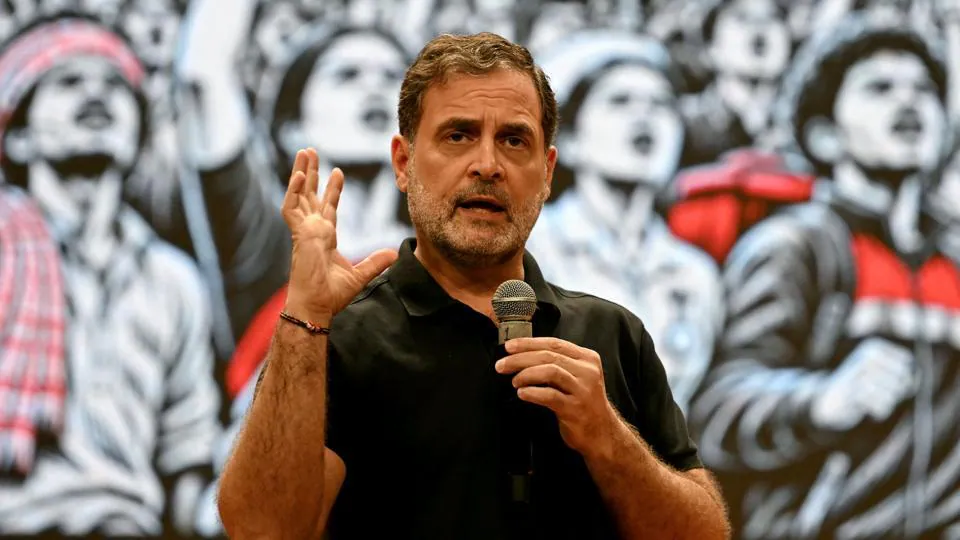
Leader of Opposition Rahul Gandhi has launched a sharp attack on the Centre’s proposed delimitation exercise, alleging that Prime Minister Narendra Modi wants a “blank cheque to redraw India’s constituencies” through legislation that could expand the Lok Sabha to a maximum of 850 seats. Congress president Mallikarjun Kharge has also accused the BJP of using the proposed expansion to consolidate political power, warning that the interests of Scheduled Castes (SCs) and Scheduled Tribes (STs) have not been adequately protected.
The criticism came on Saturday, November 28, 2026, as the INDIA bloc prepared to oppose the Constitution (132nd Amendment) Bill, 2026, and the accompanying Delimitation (Second) Bill ahead of Parliament’s special sitting beginning November 30. The revised legislative package proposes a uniform 50 per cent increase in Lok Sabha seats across states and Union Territories, alongside changes intended to facilitate the implementation of one-third reservation for women.
Gandhi argued that the proposed expansion would give the ruling BJP greater influence over the redrawing of electoral constituencies. He questioned why the government needed to increase the Lok Sabha’s strength to 850 when women’s reservation could, in his view, be implemented within the existing 543 elected seats.
The opposition’s campaign faces an additional challenge because the Dravida Munnetra Kazhagam (DMK) and the Nationalist Congress Party-Sharadchandra Pawar (NCP-SP) have backed the revised proposal, creating differences within the INDIA bloc ahead of the parliamentary debate.
Rahul Gandhi Calls 850-Seat Proposal a Threat to Democracy
Addressing a press conference in New Delhi, Gandhi accused the government of using the proposed expansion of Parliament to gain greater control over India’s electoral map. He described the proposed 850-seat Lok Sabha as a mechanism that could allow the ruling party to influence constituency boundaries to its political advantage.
“They want 850 seats. Narendra Modi wants a blank cheque to redraw India’s constituencies,” Gandhi said.
He also claimed that the BJP had lost ground in the 2024 general election and was looking for a new political strategy. Referring to allegations of electoral irregularities, Gandhi said the opposition had made progress in challenging what it calls “Vote Chori”, or electoral manipulation.
“So I am telling you that this number 850 is the number meant to finish off your future,” he said, urging citizens, particularly younger voters, to oppose what he described as an attempt to weaken democratic institutions.
Gandhi further alleged that the proposed delimitation framework could allow constituency boundaries to be redrawn in ways that weaken the representation of communities opposed to the BJP and target individual opposition leaders. These are political allegations made by the Congress leader; the government has presented the legislation as a framework for expanding representation and implementing women’s reservation.
He also questioned the composition of the proposed Delimitation Commission, arguing that the involvement of the Election Commission and the selection process for other members could give the Centre excessive influence over the exercise.
Rahul Gandhi Questions Election Commission’s Role in Delimitation
A major part of Gandhi’s criticism focused on the proposed role of Chief Election Commissioner Gyanesh Kumar and the Election Commission of India in the delimitation process.
Under the proposed framework, the delimitation exercise would be conducted by a commission whose composition has become a point of political disagreement. Gandhi alleged that the Election Commission had been “captured” and claimed that the proposed arrangement would give the BJP-led government excessive influence over constituency redrawing.
He also questioned provisions concerning the legal challengeability of the commission’s decisions, arguing that the proposed arrangement could limit judicial scrutiny of the process.
The Congress leader referred to previous delimitation exercises in Jammu and Kashmir and Assam to support his concerns about how constituency boundaries could affect political representation. He alleged that the proposed exercise could be used to reshape electoral constituencies in favour of the ruling party.
These claims form part of the opposition’s argument against the proposed commission. The actual impact of the new framework will depend on the legislation passed by Parliament, the commission’s final composition and the decisions taken during the delimitation process.
Mallikarjun Kharge Accuses BJP of Seeking to Retain Power Indefinitely
Congress president Mallikarjun Kharge echoed Gandhi’s criticism after a meeting of INDIA bloc leaders at his residence in New Delhi. He accused the BJP of attempting to use the constitutional amendment to consolidate political power and weaken democratic competition.
Kharge described the proposed expansion as an attempt to move from the BJP’s earlier election slogan of “400 paar” to “800 paar”, referring to the proposed maximum Lok Sabha strength of 850 seats.
“All the leaders of our INDIA alliance have collectively determined that the Constitutional Amendment Bill being introduced by the Modi government poses a grave threat to democracy,” Kharge said.
He further alleged that the government wanted to increase its political advantage by expanding Parliament and controlling the process through which constituencies would be redrawn.
“Now, by increasing the number of seats to 850, they seek to seize and retain power indefinitely,” he said.
Kharge’s remarks reflect the Congress leadership’s central objection: the opposition does not accept that the proposed increase in seats is necessary to implement women’s reservation and believes the delimitation provisions could have wider consequences for electoral representation.
Congress Raises Concerns Over SC and ST Representation
Kharge also argued that the proposed constitutional amendment does not adequately address the interests of Scheduled Castes and Scheduled Tribes. He said the allocation of reserved seats for these communities should reflect their respective populations within each state.
According to the Congress president, the number of seats reserved for SC and ST communities should increase in line with changes in their population. He criticised the proposed framework for not providing what he described as sufficient safeguards for their representation.
Kharge also questioned why the government was proposing to use the 2011 Census for the delimitation exercise when the next Census was approaching. He argued that the latest available population data should be considered before decisions are taken on constituency allocation.
“If they were to base the allocation on the latest census data, the SC/ST communities would naturally be entitled to more seats, reflecting their increased population,” Kharge said.
The Congress has therefore linked its opposition to two concerns: the political implications of redrawing constituency boundaries and the adequacy of representation for historically disadvantaged communities.
The debate over reserved constituencies is particularly significant because the proposed expansion is being presented as part of the implementation of women’s reservation. The question of how seats reserved for women will interact with existing SC and ST reservations is likely to remain an important part of the parliamentary discussion.
INDIA Bloc Plans Outreach to Stalin and Sharad Pawar
The INDIA bloc’s strategy meeting at Kharge’s residence focused on building a common position against the proposed legislation. Leaders discussed the need to reach out to DMK president MK Stalin and NCP-SP chief Sharad Pawar, whose parties have supported the revised proposal.
A senior opposition leader who attended the meeting said the participants wanted to explain what they believe could be the consequences of the Bill. The possibility of sending small delegations to Chennai and Mumbai was also discussed.
“All leaders discussed the need to reach out to Stalin and Pawar and to brief them about the disastrous consequences of the bill. It was also discussed that a small team of leaders should be sent to both Chennai and Mumbai,” the leader said.
Congress communication chief Jairam Ramesh briefed the meeting on the proposed legislation. Abhishek Banerjee of the All India Trinamool Congress reportedly suggested that the bloc should continue its opposition and explore all possible ways to stop the Bill.
The meeting was attended by senior Congress leaders, including Rahul Gandhi and Kharge, along with representatives of other opposition parties. The absence of the DMK and NCP-SP highlighted the divisions that have emerged over the revised delimitation proposal.
The DMK had left the INDIA alliance in June, while NCP-SP leader Supriya Sule did not attend the Saturday meeting. Their parties’ support for the legislation has complicated the opposition’s effort to present a united parliamentary position.
Rahul Gandhi Appeals to NDA Allies to Examine the Bill
Gandhi also sought support beyond the INDIA bloc, indicating that the Congress wanted regional parties within the ruling National Democratic Alliance to consider the implications of the proposed legislation.
When asked about the DMK’s absence from the opposition meeting, he said the Congress wanted every party, including NDA allies such as the Telugu Desam Party (TDP), to consider what was at stake for the country.
“We want everyone, including those in NDA like TDP, to think about India. How to protect India?” Gandhi said.
His appeal reflects the Congress strategy of framing delimitation as a question of constitutional structure and federal representation rather than simply a confrontation between the ruling alliance and opposition parties.
Whether NDA partners share the Congress’s concerns remains to be seen. The government has argued that its revised proposal offers a uniform increase in representation across states and protects their relative shares, while the opposition continues to question the need for the proposed expansion and the authority of the delimitation process.
Amit Shah Appeals to Samajwadi Party to Support the Legislation
Union Home Minister Amit Shah made an indirect appeal to the Samajwadi Party on Saturday, highlighting the potential benefits of the proposed expansion for Uttar Pradesh.
Shah argued that the legislation would allow the state to increase its representation in the legislative assembly without being divided, while also providing one-third reservation for women. He said the proposed changes could improve local representation and help governments formulate plans based on regional needs.
“This will help in formulating plans tailored to local needs and accelerating development,” Shah said, adding that the proposal would strengthen governance and public participation.
He urged political parties in Uttar Pradesh to welcome and support the legislation. His remarks came as the government sought to build wider political backing for the revised package before it is considered in Parliament.
The appeal also reflects the political importance of Uttar Pradesh, which has the largest number of Lok Sabha seats among Indian states. Any expansion of legislative representation in the state is likely to feature prominently in the debate over the proposed changes.
Shiv Sena (UBT) Questions NCP-SP’s Change of Position
The support extended by NCP-SP has also drawn criticism from other opposition parties. Shiv Sena (UBT) MP Arvind Sawant questioned why the party had changed its position after opposing the earlier version of the legislation.
“They had protested against this very bill last time. What happened this time, their party will have to explain, we do not know. What major change did they suddenly feel?” Sawant said.
He cautioned against judging the proposal only by the increase in the number of seats, arguing that the broader implications of the delimitation framework needed to be examined.
His comments underline a wider disagreement within the opposition over whether the revised proposal offers sufficient safeguards to justify support. Parties backing the legislation have pointed to the proposed uniform increase in seats and protections for the relative distribution of representation, while critics argue that constituency boundaries and the composition of the commission remain major concerns.
What Is the Congress Demanding Instead?
The Congress has outlined three principal demands as an alternative to the government’s proposed framework. Deputy Leader of the Congress in the Lok Sabha Gaurav Gogoi said the party wanted the existing strength of the House to remain unchanged and women’s reservation to be implemented within that structure.
The three demands are:
- Retain the existing Lok Sabha strength: The current strength of 543 elected seats should not be increased as part of the proposed exercise.
- Implement women’s reservation within existing seats: The one-third quota should be introduced using the current strength of the Lok Sabha.
- Protect the share of states: The proportion of Lok Sabha seats allocated to each state should remain unchanged for the next 25 years.
Gogoi argued that the government was using women’s reservation as a reason to introduce a wider delimitation exercise that the Congress does not support.
“The Congress’ demand has been clear from the beginning: the current strength of the Lok Sabha should be maintained. Second, 33% women’s reservation should be implemented based on the current strength. Third, the proportion of seats held by various states in the Lok Sabha should be frozen for the next 25 years,” he said.
The Congress position is that the women’s quota and constituency redrawing should not necessarily be treated as inseparable processes. It argues that the reservation framework can be implemented without increasing the Lok Sabha’s total strength to 850.
Why the 132nd Constitution Amendment Bill Is Different From the Earlier Proposal
The latest confrontation follows the failure of the earlier Constitution (131st Amendment) Bill, 2026, which was introduced alongside two related pieces of legislation in April. That proposal did not secure the required two-thirds majority in the Lok Sabha and could not proceed.
The revised package approved by the Union Cabinet on November 27 includes the Constitution (132nd Amendment) Bill and the Delimitation (Second) Bill. It proposes a uniform 50 per cent increase in the number of Lok Sabha seats allocated to every state and Union Territory at the first delimitation conducted after the constitutional amendment comes into force.
The proposed maximum strength of the Lok Sabha would rise to 850 seats, comprising up to 815 seats for states and 35 for Union Territories. The revised framework also proposes increasing the upper limit on the strength of state legislative assemblies.
Unlike the earlier proposal, the revised framework seeks to preserve the existing relative distribution of Lok Sabha seats among states while increasing the total number of seats. However, constituencies within states would still be subject to delimitation, which is one of the central issues raised by the opposition.
The government has linked these changes to the implementation of one-third reservation for women in the Lok Sabha and state assemblies. The opposition, however, maintains that the quota can be implemented without the proposed expansion and has questioned the use of the 2011 Census for redrawing constituencies.
Delimitation Bill to Be Taken Up During Parliament’s Special Sitting
The Lok Sabha is scheduled to reconvene on November 30, when the government plans to introduce the revised delimitation-linked constitutional amendment and related legislation.
A bulletin issued by the Lok Sabha on Saturday stated that the President had recommended consideration of the proposed Delimitation (Second) Bill, 2026, under Article 117(3) of the Constitution.
The special parliamentary sitting is scheduled to run from November 30 to December 3, with the Rajya Sabha expected to reconvene separately on December 2. The government intends to move the revised bills during this period.
The constitutional amendment will require a special majority in Parliament. This means the government will need the support of at least two-thirds of members present and voting, in addition to the constitutionally prescribed majority of the total membership of each House. Ratification by at least half of the state legislatures will also be required if the amendment affects provisions covered by Article 368’s state-ratification requirement.
The earlier failure of the 131st Amendment Bill demonstrated the difficulty of securing the necessary parliamentary numbers. The revised proposal now faces another major test, with the opposition preparing to challenge its provisions and regional parties taking different positions.
Delimitation Debate Could Reshape India’s Federal Representation
The dispute over the 132nd Constitution Amendment Bill goes beyond the proposed increase in the number of MPs. At its centre is a debate about how India’s electoral map should be redrawn, who should oversee the process and how the relative political representation of states and communities should be protected.
For the government, the revised package is intended to expand representation and create the framework for implementing women’s reservation across legislative bodies. For the Congress and several opposition parties, the same package raises questions about the use of population data, the authority of the proposed delimitation commission and the potential consequences for democratic representation.
The support of the DMK and NCP-SP has also exposed differences within the INDIA bloc, even as Congress leaders attempt to persuade the parties to reconsider their positions. Meanwhile, the government’s outreach to parties such as the Samajwadi Party and NDA allies indicates that support for the legislation remains a major political priority.
With Parliament set to take up the revised proposals on November 30, the coming debate will determine whether the government can secure the required constitutional majority. It will also test whether the competing concerns over women’s representation, federal balance, reserved constituencies and the delimitation process can be addressed through the proposed legislation.
For breaking news and live news updates, like us on Facebook or follow us on Twitter and Instagram. Read more on Latest India on thefoxdaily.com.





COMMENTS 0