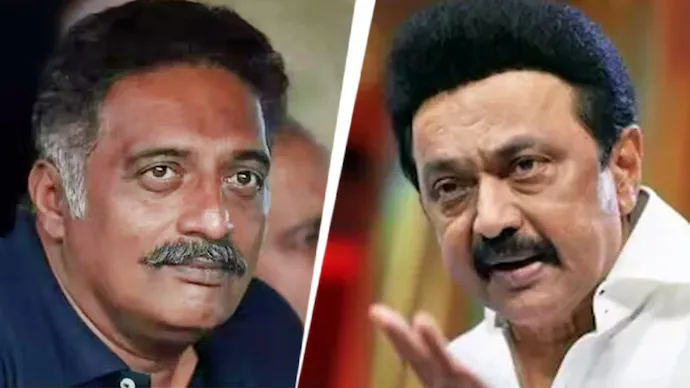
Actor Prakash Raj has criticised the Dravida Munnetra Kazhagam (DMK) for deciding to support the Centre’s revised Delimitation Bill, urging party president and Tamil Nadu Chief Minister MK Stalin to reconsider the decision. Calling the BJP-backed proposal “very dangerous”, Raj questioned why a party that has consistently raised concerns about delimitation and defended federalism was now prepared to support the legislation.
His appeal came on Saturday, November 28, 2026, just hours after the DMK passed a resolution backing the revised Bill ahead of the special Parliament sitting beginning Monday. Raj accused the party of taking a selfish decision and betraying the people, arguing that its new position contradicted its earlier opposition to the delimitation exercise.
The controversy centres on the DMK’s claim that the Centre has provided written assurances protecting Tamil Nadu’s share of representation in the Lok Sabha. Stalin has said the party’s support is based on two conditions: preserving the state’s existing 7.18 per cent share of Lok Sabha seats and protecting the balance of representation among states for another 25 years.
Prakash Raj Calls DMK’s Decision a Betrayal
In a video shared on X, Prakash Raj directly appealed to Stalin to withdraw or reconsider the DMK’s support for the revised Delimitation Bill. He argued that the legislation could have serious consequences for the country’s federal structure and questioned the political reasoning behind the party’s change in position.
“In the interest of the nation, please reconsider your support to the Delimitation Bill,” Raj said.
Describing the BJP-backed proposal as “very dangerous”, the actor questioned why the DMK was willing to support a measure it had previously challenged. He also accused the party of abandoning the concerns it had raised about the potential consequences of delimitation.
“This is a selfish decision,” Raj said, accusing the DMK of betraying the people. He appealed directly to Stalin to rethink the party’s position before Parliament takes up the legislation.
His criticism adds a prominent public voice to the opposition within sections of Tamil Nadu’s political and public discourse. The central disagreement is not simply about increasing the number of parliamentary seats, but about whether the proposed safeguards adequately protect states that have raised concerns about changes to political representation.
Why Has the DMK Decided to Support the Delimitation Bill?
Stalin has defended the DMK’s revised position by saying the Centre has put the party’s two key demands in writing. The first is that Tamil Nadu must retain its existing 7.18 per cent share of Lok Sabha seats even after the proposed expansion of Parliament.
The second demand is that the existing balance of representation among states should remain protected for another 25 years. The DMK has argued that these assurances address its concerns about the possibility of states losing political influence because of changes in parliamentary seat allocation.
The party’s position is based on the distinction between increasing the overall strength of the Lok Sabha and changing the relative share of seats held by individual states. If the House expands while Tamil Nadu’s proportional representation is protected, the state could receive additional seats without losing its existing share of national representation.
For the DMK, the written assurances have become the basis for supporting the revised proposal. Stalin’s argument is that the party’s position has changed because the Centre has addressed the specific conditions it had demanded, rather than because it has abandoned its concerns about federalism.
What Does the Revised Delimitation Package Propose?
The revised legislative package proposes a uniform 50 per cent increase in the number of seats in the Lok Sabha and state legislative assemblies. The expansion is linked to the implementation of the constitutional provision reserving one-third of seats for women in Parliament and state assemblies.
Under the proposal, the Lok Sabha’s strength would increase from its current 543 elected seats to roughly 815 seats for states, with additional provision for Union Territories. The revised allocation is intended to increase representation while broadly preserving the existing distribution of seats among states.
The package also proposes keeping the revised seat allocations and constituency boundaries in place until 2051. This provision is intended to provide a longer period of stability after the delimitation exercise.
However, the details of the legislation and the precise wording of its safeguards remain central to the political debate. The distinction between protecting a state’s share of seats and freezing the boundaries of individual constituencies is particularly important. A guarantee of relative representation does not automatically mean that every existing constituency will remain unchanged.
Why Tamil Nadu Has Been Concerned About Delimitation
Tamil Nadu’s concerns stem from the wider debate over how parliamentary constituencies should be distributed among states. Delimitation determines the boundaries and allocation of legislative constituencies, and changes to the distribution of seats can influence the relative political weight of different regions in Parliament.
States that have raised concerns argue that a population-based approach could disadvantage those that have made progress in controlling population growth. Southern states, including Tamil Nadu, have repeatedly sought assurances that their contribution to national development and demographic management will not result in a reduction in their share of parliamentary representation.
For the DMK, protecting Tamil Nadu’s 7.18 per cent share has therefore been a central political demand. The party has framed the issue as one of federal balance, arguing that states should not lose influence in national decision-making because of demographic differences.
The revised proposal’s promise to preserve the relative share of seats for 25 years is intended to address this concern. Whether the written safeguards fully satisfy the DMK’s original demands is now at the heart of the disagreement between Stalin and critics such as Prakash Raj.
DMK MPs Had Opposed the Earlier Constitutional Amendment
The party’s latest decision has attracted attention because of its earlier parliamentary position. All 22 DMK members of the Lok Sabha voted against the Centre’s previous constitutional amendment in April.
The earlier opposition reflected the party’s concerns about the proposed delimitation framework and its potential implications for Tamil Nadu’s representation. The revised package, however, has prompted a change in the party’s approach after Stalin said the Centre had accepted its demands in writing.
The shift has created a political challenge for the DMK. While the leadership argues that the revised assurances justify support, critics are questioning whether the party should trust the Centre’s commitments and whether the proposed protections are sufficiently detailed and enforceable.
Prakash Raj’s intervention highlights this tension. His appeal is aimed at persuading Stalin to maintain the position the DMK had previously taken rather than accept the revised arrangement.
DMK Support Could Matter for the Centre’s Two-Thirds Majority
The DMK’s position could carry significance in Parliament because the BJP-led government needs a two-thirds majority among members present and voting to pass the constitutional amendment. Support from regional parties may therefore become important as the government seeks the required numbers.
The party’s 22 Lok Sabha MPs could contribute to the government’s effort to secure the necessary majority. Their earlier opposition in April had been part of the resistance to the previous proposal, making the revised position politically consequential.
However, the final outcome will depend on the strength of support across parties and the number of members present and voting. The DMK’s decision alone does not guarantee passage of the legislation.
Prakash Raj’s Appeal Puts Stalin Under Political Pressure
Raj’s appeal places the DMK leadership under pressure to explain why it believes the revised Bill is acceptable after months of opposition to the delimitation framework. His criticism also raises a broader question about how regional parties should respond when the Centre offers written assurances on issues involving federal representation.
Stalin’s position is that the DMK has secured protection for Tamil Nadu’s parliamentary share and the balance among states. Raj, by contrast, believes the party should reconsider its support because the proposal remains dangerous and conflicts with its earlier stand.
The disagreement reflects two competing approaches to the same issue: accepting revised safeguards as a political achievement or maintaining opposition until the wider concerns about delimitation and federalism are resolved.
With Parliament scheduled to take up the revised package during the special sitting beginning Monday, the DMK’s decision and the reaction to it are likely to remain under close scrutiny. Whether Stalin reconsiders the party’s position or proceeds with support will be significant not only for the legislation but also for the political debate over federal representation in India.
For breaking news and live news updates, like us on Facebook or follow us on Twitter and Instagram. Read more on Latest India on thefoxdaily.com.






COMMENTS 0