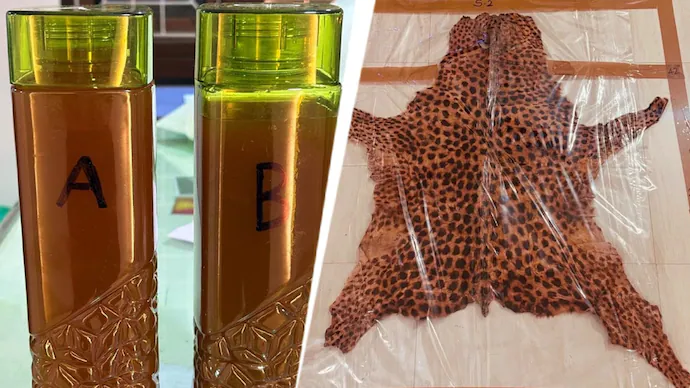
The Directorate of Revenue Intelligence (DRI) has arrested six people and seized approximately two litres of suspected King Cobra venom, three big cat skins and an air rifle in two separate operations targeting alleged wildlife trafficking networks in Maharashtra. The seizures were carried out in Pune and Navi Mumbai on November 25 and 26, 2026, following intelligence inputs about the illegal sale of protected wildlife products, including transactions allegedly arranged through social media.
The two operations, named ‘Operation Venom Shield’ and ‘Operation Feline Vigil’, uncovered separate alleged trafficking activities involving snake venom and protected animal skins. In the first case, three people were apprehended near the Indrayani River on the outskirts of Pune. In the second, DRI officers recovered suspected tiger, leopard and cheetah skins from locations in the Panvel and Navi Mumbai areas.
All six individuals and the seized materials were handed over to the Maharashtra Forest Department for further investigation and legal action. The suspected species involved enjoy the highest level of protection under India’s wildlife legislation, making the alleged possession and trade of their body parts a serious conservation and law-enforcement concern.
Operation Venom Shield: Two Litres of Suspected King Cobra Venom Seized Near Pune
The first operation, codenamed ‘Operation Venom Shield’, targeted an alleged network involved in the illegal trade of snake venom. According to the government release, DRI officers received intelligence that a stock trader-turned-social media influencer was allegedly participating in the trade of venom.
Investigators placed the suspect under surveillance on November 25, when he was expected to meet a middleman and a prospective buyer during a Kartik Purnima religious gathering on the outskirts of Pune.
The meeting was taking place near the Indrayani River, where officers had to navigate dense crowds and difficult terrain to reach the suspects. The interception followed a prolonged foot chase, after which all three individuals were apprehended.
A search led to the recovery of two bottles containing approximately two litres of a substance suspected to be King Cobra venom. The scientific identity and composition of the seized material will require confirmation through appropriate examination.
The operation also involved an injury to one DRI officer. According to the government release, the officer was injured following a spillover of the suspected venom during the chase.
The three apprehended individuals and the recovered substance were subsequently handed over to the Maharashtra Forest Department, which will investigate the alleged trafficking activity and determine the next legal steps.
Operation Feline Vigil: Suspected Tiger, Leopard and Cheetah Skins Recovered
In a separate operation named ‘Operation Feline Vigil’, DRI officers targeted an alleged wildlife trafficking network operating through social media in Navi Mumbai.
Acting on specific intelligence, officers intercepted a suspect in the Panvel area on November 26. A search of a bag allegedly carried by the individual resulted in the recovery of two animal skins suspected to belong to a tiger and a leopard.
The investigation then led officers to a residential complex in Navi Mumbai. Two women were allegedly found in possession of another animal skin suspected to belong to a cheetah.
The three recovered skins were identified provisionally as belonging to three protected big cat species:
- Tiger: Panthera tigris.
- Leopard: Panthera pardus.
- Cheetah: Acinonyx jubatus.
Officers also recovered a .177-calibre (4.5 mm) break-barrel air rifle, Model 23, from the residential premises. A preliminary examination reportedly indicated that the suspected leopard skin had a gunshot wound that may have been inflicted using the recovered rifle.
The alleged connection between the weapon and the skin remains a matter for investigation. A preliminary examination does not by itself establish when the animal was killed, who was responsible or whether the recovered rifle was used in the incident.
The three people apprehended during this operation, along with the skins, air rifle and other seized materials, were handed over to the Maharashtra Forest Department for further inquiry.
Social Media Allegedly Used to Facilitate Wildlife Trafficking
One of the significant aspects of the two operations is the alleged use of social media to facilitate illegal wildlife trade. The DRI said its intelligence inputs pointed to attempts to sell animal venom and protected wildlife trophies through online platforms.
Social media can allow sellers and prospective buyers to make initial contact without meeting in public or operating through conventional marketplaces. Alleged trafficking networks may use online accounts to advertise wildlife products, identify interested buyers and arrange private exchanges.
In the Pune operation, investigators were monitoring an alleged meeting involving a suspected venom trader, a middleman and a prospective buyer. In Navi Mumbai, the DRI said it had targeted a network allegedly operating through social media.
However, the government release does not identify the specific platforms involved, provide details of online advertisements or disclose how many potential buyers or sellers may have been connected to the alleged networks. Those details may emerge as the Forest Department examines the seized materials and investigates the individuals involved.
The alleged online activity also highlights a challenge for wildlife enforcement agencies: illegal trade can involve both physical possession of protected animal products and digital communication used to arrange transactions. Investigations may therefore require examination of seized devices, account records and communications, subject to applicable legal procedures.
King Cobra, Tiger, Leopard and Cheetah Receive Schedule I Protection
The species involved in the seizures are listed under Schedule I of the Wild Life (Protection) Act, 1972, which provides them with the highest degree of legal protection under India’s wildlife law.
The King Cobra (Ophiophagus hannah), tiger, leopard and cheetah are protected against unauthorised hunting, capture, possession and trade. The law also restricts dealings in their derivatives, body parts and trophies.
These protections are intended to prevent the exploitation of threatened wildlife and discourage commercial markets that create incentives for poaching and illegal capture. The possession or sale of protected animal products without lawful authorisation can attract serious legal consequences.
For investigators, establishing the species involved is an important part of the case. Scientific examination can help confirm whether a recovered skin or substance comes from a protected animal and provide evidence relevant to any alleged offence.
Why the Seizures Matter for Wildlife Conservation
Wildlife trafficking can damage biodiversity by creating financial incentives to kill, capture or exploit protected animals. The illegal trade in skins and other animal products can encourage poaching, while the sale of venom can create additional risks involving the capture and handling of dangerous species.
Big cats such as tigers and leopards play important roles in their ecosystems. Their loss can affect ecological balance, while the illegal removal of animals from the wild can place additional pressure on already vulnerable populations.
Cheetahs also receive legal protection in India, and any suspected trade in their skins requires careful investigation to establish the animal’s origin and the circumstances of its death. The recovery of a suspected cheetah skin in Navi Mumbai does not, on its own, establish where the animal came from or whether it was killed in India.
Similarly, the recovery of suspected King Cobra venom does not establish the number of snakes involved or the circumstances in which the venom was obtained. Those questions will require further investigation and scientific assessment.
Six Arrested as Maharashtra Forest Department Continues Investigation
The two operations resulted in the apprehension of six people in total. Three individuals were caught during the Pune operation involving suspected King Cobra venom, while three others were apprehended during the investigation into the suspected big cat skins in the Panvel and Navi Mumbai areas.
The DRI transferred the individuals and seized materials to the Maharashtra Forest Department for further investigation and legal action. The department will need to examine the suspected wildlife products, establish their origins and investigate the alleged trafficking arrangements.
The authorities have not disclosed the identities of the arrested individuals, the precise value of the seized materials or whether further arrests are expected. The available information also does not establish whether the two alleged networks were connected.
The DRI described the back-to-back operations as part of its efforts to dismantle organised wildlife crime networks and protect India’s biodiversity. The investigations will now be important in determining the extent of the alleged trafficking activities and identifying any additional people involved.
Investigation to Establish the Origin of the Seized Wildlife Products
The recovery of approximately two litres of suspected King Cobra venom, three suspected big cat skins and an air rifle has brought two alleged wildlife trafficking activities under investigation in Maharashtra. While the seizures represent a significant enforcement action, the final findings will depend on forensic examination and evidence gathered by the Forest Department.
Authorities will need to establish the identity and origin of the recovered materials, determine how they were obtained and examine whether the suspects were involved in organised buying or selling arrangements. The investigation into the suspected gunshot wound on the leopard skin may also help clarify whether the recovered air rifle has any connection to the animal’s death.
For now, the two operations highlight the continuing challenge of preventing illegal wildlife trade through both physical networks and online platforms. The enforcement action has disrupted the alleged activities and brought six people into the investigation, but the full scale of the networks and their links, if any, remain to be established.
For breaking news and live news updates, like us on Facebook or follow us on Twitter and Instagram. Read more on Latest India on thefoxdaily.com.





COMMENTS 0