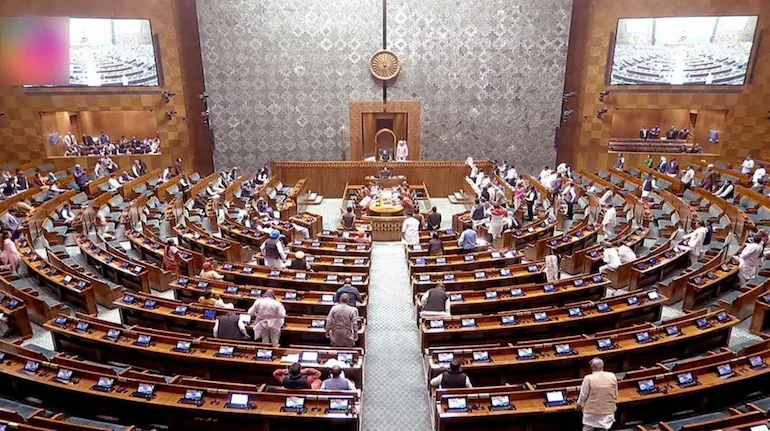
The Lok Sabha is scheduled to consider and pass three key legislative proposals on Monday, December 1, 2026, as the Centre moves ahead with its revised plan to implement one-third reservation for women in Parliament, state assemblies and the legislative assemblies of select Union Territories. The legislative package includes the Constitution (132nd Amendment) Bill, 2026, the Delimitation (Second) Bill, 2026, and the Union Territories Laws (Amendment) Second Bill, 2026.
According to the List of Business issued on Saturday, Law Minister Arjun Ram Meghwal will move the Constitution amendment and revised delimitation bills for consideration and passage. Union Home Minister Amit Shah will move the revised legislation dealing with Union Territory laws.
The government’s agenda also includes withdrawing two earlier bills introduced in the Lok Sabha on April 16: the original Delimitation Bill, 2026, and the Union Territories Laws (Amendment) Bill, 2026. The Centre plans to replace them with revised versions, which will be considered alongside the constitutional amendment.
The proposed legislation is significant because it connects the implementation of Women’s Reservation with changes to parliamentary and assembly representation. It also brings Delhi, Jammu and Kashmir and Puducherry into the legislative framework through amendments to the laws governing their elected assemblies.
Which Three Bills Will the Lok Sabha Consider on Monday?
The three bills listed for consideration and passage form a connected legislative package. While the Constitution amendment provides the constitutional framework, the revised delimitation and Union Territory bills establish the legal arrangements needed to implement the proposed changes across different legislatures.
- Constitution (132nd Amendment) Bill, 2026: Seeks to facilitate the implementation of women’s reservation in legislative bodies.
- Delimitation (Second) Bill, 2026: Provides for implementing women’s reservation in the Lok Sabha, state assemblies and Union Territory legislatures, alongside the readjustment of seat allocation and constituency boundaries.
- Union Territories Laws (Amendment) Second Bill, 2026: Proposes amendments to the laws governing Delhi, Jammu and Kashmir and Puducherry to extend the women’s reservation framework to their legislative assemblies.
The government intends to take up all three bills together. This approach reflects their interdependence: the constitutional amendment establishes the broader legal basis, while the accompanying legislation addresses the delimitation process and the specific legal provisions applicable to Union Territories.
Government to Withdraw Earlier Delimitation and Union Territory Bills
Before introducing the revised proposals, the government plans to withdraw the original Delimitation Bill, 2026, and the Union Territories Laws (Amendment) Bill, 2026. Both were introduced in the Lok Sabha on April 16.
The withdrawal is part of the government’s revised legislative approach. Instead of proceeding with the earlier versions, the Centre will introduce replacement bills alongside the Constitution (132nd Amendment) Bill.
The revised legislation is expected to provide the framework required to connect women’s reservation with the proposed changes in legislative representation. The decision to replace the earlier bills also means that MPs will consider the updated provisions rather than simply resume discussion on the original proposals.
The exact implications of the revised wording will depend on the provisions ultimately passed by Parliament. The introduction of replacement bills does not, by itself, mean that the proposed changes have become law.
What Does the Delimitation (Second) Bill Propose?
The Delimitation (Second) Bill, 2026, is intended to facilitate women’s reservation in the Lok Sabha, state legislative assemblies and Union Territory legislatures. It also provides for readjusting the allocation of seats and delimiting constituencies as part of the proposed implementation process.
Delimitation refers to the process of determining the boundaries of electoral constituencies and, where applicable, adjusting the distribution of seats. It is an important part of the legislative package because the introduction of reserved constituencies requires a framework for identifying the seats in which women will be elected under the quota.
The proposal therefore involves more than simply reserving a fixed number of existing seats. It links the implementation of the women’s quota with changes to the structure and allocation of legislative representation.
The issue has generated considerable political debate, particularly over the potential impact of delimitation on the relative representation of different states. Several southern states have expressed concerns about protecting their existing share of Lok Sabha seats, arguing that changes in population-based representation should not reduce their influence in Parliament.
The revised legislative package has consequently become a major political issue, with parties debating both women’s representation and the federal balance between states.
Why Are Delhi, Jammu and Kashmir and Puducherry Included?
The third bill, the Union Territories Laws (Amendment) Second Bill, 2026, deals specifically with the implementation of women’s reservation in Union Territories that have legislative assemblies.
It proposes amendments to three existing laws:
- Government of Union Territories Act, 1963: The legislation governing the administration and legislative framework of Puducherry.
- Government of National Capital Territory of Delhi Act, 1991: The law governing the functioning of Delhi’s elected legislative assembly and administration.
- Jammu and Kashmir Reorganisation Act, 2019: The legislation establishing the present administrative and legislative framework for Jammu and Kashmir.
These amendments are intended to extend the women’s reservation framework to Delhi, Jammu and Kashmir and Puducherry, which are the three Union Territories with legislative assemblies.
Including these territories is necessary because the laws governing their assemblies are distinct from the constitutional and statutory arrangements applicable to state legislatures. The proposed amendments would provide the legal basis for implementing the quota within those separate frameworks.
Why Will the Three Bills Be Taken Up Together?
Law Minister Arjun Ram Meghwal will also move a motion seeking the suspension of the application of the proviso to Rule 66 of the Lok Sabha Rules for consideration and passage of the two accompanying bills, insofar as they are dependent on the Constitution amendment bill.
The procedural motion is intended to allow the House to consider the connected proposals together rather than treating them as entirely separate legislative exercises.
All three bills listed for consideration and passage are scheduled to be taken up together. This will allow MPs to examine the constitutional framework and the supporting legislation within the same parliamentary process.
The move is particularly important because the delimitation and Union Territory amendments are linked to the constitutional changes proposed for implementing women’s reservation. Their passage and eventual implementation will depend on the relevant legislative and constitutional requirements being fulfilled.
Special Parliament Sitting to Focus on Women’s Reservation and Delimitation
The proposed consideration of the three bills forms part of the special parliamentary sitting scheduled to begin on November 30 and continue until December 3, 2026, subject to the business of the two Houses.
The government is seeking to advance the revised legislative package during this period, making the coming parliamentary discussions important for the future of women’s representation in elected institutions.
However, the bills still need to complete the required parliamentary process. The Constitution amendment must secure the special majority required for constitutional amendments, while the accompanying legislation must also pass through the applicable legislative procedures.
The government’s decision to bring revised bills has also reopened political negotiations with regional parties, particularly those concerned about the impact of delimitation on their states’ representation.
What Happens Next?
The immediate focus will be on the Lok Sabha’s consideration of the three bills on Monday. MPs will have the opportunity to debate the proposed constitutional changes, the delimitation framework and the amendments required to extend women’s reservation to the three Union Territories with legislative assemblies.
If the proposals secure the necessary support, they will move forward through the remaining constitutional and legislative procedures. Their passage would represent an important step towards implementing the one-third reservation framework, although the actual allocation of reserved constituencies would still depend on the relevant delimitation process.
The legislation therefore places two major questions before Parliament: how to expand women’s representation in elected institutions and how to carry out the associated changes without creating an imbalance in the representation of states and Union Territories.
With the government preparing to introduce the revised bills and opposition parties closely examining their provisions, Monday’s proceedings could become a defining moment in the debate over women’s reservation and delimitation in India.
For breaking news and live news updates, like us on Facebook or follow us on Twitter and Instagram. Read more on Latest India on thefoxdaily.com.





COMMENTS 0