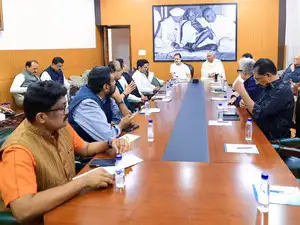
The INDIA Bloc has outlined three key demands concerning the proposed Delimitation exercise, placing the size of the Lok Sabha, the implementation of Women’s Reservation and the distribution of parliamentary seats among states at the centre of the debate. The Opposition alliance wants the current strength of the Lok Sabha to remain unchanged, women’s reservation to be implemented within the existing parliamentary framework and the present state-wise allocation of seats to be protected for another 25 years.
The demands come amid growing political disagreements over the Centre’s proposed constitutional changes linking delimitation with the implementation of the 2023 women’s reservation law. While the government has argued that expanding parliamentary representation is necessary to move forward with the reservation framework, Opposition parties have raised concerns about the possible consequences for federal representation and the balance of power among states.
The INDIA bloc’s position seeks to separate the objective of increasing women’s participation in legislatures from a larger expansion and redistribution of parliamentary seats. It also reflects concerns among several regional parties that a population-based delimitation exercise could change the relative political influence of states.
What Are the INDIA Bloc’s Three Demands?
The Opposition alliance has focused on three central conditions for any proposed delimitation exercise. Together, they seek to preserve the existing parliamentary structure while allowing women’s reservation to move forward.
- Maintain the current strength of the Lok Sabha: The INDIA bloc wants the number of seats in the Lower House to remain unchanged rather than increase as part of the proposed constitutional changes.
- Implement women’s reservation within the existing framework: The alliance wants the one-third reservation for women to be implemented without making a larger expansion of the Lok Sabha a necessary condition.
- Protect the current state-wise distribution of seats for 25 years: The Opposition wants the existing share of Lok Sabha seats allocated to each state to remain unchanged for another 25 years, protecting the current balance of parliamentary representation.
These demands address different aspects of the delimitation debate. The first concerns the overall size of Parliament, the second concerns women’s political representation, and the third focuses on the federal balance between states.
Why the INDIA Bloc Wants the Lok Sabha’s Strength to Remain Unchanged
The demand to retain the current strength of the Lok Sabha is a direct challenge to the government’s reported proposal to increase the number of parliamentary seats. The INDIA bloc’s position suggests that the implementation of women’s reservation should not automatically require a larger Lower House.
Under the 2023 constitutional amendment, one-third of seats in the Lok Sabha and state legislative assemblies are reserved for women. However, implementation is linked to a future delimitation exercise following the publication of relevant Census figures.
The Opposition’s approach seeks to address this delay without accepting a broader expansion of Parliament. By calling for women’s reservation within the existing strength of the Lok Sabha, the alliance is arguing that the objective of improving women’s representation should be considered separately from the question of increasing the total number of seats.
The distinction is important because increasing the number of seats and reserving a proportion of those seats for women are two separate constitutional questions, even if the government has linked them through its proposed legislative framework.
Why Protecting State-Wise Seat Share for 25 Years Matters
The demand to preserve the current distribution of Lok Sabha seats among states for another 25 years addresses one of the most politically sensitive aspects of delimitation.
India’s states have experienced different population growth patterns over several decades. A delimitation exercise that changes parliamentary representation according to population could increase the relative share of states with faster population growth while reducing the proportion held by states that have experienced slower growth.
Several southern states have expressed concern that such a redistribution could reduce their relative influence in national politics despite their efforts towards population stabilisation. Their argument is that states should not face a loss of parliamentary weight because of differences in demographic growth.
Protecting the existing state-wise allocation for 25 years would seek to provide a longer period of stability. It would also prevent a change in the relative distribution of seats from becoming an immediate consequence of the proposed delimitation exercise.
However, preserving each state’s share is different from freezing the boundaries of individual constituencies. Delimitation can involve redrawing constituency boundaries within states without necessarily changing the total number of seats allocated to each state. The INDIA bloc’s demand, as outlined, specifically concerns the state-wise distribution.
Women’s Reservation at the Centre of the Political Disagreement
The 2023 women’s reservation law provides for reserving one-third of seats in the Lok Sabha and state legislative assemblies for women. Its implementation has become closely linked to the delimitation debate because the constitutional amendment made the reservation operational after a future delimitation exercise based on relevant Census figures.
The INDIA bloc’s position attempts to create a different route: implement the reservation while retaining the current strength of the Lok Sabha and protecting the existing distribution of seats among states.
This approach could allow the debate over women’s representation to proceed without making a substantial increase in parliamentary seats the central condition. It also gives the Opposition a way to argue that supporting women’s reservation does not require accepting every element of the government’s delimitation proposal.
The practical details of implementing one-third reservation within the existing parliamentary structure would still need to be addressed through legislation and the applicable constitutional process. Questions concerning the identification and rotation of reserved constituencies would remain important.
DMK and NCP(SP) Support Adds to the Opposition Debate
The revised proposals have also received support from the Dravida Munnetra Kazhagam (DMK) and the Nationalist Congress Party (Sharadchandra Pawar), according to the supplied account. Their backing is politically significant because both parties have been involved in the wider debate over how delimitation could affect state representation and Opposition coordination.
The DMK has repeatedly raised concerns about the potential impact of population-based seat redistribution on Tamil Nadu’s parliamentary representation. Its position reflects the broader concern among several southern states that demographic changes should not weaken their relative influence in Parliament.
NCP(SP), meanwhile, has been at the centre of a separate political disagreement after reports that it was willing to support the government’s proposed legislation. The party’s reported support had drawn criticism from Congress leaders and prompted the BJP to defend Sharad Pawar’s independent political position.
Support for revised proposals from the DMK and NCP(SP) indicates that the Opposition debate is not limited to a simple government-versus-opposition division. Parties are also attempting to find common ground on specific safeguards that could shape the final delimitation framework.
Why Delimitation Has Become a Federal Issue
Delimitation is the process of determining or redrawing electoral constituency boundaries. In a parliamentary system such as India’s, it influences how voters are grouped into constituencies and how representation is organised across the country.
The exercise becomes particularly sensitive when population changes affect the relative representation of states. States with faster population growth may seek greater parliamentary representation, while states with slower growth may worry about losing their existing share.
This creates a difficult policy question: should representation be adjusted primarily according to population, or should the process also account for the federal balance and the long-term consequences of demographic differences?
The INDIA bloc’s demand for a 25-year protection period reflects the second concern. It seeks to prevent changes in population from immediately altering the relative parliamentary weight of states.
The issue is not simply about the number of MPs. Lok Sabha representation influences the role states play in national legislation, parliamentary debates and the formation of governments. Any major redistribution can therefore have consequences for the country’s political balance.
What Happens Next in the Delimitation Debate?
The INDIA bloc’s three demands provide a framework for its objections to the government’s proposed approach. The alliance wants women’s reservation to be implemented while retaining the present strength of the Lok Sabha and protecting the existing state-wise distribution of seats for 25 years.
The government will have to address these concerns as the proposed legislation is debated in Parliament. Any constitutional amendment must meet the special majority requirements in both Houses, and provisions affecting federal arrangements may also require ratification by at least half of the state legislatures.
The support of regional parties could become important in negotiations over the final framework. Their concerns are shaped not only by party politics but also by the potential effect of delimitation on the representation of their respective states.
For the INDIA bloc, the challenge will be to maintain agreement among parties with different political interests while presenting a common position on women’s reservation and federal representation. For the government, the task will be to explain how its proposed changes can expand representation without creating concerns about the relative influence of states.
Three Demands Could Shape the Next Phase of Delimitation Politics
The INDIA bloc’s demands mark an attempt to establish clear conditions for the proposed delimitation exercise. Rather than rejecting women’s reservation as an objective, the alliance is seeking an alternative arrangement that preserves the existing size of the Lok Sabha and the current distribution of seats among states.
The 25-year protection demand is particularly significant because it places the federal balance at the centre of the debate. It reflects concerns that changes in population should not automatically translate into a shift in the relative political influence of states.
Whether the government accepts these proposals or proceeds with its own legislative framework will determine the next stage of the confrontation. The outcome will influence not only the implementation of women’s reservation but also how parliamentary representation is organised across India in the years ahead.
For breaking news and live news updates, like us on Facebook or follow us on Twitter and Instagram. Read more on Latest India on thefoxdaily.com.




COMMENTS 0