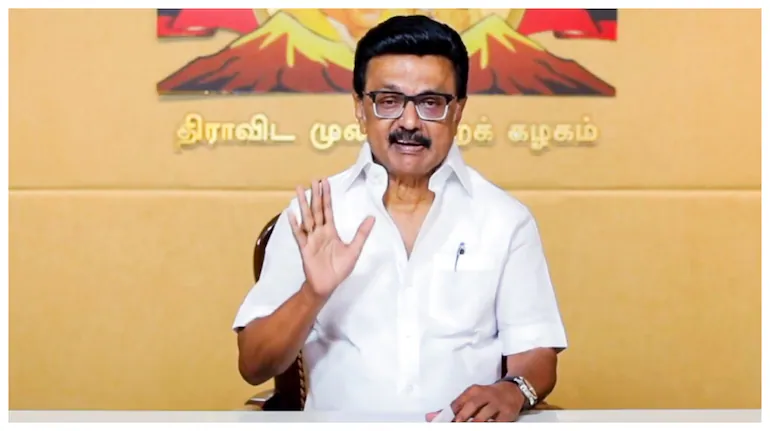
DMK president and former Tamil Nadu Chief Minister M.K. Stalin has firmly rejected speculation that his party could support the BJP-led Centre’s proposed Delimitation-linked legislation, insisting that the DMK will not compromise on Tamil Nadu’s parliamentary representation. His clarification comes amid political debate over the possible return of the women’s reservation-linked Bill during the upcoming special sitting of Parliament.
In a post on X, Stalin reiterated two key demands: Tamil Nadu’s share of parliamentary constituencies must not fall below its existing 7.18%, and the current proportion of parliamentary representation among states, based on the 1971 Census, should remain protected for another 25 years.
His statement came hours after actor Vijay’s Tamilaga Vettri Kazhagam (TVK) accused the DMK of preparing to support the BJP on the issue. The allegation triggered questions about whether the ruling political alignment in Tamil Nadu could influence the party’s long-standing opposition to a delimitation exercise that it believes could disadvantage southern states.
Stalin dismissed the speculation, saying neither media reports nor criticism from political opponents would change the party’s position. The controversy has brought the debate over parliamentary seat redistribution, women’s reservation and the political representation of states back into focus ahead of Parliament’s expected discussions.
What MK Stalin Said About the DMK’s Delimitation Position
Stalin used his post on X to make clear that the DMK’s position on delimitation remains unchanged. He said that even if the number of parliamentary constituencies increases, Tamil Nadu’s existing share of 7.18% must be protected.
He also argued that the proportion of parliamentary representation among states, determined using the 1971 Census and subsequently frozen, should remain unchanged for another 25 years.
In his statement, Stalin said:
“…If the number of parliamentary constituencies is increased, under no circumstances should Tamil Nadu’s share fall below its current 7.18%! The existing proportion of parliamentary representation among States, as determined on the basis of the 1971 Census and frozen earlier, must remain unchanged for another 25 years!”
Reaffirming the party’s position, he added that the DMK remained firm on both demands and would not change its stand because of speculation or political criticism.
“The DMK remains firm on both these positions today and will continue to do so… The speculation being spread in the media and the grumbling of backstabbers will not shake our position in any way… The DMK will never compromise on Tamil Nadu’s interests,”
The statement directly addresses the suggestion that the DMK might support the Centre’s proposed legislation despite its objections to the possible consequences of delimitation. Stalin’s emphasis on the 7.18% threshold and the 25-year protection period also sets out the conditions the party wants preserved in any future exercise.
Why TVK Accused the DMK of Changing Its Position
The political controversy intensified after Vijay’s TVK claimed that the DMK could support the BJP as the Centre prepares to revive the delimitation-linked women’s reservation Bill. The party accused the DMK of abandoning its ideological position and questioned whether its opposition to the proposed changes would remain consistent.
TVK also invoked a famous remark associated with former Tamil Nadu Chief Minister and DMK founder C.N. Annadurai: “What is the use of a beard for a goat and a Governor for a country?”
The reference was intended as a political criticism of the DMK’s position and its relationship with the wider political debate surrounding the Centre’s proposed legislation. By invoking Annadurai, TVK sought to frame the controversy around the ideological legacy of the Dravidian movement.
Stalin’s response rejected the suggestion that the DMK was preparing to compromise. Rather than addressing the accusation through a direct political exchange with TVK, he restated the party’s specific demands on Tamil Nadu’s share of parliamentary seats and the distribution of representation among states.
The exchange also highlights the growing political competition in Tamil Nadu, where the DMK’s established position on state rights and federal representation has become an important part of the debate over delimitation.
What Is the Delimitation Debate About?
Delimitation refers to the process of redrawing the boundaries of electoral constituencies and determining how many seats different regions receive in representative bodies. In the Lok Sabha, the exercise can influence the number of parliamentary constituencies allocated to states and the distribution of political representation across the country.
The issue has become politically sensitive because India’s states have experienced different population growth patterns. Southern states such as Tamil Nadu have raised concerns that a redistribution based heavily on population could reduce their relative share of parliamentary representation compared with states that have recorded faster population growth.
Stalin’s argument is that states should not be disadvantaged for implementing population-control measures. If representation were redistributed primarily according to population, states that successfully slowed population growth could face a reduction in their relative influence in Parliament.
The DMK therefore wants the existing proportion of parliamentary representation among states to remain protected, even if the overall number of constituencies increases. Its demand is not simply about preventing a reduction in Tamil Nadu’s absolute number of seats. It is also about ensuring that the state’s relative share does not decline as representation expands elsewhere.
This distinction is central to the political disagreement. A state could retain its existing number of seats while its share of the total Lok Sabha strength falls if other states receive a larger increase. Stalin’s 7.18% demand seeks to address that possibility.
Why the 1971 Census Matters to Tamil Nadu
The 1971 Census is central to the delimitation debate because the existing freeze on the redistribution of parliamentary representation has been linked to population data from that period. The arrangement was intended to prevent states that had successfully controlled population growth from losing political representation as a consequence of their demographic progress.
For Tamil Nadu and other southern states, the concern is that a future delimitation exercise could alter the balance of representation if newer population figures become the primary basis for allocating seats.
Stalin’s demand is that the existing proportion among states should continue for another 25 years. This would provide a longer period of protection against changes that the DMK believes could disadvantage Tamil Nadu.
The debate also raises a broader constitutional and political question: how should parliamentary representation balance the principle of population-based representation with the need to protect the interests of states that have followed different demographic paths?
Supporters of population-based redistribution can argue that constituencies should reflect changes in population so that representation remains broadly aligned with the number of people represented. Opponents of an exclusively population-driven approach argue that it could penalise states for achieving lower population growth and create an imbalance in the federal structure.
These competing concerns explain why delimitation has become a major political issue rather than a purely administrative exercise.
Women’s Reservation Bill and Delimitation: Why the Issues Are Connected
The latest political debate is linked to legislation concerning women’s reservation in the Lok Sabha and state legislative assemblies. The proposed framework has brought delimitation into focus because the implementation of the reservation arrangement is connected to the future determination of constituencies.
The political disagreement is therefore not limited to whether more women should be represented in elected legislatures. It also concerns how the number and boundaries of constituencies will be determined and whether the process could change the balance of representation among states.
For the DMK, support for women’s reservation and acceptance of a particular delimitation framework are separate questions. Stalin’s latest statement focuses on protecting Tamil Nadu’s existing share and maintaining the current proportion of representation among states.
The distinction is important because political parties can support the broader objective of increasing women’s representation while disagreeing over the mechanism and conditions through which it is implemented.
Why the Bill’s Earlier Defeat Matters
The delimitation-linked Bill referred to in the latest political discussion was defeated in April after it failed to secure the required two-thirds majority. The lack of sufficient support prevented the proposed legislation from advancing through Parliament at that time.
Its possible return has renewed attention on the positions of political parties, particularly those representing states that have expressed concerns about the consequences of delimitation.
According to the schedule mentioned in the current political discussion, the Lok Sabha is expected to reconvene on Monday, November 30, while the Rajya Sabha is scheduled to meet on Wednesday, December 2. The proposed special sitting has therefore become an important moment for parties to clarify their positions.
However, the expected parliamentary discussions should not be confused with a confirmed outcome. The Bill’s return, the support it may receive and the final shape of any legislative proposal will depend on the parliamentary process and the positions taken by political parties.
What Stalin’s Statement Means for the Upcoming Parliamentary Debate
Stalin’s clarification establishes that the DMK is not publicly backing away from its stated demands on delimitation. By repeating the 7.18% threshold and the proposed 25-year continuation of the existing representation formula, he has given the party’s position a specific and measurable basis.
The statement also places pressure on the political discussion to focus on the substance of the proposed changes rather than speculation about possible alliances or parliamentary support. Any future debate involving the DMK will have to account for the conditions Stalin has publicly reiterated.
For Tamil Nadu, the central concern remains whether the state can retain its relative parliamentary influence if the total number of Lok Sabha seats increases. For the Centre, the broader challenge is to address demands for updated representation while responding to concerns raised by states about demographic fairness and federal balance.
The issue could also influence political conversations beyond Tamil Nadu, as other states examine how a future delimitation exercise might affect their representation. The debate involves questions of population, federalism and the distribution of political power that extend beyond the interests of any single party.
DMK’s Delimitation Stand Remains Unchanged, Says Stalin
MK Stalin‘s latest statement has sought to put an end to speculation that the DMK could support the BJP-led Centre’s delimitation-linked legislation without securing protections for Tamil Nadu. His message is that the party’s position remains tied to two demands: preserving the state’s existing 7.18% share of parliamentary representation and maintaining the current proportion among states for another 25 years.
The political exchange with TVK has added another dimension to an already contentious debate. While TVK questioned the DMK’s consistency, Stalin has responded by reaffirming the party’s position and rejecting claims that it would compromise on the state’s interests.
With Parliament expected to reconvene for discussions on November 30 and December 2, attention will turn to the government’s next steps and the positions taken by different parties. The central question will be whether a legislative framework can address women’s reservation while also responding to concerns about the future distribution of parliamentary representation among India’s states.
For breaking news and live news updates, like us on Facebook or follow us on Twitter and Instagram. Read more on Latest India on thefoxdaily.com.






COMMENTS 0