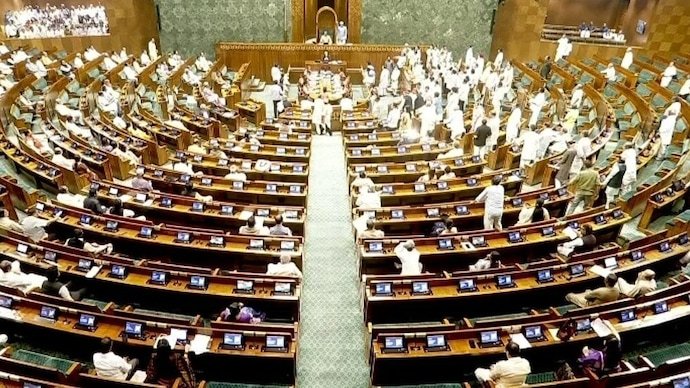
The Union government is preparing for a possible special session of Parliament shortly after the ongoing Monsoon Session concludes on August 13, with the aim of advancing two major constitutional proposals the Delimitation Bill and the Women’s Reservation Amendment Bill. According to government sources, the Centre is exploring its legislative options while working to secure the special majority required to pass the proposed constitutional amendment.
Rather than proroguing Parliament immediately after the Monsoon Session, the government may keep it technically in session, enabling it to reconvene lawmakers at short notice if it determines that sufficient parliamentary support has been secured. The reported strategy reflects the significance of the proposed legislation, both of which would require approval through the constitutional amendment process.
What Is the Government Planning?
According to government sources, the Centre is considering a special sitting of Parliament after the Monsoon Session ends. The proposed agenda would include the Delimitation Bill and the Women’s Reservation Amendment Bill, which have been brought together as part of the 131st Constitutional Amendment Bill.
The immediate challenge for the government is securing the constitutionally mandated two-thirds special majority required for amendments to the Constitution. Until those numbers are assured, the government is reportedly continuing political consultations before deciding whether to convene the special session.
Keeping Parliament from being prorogued would allow the executive to summon members back quickly without waiting for a completely new parliamentary session to begin.
Why Parliament May Not Be Prorogued
Normally, once a parliamentary session concludes, it is followed by prorogation, formally ending that session. However, if Parliament is not prorogued, the government gains greater procedural flexibility to reconvene both Houses within a short period.
According to the information available, this option is being considered because the government wants to move quickly once it is confident of obtaining the numbers necessary to pass the constitutional amendment.
Such procedural decisions can be important when legislation depends on precise parliamentary arithmetic and negotiations among multiple political parties.
Understanding the 131st Constitutional Amendment Bill
The proposed legislation combines two politically significant issues: parliamentary delimitation and women’s reservation in legislatures.
Constitutional Amendment Bills differ from ordinary legislation because they seek to amend provisions of the Constitution rather than enact or modify ordinary laws. As a result, they are subject to stricter voting requirements in Parliament.
According to the available information, the Delimitation Bill and the Women’s Reservation Amendment Bill are being pursued together under the framework of the 131st Constitutional Amendment Bill.
Why a Two-Thirds Majority Matters
Unlike ordinary Bills that can often be passed with a simple majority of members present and voting, Constitutional Amendment Bills require a special majority in both the Lok Sabha and the Rajya Sabha.
Government sources indicated that the current threshold stands at 360 members in the Lok Sabha and 164 members in the Rajya Sabha for the proposed legislation.
These higher voting requirements mean that governments frequently need support beyond their own alliance, particularly when they do not independently command the necessary numbers in both Houses.
Previous Attempt Fell Short
The government’s effort to pass the proposed constitutional amendment during the three-day special session of Parliament held in April did not succeed.
According to the available information, the BJP-led National Democratic Alliance (NDA) did not possess the required special majority in either House at that time, preventing the legislation from clearing Parliament.
That experience appears to have influenced the government’s current strategy of waiting until it believes sufficient support has been secured before bringing the Bill back for consideration.
How the Political Numbers Have Changed
Government sources say the parliamentary arithmetic has improved since the earlier attempt.
Following the West Bengal Assembly elections in May, political developments reportedly strengthened the BJP’s position in both the Lok Sabha and the Rajya Sabha, reducing the gap between its existing strength and the special majority required for constitutional amendments.
Although the reported improvement does not automatically guarantee passage of the Bill, it has increased speculation that the government believes the legislation has become more politically achievable than it was earlier this year.
The DMK’s Potential Role
One of the most closely watched political questions concerns the possible position of the Dravida Munnetra Kazhagam (DMK).
According to government sources, the BJP has been looking at the possibility of securing support from the DMK’s 22 Lok Sabha members following political developments involving Tamil Nadu Chief Minister M.K. Stalin and the congress.
However, whether such support would materialise remains uncertain.
The available information does not indicate that the DMK has committed to supporting the proposed constitutional amendment.
Why Delimitation Remains Politically Sensitive
Even if discussions continue between political parties, delimit
For breaking news and live news updates, like us on Facebook or follow us on Twitter and Instagram. Read more on Latest India on thefoxdaily.com.






COMMENTS 0