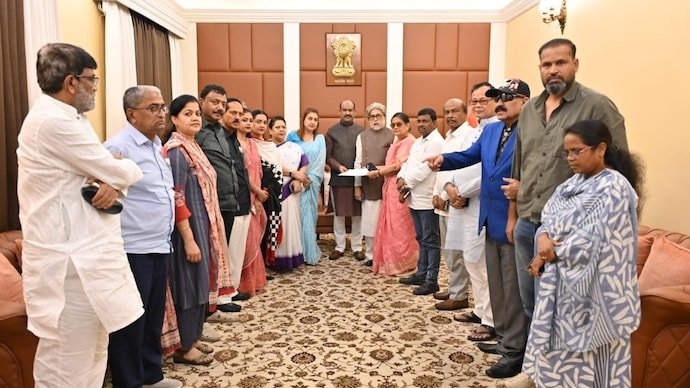
Indian Politics witnessed a dramatic twist after a group of rebel Trinamool congress (TMC) MPs formally decided to merge with the Nationalist Citizens Party (NCPI) and extend support to the BJP-led National Democratic Alliance (NDA). The move marks a significant escalation in the ongoing power struggle within the TMC and could reshape West Bengal’s political landscape in the months ahead.
The development comes amid a prolonged internal conflict over leadership, organizational control, and the party’s future direction following electoral setbacks. What initially appeared to be a factional dispute has now evolved into a full-scale political rebellion involving lawmakers, party functionaries, and influential leaders.
With questions emerging over the applicability of anti-defection laws, parliamentary recognition, and control of the party’s political legacy, the crisis has moved beyond state politics and become a matter of national significance.
What Triggered the Latest TMC Crisis?
The current rebellion did not emerge overnight. Internal tensions within the TMC have reportedly been building for years, particularly over issues related to leadership structure, candidate selection, organizational management, and decision-making authority.
The situation intensified after the party’s disappointing electoral performance, which triggered widespread introspection among leaders and workers.
Many dissident leaders argued that the party needed structural reforms, greater internal democracy, and a renewed political strategy to regain lost ground.
As differences widened, a section of MPs and MLAs began organizing separately, eventually leading to the formation of a rebel bloc.
Why Did Rebel MPs Merge With Another Party?
The decision to merge with the Nationalist Citizens Party appears to be rooted largely in legal and parliamentary considerations.
Under India’s anti-defection framework, lawmakers cannot simply form a separate faction and continue enjoying the benefits of their elected positions without facing potential disqualification.
By merging with an existing recognized political party, the rebel group hopes to strengthen its legal position while maintaining its parliamentary presence.
This strategy could become central to the legal battles that are likely to follow.
Understanding the Anti-Defection Law
The anti-defection law was introduced to prevent elected representatives from frequently changing political loyalties for personal or political gain.
The law seeks to promote stability in legislatures by discouraging opportunistic defections.
Under the Tenth Schedule of the Constitution, lawmakers may face disqualification if they voluntarily give up membership of the party under whose symbol they were elected.
However, specific provisions exist regarding mergers.
| Political Action | Potential Legal Consequence |
|---|---|
| Individual Defection | Possible disqualification |
| Formation of Separate Group | Legal challenges likely |
| Merger With Another Party | Subject to constitutional provisions |
| Recognition by Speaker | Depends on legal scrutiny |
| Claim to Original Party Identity | May require judicial determination |
This legal complexity explains why the rebel MPs opted for a merger route instead of functioning as an independent parliamentary faction.
The Significance of Supporting the NDA
Perhaps the most politically significant aspect of the development is the rebels’ decision to support the NDA.
This move has implications that extend beyond parliamentary arithmetic.
For the NDA, support from a sizable group of former TMC MPs strengthens its political influence and further weakens one of its key regional rivals.
For the rebels, aligning with the NDA could provide political protection, greater visibility, and access to a broader national platform.
The decision also signals a potential ideological and strategic realignment among leaders WHO were once part of one of India’s most prominent opposition parties.
Sudip Bandyopadhyay’s Defection Changes the Equation
The entry of senior leader Sudip Bandyopadhyay into the rebel camp has added substantial weight to the dissident movement.
As a veteran politician and one of the most recognizable faces in the party, his support lends credibility and legitimacy to the rebellion.
Political movements often gain momentum when senior leaders abandon the official leadership structure.
Bandyopadhyay’s decision suggests that dissatisfaction within the organization may run deeper than previously believed.
His political experience and organizational influence could prove crucial as the rebels attempt to expand their support base.
Why the Leadership Battle Matters
At its core, the crisis is increasingly being viewed as a struggle over the future leadership of the party.
While Mamata Banerjee remains one of India’s most influential regional leaders, debates over succession and organizational control have become increasingly prominent.
The conflict reflects broader questions facing many political parties across India:
- How should leadership transitions be managed?
- What role should younger leaders play?
- How much authority should be centralized?
- How can internal democracy be strengthened?
These issues are not unique to the TMC and are increasingly shaping political debates nationwide.
The Mamata Banerjee Camp’s Response
The official TMC leadership has responded aggressively to the rebellion.
Several rebel leaders have been removed from key organizational positions as part of a restructuring effort aimed at consolidating loyalists within the party hierarchy.
The reshuffle serves multiple objectives:
- Reasserting leadership authority
- Preventing further defections
- Rewarding loyal members
- Stabilizing party operations
- Projecting organizational unity
Such measures are common when political parties face internal challenges and seek to demonstrate control.
Can Both Groups Claim to Be the Real TMC?
One of the most intriguing questions emerging from the crisis is whether the rebel faction can claim legitimacy as the “real” TMC.
Political history in India contains numerous examples of party splits resulting in competing claims over party names, symbols, and organizational identity.
These disputes often involve:
- Legislative strength
- Organizational control
- Election Commission rulings
- Court interventions
- Public support
The ultimate outcome may depend not only on legal arguments but also on political realities and public perception.
Impact on West Bengal Politics
The implications for West Bengal Politics could be substantial.
For more than a decade, the TMC has been the dominant political force in the state.
A major split within the party could alter political equations ahead of future elections.
Possible consequences include:
- Fragmentation of traditional vote banks
- Strengthening of rival parties
- New political alliances
- Changes in opposition dynamics
- Leadership restructuring within regional politics
Whether the rebellion becomes a temporary disruption or a long-term political realignment remains uncertain.
How This Could Benefit the BJP and NDA
From a strategic perspective, the crisis creates opportunities for the NDA.
West Bengal has long been a major political battleground, with the BJP investing significant resources to expand its presence in the state.
A divided opposition often benefits the ruling alliance at the national level.
The weakening of a major regional rival could potentially improve the NDA’s prospects in future parliamentary and state-level contests.
Political analysts will closely watch whether the support from rebel MPs translates into broader organizational cooperation.
Lessons From Previous Political Splits in India
Indian politics has witnessed numerous party splits over the decades.
Some resulted in the formation of powerful new political organizations, while others faded after initial media attention.
History suggests that successful breakaway movements usually require:
- Strong leadership
- Clear ideological positioning
- Grassroots organizational support
- Electoral credibility
- Public trust
Without these elements, political rebellions often struggle to sustain momentum.
The Legal Battle Could Be as Important as the Political One
While headlines focus on defections and alliances, the legal dimension may ultimately determine the future of the rebellion.
Several key questions remain unresolved:
- Will the Speaker recognize the merger?
- Can the rebels avoid disqualification?
- Who controls the party’s parliamentary identity?
- Can either faction claim ownership of the party’s political legacy?
These issues could lead to prolonged legal proceedings that shape the future of the movement.
A Broader Reflection on Regional Parties in India
The TMC crisis also reflects broader challenges facing regional political parties.
Many successful regional parties are built around charismatic leaders whose personal popularity becomes central to the party’s identity.
While such leadership models can drive electoral success, they can also create succession challenges and internal tensions over time.
As Indian politics evolves, regional parties increasingly face pressure to balance centralized leadership with institutionalized organizational structures.
Future Outlook: What Happens Next?
The coming weeks are likely to be crucial.
The rebel faction will attempt to consolidate support and strengthen its legal position following the merger with the Nationalist Citizens Party.
Meanwhile, the Mamata Banerjee-led leadership is expected to focus on preserving party unity, preventing further defections, and reinforcing organizational discipline.
Courts, parliamentary authorities, and political developments will collectively determine the next phase of the crisis.
Much will depend on whether additional lawmakers join the rebels or remain loyal to the existing leadership.
Conclusion
The decision by 20 rebel TMC MPs to merge with the Nationalist Citizens Party and support the NDA marks a major turning point in the ongoing crisis within the Trinamool Congress. What began as internal dissatisfaction has evolved into a significant political and legal confrontation with implications for West Bengal, Parliament, and national politics.
Beyond the immediate drama, the episode highlights deeper questions about leadership, party democracy, anti-defection laws, and the future of regional political movements in India.
Whether this rebellion transforms into a lasting political force or remains a temporary disruption will depend on legal outcomes, organizational strength, and the ability of both factions to convince voters that they represent the future of the movement. For now, the battle for the soul of the TMC is far from over.
For breaking news and live news updates, like us on Facebook or follow us on Twitter and Instagram. Read more on Latest India on thefoxdaily.com.






COMMENTS 0