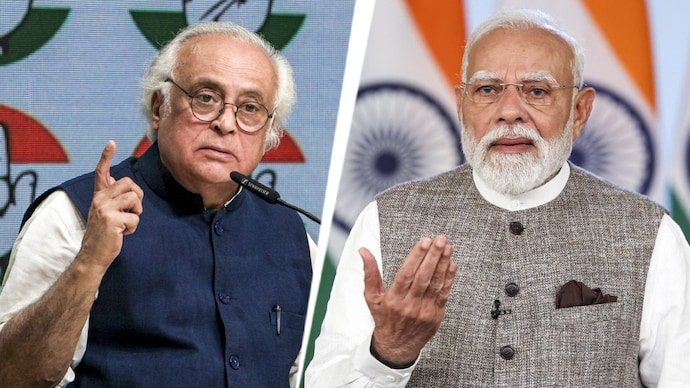
India‘s upcoming Census 2027 has already become a political battleground, with the Congress questioning whether the government’s planned method for recording caste will produce reliable national data.
The dispute is centred on a seemingly simple question: when an enumerator asks a person to state their caste, should the answer be selected from a standardised list, or should the respondent’s caste or sub-caste be entered as declared?
The Centre has opted for an open-ended approach in the caste question notified for the second phase of the census. Congress leaders argue that this could recreate one of the central problems associated with the caste component of the Socio-Economic and Caste Census (SECC) 2011: thousands of variations in caste names, spellings, local identities and sub-castes can make the resulting raw data difficult to classify and consolidate.
The political stakes are particularly high because Census 2027 will include caste enumeration beyond the Scheduled Castes and Scheduled Tribes. The resulting data could influence future debates over social welfare, representation, backwardness and reservation policy.
Congress has now turned the government’s own argument from 2021 into a central question for the Modi government: if a pre-existing caste registry and a drop-down menu could have improved consistency in caste data, as the Centre told the Supreme Court, why is Census 2027 relying on an open-ended response?
What is the controversy over the Census 2027 caste question?
The Centre notified the questions for the second phase of Census 2027 on August 14. The exercise will collect detailed information about individuals and households, including caste.
The caste-related item is identified as “Scheduled Caste (SC)/Scheduled Tribe (ST)/Caste”. Under the format described in reports on the questionnaire, the enumerator will record the caste or sub-caste as declared by the respondent rather than simply selecting a caste from a nationally standardised menu.
That design has become the main focus of Congress’s criticism.
The party argues that India has an enormous number of castes and sub-castes, with identities often varying according to geography, language, spelling and local usage. Two respondents could potentially describe the same or closely related social group using different names.
That creates a statistical challenge.
If the names are simply collected as free-text responses, the data may initially contain numerous separate entries for what could eventually be treated as the same social group. The quality of the final caste count would therefore depend heavily on the coding and validation process used after enumeration.
Why Congress is invoking the Modi government’s 2021 Supreme Court affidavit
Congress leader and Rajya Sabha MP Jairam Ramesh has based much of the criticism on the Union government’s own position regarding the SECC 2011 data.
In an affidavit filed before the Supreme Court in September 2021, the Centre argued that the caste data collected through the SECC had serious technical problems. The government said the raw caste and tribe data contained flaws that made it unsuitable for use in the form in which it had been collected.
One passage highlighted by Ramesh said that no caste registry had been prepared before the 2011 exercise and that it would have been ideal to have a caste registry accompanied by a drop-down menu from which castes could be selected.
The reasoning was straightforward: standardised options could reduce inconsistencies and make the resulting data more comparable.
Ramesh is now asking why a mechanism of that kind has not been adopted for the national caste enumeration planned for 2027.
That gives the Congress criticism a specific technical argument rather than making it solely a political objection. The party is essentially asking the government to explain why a problem identified by the Centre itself in relation to the 2011 exercise should not be addressed before the next national caste count.
Is the government actually excluding OBCs from Census 2027?
Congress has also accused the government of deliberately excluding the OBC category from the census questionnaire.
The criticism needs to be understood carefully.
The reported questionnaire uses a broad caste field alongside SC and ST classifications rather than providing a separate question that simply asks respondents to select an OBC category. Congress argues that this design could make it harder to generate a clear national count of Other Backward Classes.
But the absence of an OBC tick-box does not, by itself, establish that OBC respondents will not be counted.
The central technical issue is what happens to the caste information after respondents provide their answers. If the enumeration system and subsequent coding process can reliably identify castes and map them to the relevant social classifications, an open-ended response can theoretically produce usable data.
The unresolved question raised by critics is whether that coding system will be sufficiently transparent, standardised and robust to prevent fragmentation of caste identities.
Why the 2011 caste data remains central to the debate
The controversy over Census 2027 cannot be separated from the experience of the SECC 2011.
The caste component of that exercise produced a very large number of raw caste entries. The problem was not simply the number of people counted. It was the difficulty of organising the responses into consistent and analytically useful categories.
Variations can occur for several reasons.
- Different spellings of the same caste name can create separate entries.
- The same community may have different names in different regions or languages.
- A broad caste identity may coexist with multiple sub-caste or subgroup names.
- Local names and alternative names can complicate classification.
- Respondents may use descriptions that do not correspond directly to an official administrative category.
These problems do not mean an open-ended question is automatically incapable of producing useful information. They do, however, make the subsequent coding and validation process extremely important.
That is why the debate has shifted from the simple question of whether caste will be counted to a more technical question: how will the answers be converted into reliable national statistics?
The “Mappilas” example illustrates the coding problem
Mandal Army national president Aniruddh Singh Vidrohi has used the issue of caste-name variation to argue for a more comprehensive national coding system.
He has referred to examples discussed in the government’s earlier explanation of the problems surrounding SECC 2011, including variations involving the name “Mappilas”.
The broader point is more important than the individual example. Suppose members of the same social group provide different spellings, local names or subgroup descriptions. If each response initially becomes a separate database entry, the raw dataset could make one community appear to consist of several smaller groups.
That does not necessarily mean the final data would remain fragmented. A later classification process can potentially map alternative names to a common code.
But such a system needs clear rules.
Vidrohi has therefore called for a National Caste Master Registry, standard caste codes, systematic mapping of local names and spelling variations, and mechanisms for checking inaccurate classifications.
His argument goes to the heart of the Census 2027 controversy: counting responses is only the first stage. Making those responses statistically meaningful is the harder task.
Why Bihar and Telangana are being cited as alternative models
Congress has repeatedly pointed to caste surveys conducted in Bihar and Telangana as examples of how a more structured approach could work.
Bihar’s caste-based survey used designated caste codes. Reports on the exercise described a system in which different communities were assigned numerical codes, with related names grouped under specified categories.
Telangana’s caste survey also used extensive lists and codes covering different social categories. Its published material includes standardised caste names, alternative names and codes across categories such as Scheduled Castes, Scheduled Tribes, Backward Classes and other castes.
The advantage of such an approach is relatively obvious: an enumerator has a defined framework for recording responses rather than starting with an entirely blank field.
It does not eliminate every problem. India’s caste identities are complex, and a predefined list itself has to be prepared carefully. A list can become controversial if communities believe their identity has been omitted, grouped incorrectly or placed under an unsuitable classification.
But standardisation can make one part of the process more consistent.
That is why Congress argues that the national census should learn from state-level exercises rather than rely on a system that critics fear could reproduce the weaknesses of earlier caste data collection.
What does the government say about validation?
The debate is not simply about whether the census has any technical safeguards.
The government has indicated that the Census 2027 process will include a Code Directory and validation checks. A nationwide pre-test was also conducted to assess the census methodology, digital tools and training systems before the full exercise.
That means the open-ended response collected by an enumerator does not necessarily represent the final format in which the caste data will be published.
The important unanswered issue is how the coding process will work in practice and how much of it will be visible to political parties, researchers and the public.
For critics, transparency is almost as important as the coding itself. If millions of caste responses are consolidated into standard categories, stakeholders will want to know what rules were used to make those decisions.
A credible system therefore needs more than a digital form. It needs a documented methodology for handling alternative names, spelling differences, sub-castes, unmatched responses and cases in which respondents provide information that does not fit an existing category.
Why OBC data makes this debate politically sensitive
The OBC question has enormous political importance in India.
Other Backward Classes constitute a broad collection of communities rather than a single social group. Their political representation and access to reservation and welfare policies have been central issues in Indian Politics for decades.
The Mandal Commission and the implementation of OBC reservation in central government employment transformed the country’s political debate around caste and representation. Since then, questions about the size, composition and socio-economic condition of backward communities have remained politically significant.
A reliable national caste count could provide a new factual basis for those debates.
It could also create new political demands.
If communities believe the data demonstrates under-representation or disadvantage, they may demand changes in reservation, welfare programmes or political representation. Conversely, communities that believe they have been classified inaccurately could challenge the results.
This is why the methodology of Census 2027 is not merely a technical issue for statisticians. The way caste is recorded could have consequences for policy and politics long after the enumeration ends.
Caste census enters an increasingly charged political environment
The debate is taking place at a particularly politically sensitive moment.
Caste and reservation have returned to the centre of political campaigns, public protests and social-Media debates. Political parties are increasingly using caste representation as part of their electoral strategies.
The upcoming Uttar Pradesh Assembly election adds another layer to the controversy.
Uttar Pradesh has enormous electoral importance, with 80 Lok Sabha constituencies and a highly complex caste composition. The Samajwadi Party has made caste representation and a caste census prominent elements of its political messaging.
Samajwadi Party chief Akhilesh Yadav has promised to conduct a caste census within three months if his party forms the government in Uttar Pradesh.
The political importance of the issue was also visible in the 2024 Lok Sabha election in Uttar Pradesh, where the Congress-Samajwadi Party alliance won 43 of the state’s 80 seats.
That does not establish that caste census concerns alone determined the election result. It does show, however, that caste representation has become an important part of the political competition in India’s most populous state.
Could Census 2027 change the reservation debate?
A national caste count could provide a much broader statistical foundation for future discussions about social groups and government policy.
But census data alone would not automatically determine reservation policy.
Population numbers are only one part of the policy process. Governments would also have to consider constitutional provisions, existing legal frameworks, socio-economic indicators, administrative classifications and judicial decisions.
This distinction matters because political arguments sometimes treat a caste population figure as if it directly translates into a particular reservation entitlement. In reality, the relationship between demographic data and policy is more complicated.
Still, accurate population information could significantly change the evidence available for those debates.
What a credible caste census would need to get right
The current controversy points to several technical requirements that will determine the credibility of the final data.
- Standardisation: Different spellings and local names should be capable of being mapped consistently.
- Classification: The methodology should clearly explain how caste and sub-caste responses are coded.
- Validation: The system should identify potentially inconsistent or duplicate entries.
- Transparency: The rules used to consolidate responses should be clearly documented.
- Unmatched responses: There should be a defined process for handling caste names that do not immediately correspond to an existing category.
- Quality control: Independent checks can help identify systematic errors before final data is released.
These safeguards matter regardless of which political party is making the argument. A caste census is only as useful as the methodology behind it.
Is this really a BJP U-turn?
Congress has framed the controversy as evidence of a possible second reversal by the BJP-led government: first, it argues, the government resisted demands for a caste census before agreeing to include caste in Census 2027; now, Congress says the chosen methodology could undermine the value of that exercise.
Whether that amounts to a “U-turn” is ultimately a political judgment.
What can be established is that the government has committed to caste enumeration in the upcoming national census, while Congress is challenging the design of the caste question and demanding a more standardised process.
The strongest part of the opposition’s argument is not simply that the caste field is open-ended. It is that the government itself previously identified standardisation as a way to improve the reliability of caste data.
The government’s answer will therefore need to address a straightforward technical question: how will Census 2027 prevent the same kinds of fragmentation and classification problems that the Centre identified in the SECC 2011 data?
The real test will come after people answer the question
The political debate is currently focused on the census questionnaire, but the most important part of the process may happen after enumerators have collected the responses.
An open-ended field does not automatically produce bad data, just as a predefined list does not automatically guarantee perfect data.
The decisive factor will be what happens between the raw response and the final published statistic.
If the government has a comprehensive coding directory, reliable mapping of alternative names, strong validation systems and a transparent audit process, many of the concerns raised by Congress and OBC organisations could potentially be addressed.
If those safeguards are weak or poorly documented, criticism over the reliability of the caste count is likely to intensify.
What happens next in the Census 2027 caste row?
The next phase of the debate is likely to focus less on whether caste will be counted and more on how the government will code and validate the answers.
Congress is expected to continue pressing for a predefined caste list and greater transparency. OBC organisations and other groups have already raised concerns about the open-ended format. The government, meanwhile, has pointed to the wider census methodology, digital systems, code directories and validation mechanisms.
The outcome matters because Census 2027 could become one of India’s most consequential sources of demographic information for future caste and reservation debates.
The question facing the government is therefore bigger than whether an enumerator has a list on a screen.
It is whether India can convert millions of individual caste declarations, with all their regional names, spellings and social complexities, into a dataset that political parties, courts, policymakers and citizens can trust.
For Congress, that question has become a political weapon against the BJP. For OBC groups and other stakeholders, it is a question of representation and recognition. And for the census itself, it is ultimately a question of statistical credibility.
As Census 2027 approaches, the argument over caste enumeration is likely to grow louder. But the most important measure of success will not be how loudly the political parties debate the census. It will be whether the final data can withstand scrutiny when the numbers begin shaping India’s next generation of policy and political arguments.
For breaking news and live news updates, like us on Facebook or follow us on Twitter and Instagram. Read more on Latest India on thefoxdaily.com.





COMMENTS 0