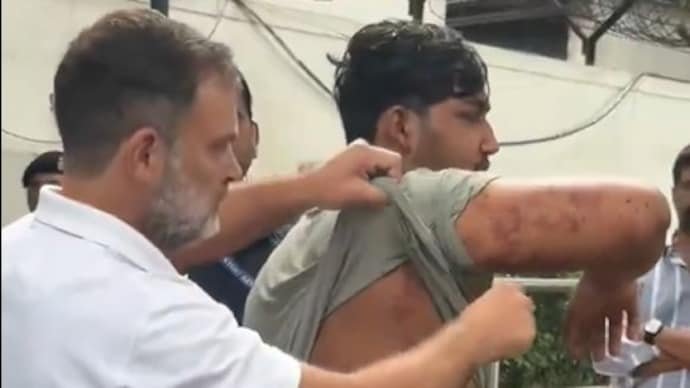
Political tensions over the nationwide student protests intensified after Leader of the Opposition Rahul Gandhi alleged that security personnel used pellet guns during demonstrations related to the alleged examination paper leak controversy. Speaking after meeting injured protesters, Gandhi highlighted the case of a 19-year-old student WHO reportedly suffered a serious eye injury and questioned whether authorities had used disproportionate force against peaceful demonstrators.
The allegations have added a new dimension to an already charged debate over examination reforms, shifting public attention from the paper leak controversy itself to questions surrounding policing, protest rights, and government accountability. While Delhi Police has previously denied using pellet guns during the demonstrations, the claims have continued to generate Political Controversy and calls for an independent examination of the incidents.
As negotiations between protest organizers and the government continue, the latest developments underline how the movement has evolved beyond demands for examination reforms into a broader discussion about democratic accountability and the treatment of protesters.
What Rahul Gandhi Alleged
Addressing the media after meeting injured students, Rahul Gandhi alleged that several protesters sustained serious injuries during police action against demonstrations linked to the alleged examination paper leak issue.
Referring to one injured student, identified as Sahil, Gandhi claimed the protester suffered severe damage to one eye after allegedly being struck by a pellet while participating in what he described as a peaceful demonstration.
According to Gandhi, doctors were uncertain whether the student’s eyesight could be fully restored.
The allegations have not been independently verified, and authorities have maintained their position regarding the methods used during crowd-control operations.
The Broader Context Behind the Protests
The demonstrations originally began over concerns regarding alleged irregularities in competitive examinations and quickly expanded into a nationwide movement demanding greater transparency and accountability in India‘s examination system.
Over time, the movement attracted:
- Students.
- Education activists.
- Civil society organizations.
- Political leaders.
- Parents and educators.
What started as protests focused on examination integrity has increasingly become a broader conversation about public institutions and governance.
Rahul Gandhi’s Three Major Demands
During his interaction with the media, Gandhi outlined three primary demands on behalf of the protesters.
| Demand | Purpose |
|---|---|
| Action against those responsible for examination irregularities | Ensure accountability within the education system. |
| Investigation into alleged excessive use of force | Address concerns over injuries sustained during protests. |
| Public apology from the Prime Minister | Acknowledge the impact of the crackdown on students. |
In addition, Gandhi reiterated the Opposition’s demand for the resignation of Union Education Minister Dharmendra Pradhan, arguing that ministerial accountability was necessary to restore public confidence.
Government and Protest Representatives Continue Dialogue
Even as political rhetoric intensified, discussions between government representatives and protest organizers continued.
According to public statements made after recent meetings, two important issues reportedly received in-principle consideration:
- Financial assistance for families affected by the examination controversy.
- Withdrawal of legal cases registered against student protesters.
However, discussions regarding political accountability, including demands relating to the Education Minister, remain unresolved.
Why Allegations of Pellet Gun Use Have Drawn Attention
Pellet guns have long been the subject of public debate because of concerns regarding the injuries they can cause, particularly to the eyes.
Although authorities have maintained that established crowd-control procedures were followed, allegations involving pellet-related injuries naturally attract heightened public scrutiny because of their potential medical consequences.
If credible evidence emerges regarding the use of such equipment during civilian demonstrations, it could become an important subject for legal and administrative review.
Understanding Crowd-Control Measures in India
Law enforcement agencies generally employ a graduated approach when managing large public demonstrations.
Depending on the circumstances, crowd-control measures may include:
- Public announcements.
- Barricades.
- Deployment of additional personnel.
- Detention of demonstrators.
- Water cannons in certain situations.
- Tear smoke or other legally authorized methods where considered necessary.
The appropriateness of any specific measure depends on the operational situation and remains subject to legal standards and subsequent review where required.
Medical Concerns Associated With Eye Injuries
Eye injuries sustained during public disturbances can vary significantly in severity.
Medical specialists generally emphasize that immediate treatment is critical because injuries involving the eye may affect:
- Vision.
- Retinal health.
- Corneal integrity.
- Long-term visual recovery.
The eventual outcome depends on factors including the nature of the injury, timely medical intervention, and ongoing treatment.
Comparison: Protesters’ Demands and Government Response
| Issue Raised | Current Status |
|---|---|
| Compensation for affected families | Reportedly accepted in principle during discussions. |
| Withdrawal of cases against protesters | Reportedly received in-principle agreement. |
| Education Minister’s resignation | Under discussion; no final decision announced. |
| Investigation into alleged use of force | Remains politically disputed. |
Why Accountability Has Become the Central Theme
While the movement began with demands linked to examination integrity, accountability has increasingly become its defining issue.
Participants have argued that restoring confidence requires action at multiple levels, including:
- Transparent investigations.
- Administrative reforms.
- Protection of students’ rights.
- Institutional responsibility.
This broader focus explains why political debate has expanded well beyond the original examination controversy.
Expert Insight: How Protest Narratives Evolve
Political analysts frequently observe that protest movements evolve as events unfold.
An issue initially centered on policy may later focus on public perception, law enforcement practices, or institutional accountability if developments during demonstrations become major News stories.
In many democratic societies, allegations concerning the treatment of protesters often receive as much public attention as the original cause of the protests themselves, particularly when questions arise regarding proportionality and civil liberties.
Possible Political Impact
The allegations and continuing demonstrations may influence political discourse in several ways:
- Greater parliamentary scrutiny of examination reforms.
- Renewed debate over policing standards during protests.
- Increased public discussion about accountability in education administration.
- Continued negotiations between protest organizers and the government.
How these issues develop will likely depend on future official responses and the outcome of ongoing discussions.
What Happens Next?
Attention is now focused on several important developments expected in the coming days:
- Further rounds of dialogue between protest representatives and government officials.
- Government decisions regarding unresolved demands.
- Potential announcements on examination reforms.
- Clarification regarding allegations surrounding police action.
These developments could significantly influence both the future of the protests and the broader policy debate.
Future Outlook
The controversy has expanded beyond allegations of examination irregularities to encompass larger questions about governance, public accountability, and the relationship between the state and peaceful protest movements. Whether through dialogue, legislative reforms, or administrative action, authorities will likely face continued pressure to address concerns raised by students and opposition leaders alike.
At the same time, any credible findings regarding the conduct of crowd-control operations are likely to attract sustained public and political attention, making transparency an important factor in restoring confidence.
Conclusion
Rahul Gandhi’s allegations regarding the alleged use of pellet guns have intensified an already significant national debate surrounding student protests and examination reforms. While the claims remain contested and official authorities have previously rejected allegations of pellet gun use, the issue has brought renewed attention to questions of accountability, policing, and democratic protest.
As negotiations between protest organizers and the government continue, the coming days may determine whether the focus shifts back toward long-term education reforms or remains centered on the events that unfolded during the demonstrations. Regardless of the immediate political outcome, the movement has already sparked a wider conversation about institutional trust and the future of India’s examination system.
For breaking news and live news updates, like us on Facebook or follow us on Twitter and Instagram. Read more on Latest India on thefoxdaily.com.





COMMENTS 0