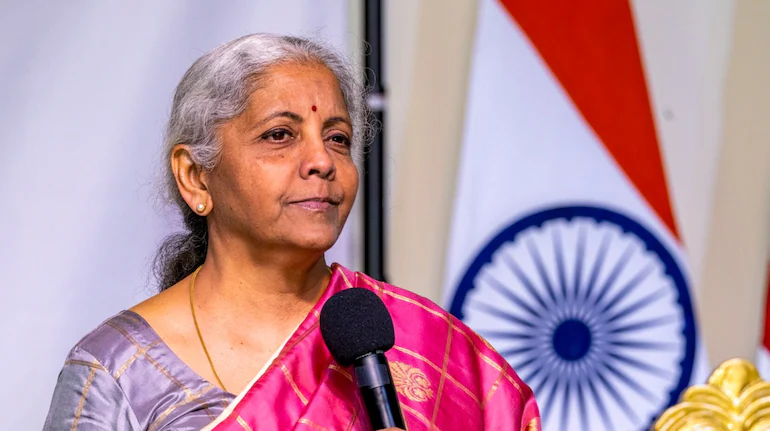
Union Finance Minister Nirmala Sitharaman on Wednesday criticised Congress leader Rahul Gandhi over his renewed challenge to Prime Minister Narendra Modi for an open debate, asking the Leader of Opposition in the Lok Sabha to use Parliament as the platform for questioning the government.
In a strongly worded post on X on November 3, 2026, Sitharaman argued that Gandhi already had an established constitutional and parliamentary platform to raise questions, demand explanations and hold the government accountable. She questioned why he was inviting the Prime Minister to debate outside Parliament when the House provided an opportunity for precisely that purpose.
The Finance Minister also referred to Union Home Minister Amit Shah’s offer to convene a special session of Parliament to discuss the Special Intensive Revision (SIR) of electoral rolls and Electronic Voting Machines (EVMs). She asked why Gandhi was not showing the same enthusiasm for a parliamentary debate that he demonstrated while issuing challenges on social media.
Sitharaman further accused Gandhi and the Congress of walking out of parliamentary proceedings when the government responded to their allegations. She also alleged that repeated disruptions by the Congress and the INDIA bloc had resulted in entire parliamentary sittings being lost.
The exchange has brought the focus back to the confrontation between the government and Opposition over parliamentary accountability, Electoral Reforms, the functioning of democratic institutions and the role of the Leader of Opposition.
Why did Nirmala Sitharaman challenge Rahul Gandhi to debate in Parliament?
Sitharaman’s response followed Gandhi’s renewed invitation to Prime Minister Narendra Modi for an open debate. Instead of accepting the idea of an external venue, the Finance Minister argued that Parliament was already the appropriate place for such a discussion.
Addressing Gandhi directly, she wrote: “Rahul ji, you ask the Prime Minister to choose a venue for a debate. There is already one: Parliament, where you happen to be the LoP.”
Her argument was that the Leader of Opposition did not need to create a separate platform to question the government. As the senior Opposition leader in the Lok Sabha, Gandhi could raise issues, seek answers from ministers and participate in debates through established parliamentary procedures.
Sitharaman also questioned the consistency of Gandhi’s demand for accountability, arguing that demanding answers from the government also required the Opposition to remain present and listen when ministers responded.
She said: “Demanding answers also carries an obligation to hear them.”
The Finance Minister’s remarks were aimed at highlighting what she described as a contradiction between Gandhi’s public calls for debate and the Opposition’s conduct during parliamentary proceedings.
Sitharaman accuses Congress and INDIA bloc of disrupting Parliament
A major part of Sitharaman’s criticism focused on the functioning of Parliament and the conduct of Opposition members during debates.
She alleged that Gandhi and members of his party had repeatedly walked out of the House while the government was responding to their allegations. According to her, the Opposition could not claim to be interested in hearing answers while leaving parliamentary proceedings before those responses were completed.
Sitharaman also accused the Congress and the INDIA bloc of repeatedly disrupting proceedings, claiming that such interruptions had resulted in entire sittings being washed out.
She questioned why Gandhi was demanding debates while, according to her, the Opposition was not allowing Parliament to function normally.
The criticism reflects a wider political disagreement over parliamentary disruptions. The government has frequently called on Opposition parties to participate in discussions and allow legislative business to continue, while Opposition leaders have used parliamentary platforms and protests to raise questions about government policies and decisions.
In her post, Sitharaman sought to place responsibility on Gandhi as Leader of Opposition, arguing that the position carries an obligation to participate seriously in parliamentary debate.
What did Sitharaman say about the mock Parliament at Mallikarjun Kharge’s residence?
Sitharaman also criticised a mock Parliament exercise organised by Opposition leaders at the residence of Congress president Mallikarjun Kharge on October 31.
The exercise involved Opposition leaders conducting symbolic parliamentary proceedings seeking the removal of Chief Election Commissioner Gyanesh Kumar. Former Lok Sabha Speaker Meira Kumar presided over the proceedings.
The event was a political exercise and did not have formal constitutional or legal force. It was intended to highlight the Opposition’s objections and concerns relating to the functioning of electoral institutions.
However, Sitharaman questioned why Opposition leaders had found the time and enthusiasm to organise the mock Parliament while allegedly failing to participate constructively in the actual legislature.
Taking a direct swipe at the exercise, she said: “Frankly, that was more a ‘mockery of Parliament’ than a ‘mock Parliament’.”
The Finance Minister argued that the real Parliament deserved at least as much attention from Opposition leaders as the symbolic exercise held at Kharge’s residence.
Her remarks added another dimension to the political dispute, with the government questioning the Opposition’s parliamentary conduct while Congress leaders have continued to raise concerns about electoral processes and democratic institutions.
Sitharaman asks Rahul Gandhi to provide evidence for his allegations
Beyond the debate challenge, Sitharaman called on Gandhi to support his allegations with specific facts and evidence.
She argued that making a lengthy list of accusations against the government did not automatically make those claims stronger. Instead, she said the Leader of Opposition should identify specific allegations, present supporting material and remain in Parliament to face scrutiny and hear the government’s response.
In her post, she wrote that Gandhi should bring forward evidence rather than simply making broad accusations.
The Finance Minister also invoked Gandhi’s frequently used slogan, “Daro mat”, urging him to demonstrate the same confidence inside Parliament that he displayed while challenging the Prime Minister publicly.
She said: “Then bring the facts, face the scrutiny and stay to hear the answers.”
Sitharaman’s criticism was also framed around the responsibilities associated with the position of Leader of Opposition. She argued that the role required seriousness, accountability and adherence to parliamentary standards.
The remarks underline the government’s attempt to shift the debate from Gandhi’s proposed open discussion with Modi to the Opposition leader’s participation in the existing parliamentary process.
What debate did Rahul Gandhi propose to Narendra Modi?
The latest confrontation followed Gandhi’s renewed challenge to Prime Minister Narendra Modi on Tuesday. The Congress leader called for an open debate involving the Prime Minister, with the media and young people present.
Gandhi proposed that the discussion cover several major issues, including India’s financial system, the India-US deal, the Adani case and alleged foreign connections.
He also suggested that Rashtriya Swayamsevak Sangh (RSS) chief Mohan Bhagwat could moderate the proposed discussion.
The proposal was presented as an opportunity to discuss important national and political questions in an open forum. Gandhi’s challenge came amid continuing disagreements between the Congress and the government over economic policy, foreign relations, corporate accountability and democratic institutions.
However, Sitharaman rejected the need to choose an alternative venue, arguing that Parliament was the appropriate place for such exchanges.
The disagreement therefore centres not only on the issues Gandhi wants to discuss but also on where and how the government and Opposition should engage with each other.
Amit Shah’s offer for a special Parliament session on SIR and EVMs
Union Home Minister Amit Shah’s offer to convene a special parliamentary session became a central part of Sitharaman’s argument.
Shah had challenged Gandhi to debate the Special Intensive Revision of electoral rolls, Electronic Voting Machines and alleged infiltration inside Parliament. He said the government was prepared to convene a special session to discuss these subjects.
Shah reiterated the offer on Tuesday during an event in Raipur, urging Opposition parties to allow Parliament to function and participate in discussions.
SIR has become a politically contentious issue, with Opposition parties raising questions about the revision of electoral rolls and its implications for voters. EVMs have also remained a recurring subject of political debate, with disagreements over the transparency and reliability of the electoral process.
By referring to Shah’s offer, Sitharaman questioned why Gandhi was seeking a public debate with the Prime Minister instead of taking up the subjects through the parliamentary platform made available by the government.
Her argument was that the Opposition had an opportunity to discuss its concerns through formal proceedings and should demonstrate its willingness to participate in those discussions.
Why are SIR and EVMs at the centre of the political dispute?
The Special Intensive Revision of electoral rolls and the use of Electronic Voting Machines have become important subjects in the political confrontation between the government and Opposition parties.
SIR involves an intensive exercise to review and update electoral rolls. Such revisions can affect the accuracy of voter lists and have implications for the inclusion of eligible voters. The process has therefore attracted political attention, particularly where Opposition parties have raised concerns about transparency and the possibility of eligible voters being excluded.
EVMs have also remained a subject of debate in Indian Politics. Opposition leaders have raised questions about electoral transparency and the systems used to conduct elections, while the government and election authorities have defended the existing electoral framework.
The disagreement has extended beyond technical questions about election administration to wider arguments about public confidence in democratic institutions.
Shah’s offer to discuss these issues in Parliament provided the immediate political context for Sitharaman’s challenge to Gandhi. She used it to argue that the Opposition should take up its concerns through formal legislative proceedings rather than relying primarily on public challenges on social media.
What did Nirmala Sitharaman say in her full message?
In her post on X, Sitharaman questioned Gandhi’s commitment to parliamentary proceedings and called on him to support his allegations with evidence. She also criticised the Opposition’s walkouts, disruptions and mock Parliament exercise.
“Just yesterday, Home Minister Shri @AmitShah offered a special session to debate SIR and EVMs. Why not show the same enthusiasm for a debate in Parliament that you show while issuing challenges on social media? Demanding answers also carries an obligation to hear them.
There have been several occasions when you and your party have walked out of Parliament while the government was responding to your allegations. How do you claim to be so eager for a debate when you don’t even stay to hear the other side?
It doesn’t stop at walkouts. You and the INDI Alliance have repeatedly disrupted proceedings, leading to entire sittings being washed out. If you are so keen on debating, why not allow Parliament to function in the first place?
And then there’s the mock Parliament you recently held at the Congress President’s residence. Frankly, that was more a ‘mockery of Parliament’ than a ‘mock Parliament’. You found the time and enthusiasm for that exercise. Surely, the real Parliament deserves at least as much.
You speak endlessly about protecting democracy and the Constitution. But that respect should also reflect in how you treat the institutions they have established.
As for the issues you frivolously raise, bring specific allegations and evidence to back them up. Simply throwing together a long list of accusations doesn’t make your case any stronger.
As LoP, you are expected to show some seriousness and responsibility. You say, ‘Daro mat.’ Then bring the facts, face the scrutiny and stay to hear the answers. In the House, uphold the standards of debate you demand from others.”
The post concluded with a direct appeal to Gandhi to raise his concerns in Parliament, provide supporting evidence and remain present when the government responds.
What is the role of the Leader of Opposition in Parliament?
The Leader of Opposition is an important position in India’s parliamentary system. The role provides the principal Opposition leader with a platform to question the government, challenge its policies and present alternative arguments on matters of national importance.
In the Lok Sabha, the Leader of Opposition can participate in debates, raise issues affecting the public and demand explanations from ministers. The position also gives the Opposition a formal voice in parliamentary proceedings and helps ensure that government decisions face scrutiny.
Sitharaman’s criticism was based on this responsibility. She argued that Gandhi should use the parliamentary position to raise specific questions and remain present to hear the government’s responses.
Her remarks also reflected the government’s position that parliamentary accountability requires participation from both sides. While the Opposition has a responsibility to question the government, ministers must also be able to respond through established proceedings.
What happens next in the Rahul Gandhi-Nirmala Sitharaman exchange?
The latest exchange highlights the continuing political confrontation between the government and Congress over the functioning of Parliament, electoral reforms and the accountability of political leaders.
Gandhi’s proposed open debate with Modi brought attention to issues including the economy, the India-US deal and the Adani case. Sitharaman’s response, however, shifted the focus towards parliamentary proceedings and the government’s offer to discuss SIR and EVMs in a special session.
Shah’s offer has also placed pressure on the Opposition to clarify whether it is prepared to take up these issues through a formal parliamentary debate.
The political disagreement is likely to remain centred on competing demands for accountability, the functioning of democratic institutions and the role of Parliament as a forum for questioning the government.
For Sitharaman, the central message was that demanding answers must also involve listening to them. She challenged Gandhi to present evidence, face scrutiny and demonstrate his commitment to parliamentary debate by participating in the proceedings of the House.
For breaking news and live news updates, like us on Facebook or follow us on Twitter and Instagram. Read more on Latest India on thefoxdaily.com.





COMMENTS 0