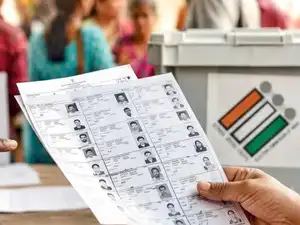
Union Minister Sukanta Majumdar has defended the Election Commission‘s Special Intensive Revision of electoral rolls, accusing the Congress-led opposition of spreading misinformation and creating apprehensions among voters. His remarks come amid growing political disagreement over the revision exercise, which has become a major point of confrontation between the BJP and the INDIA bloc.
Majumdar argued that electoral roll revisions are not new and said similar exercises had taken place under successive governments, including during Congress rule. He maintained that the process is intended to improve the accuracy of voter lists by identifying entries that may no longer meet the requirements for registration.
The minister’s comments form part of a wider political debate over voter deletions, constitutional provisions governing elections and the Election Commission’s responsibility for maintaining electoral rolls.
Majumdar Defends Special Intensive Revision of Electoral Rolls
Speaking about the SIR exercise, Majumdar rejected opposition criticism that the revision process was inherently irregular. He argued that the Election Commission has the constitutional responsibility to maintain accurate electoral rolls and remove entries that are no longer valid.
On October 31, 2026, Majumdar said that intensive revisions had been conducted 12 times since 1952, with the previous exercise taking place in 2004. He used this historical context to challenge the opposition’s portrayal of the current process as an unprecedented development.
He also accused Congress and other opposition parties of spreading misinformation and creating unnecessary concerns among voters. These remarks reflect the BJP’s position that the revision is an administrative exercise intended to improve electoral accuracy rather than target eligible voters.
However, opposition parties have raised concerns about how the process is being implemented and whether eligible citizens could lose their place on electoral rolls because of documentation or verification problems.
Why the INDIA Bloc Is Opposing the SIR Exercise
The INDIA bloc and other opposition parties have questioned the manner in which the Election Commission is conducting the Special Intensive Revision. Their concerns centre on the possibility that genuine voters could be excluded from electoral rolls during the verification process.
Opposition leaders have argued that large-scale deletions require careful scrutiny, particularly when people face difficulties establishing their residence or responding to verification notices. Migrant workers, elderly citizens, economically disadvantaged households and people with limited access to documentation have featured prominently in the wider debate.
The opposition has also questioned the transparency and accountability of the process, demanding that the Election Commission explain how names are being removed and what safeguards are available to people who believe their entries have been wrongly deleted.
The BJP, in contrast, maintains that accurate electoral rolls are essential to democratic elections and that removing duplicate, deceased or otherwise ineligible entries helps protect the integrity of the voting system.
Voter Deletions: Migration, Duplicate Entries and Deceased Electors
One of the biggest points of disagreement surrounding the SIR exercise is the number of names removed from electoral rolls and the reasons behind those deletions.
Majumdar argued that deletions can result from several administrative circumstances, including:
- Deceased voters: Entries belonging to people who have died may need to be removed from electoral records.
- Permanent migration: People who have permanently shifted from their registered constituency may no longer meet the ordinary residence requirement there.
- Duplicate registrations: A person may appear more than once on electoral rolls after registering at a new address without removing an earlier entry.
- Untraceable electors: Some voters may not be located during verification despite repeated attempts by officials.
The Election Commission has identified these categories as reasons for deletions during the revision process. However, the classification of individual entries must follow the prescribed verification procedures, and eligible voters must have an opportunity to challenge incorrect removals.
It is therefore important to distinguish between the total number of deleted entries and the number of eligible citizens who may have been wrongly excluded. The two figures do not necessarily represent the same group.
Constitutional Provisions at the Centre of the Debate
Majumdar defended the Election Commission’s authority to conduct electoral roll revisions, referring to the constitutional framework governing elections in India.
Article 324 of the Constitution gives the Election Commission responsibility for the superintendence, direction and control of elections. The Representation of the People Act, 1950, and the Registration of Electors Rules, 1960, provide the legal framework for preparing and revising electoral rolls.
These provisions allow electoral authorities to update voter records and ensure that the lists reflect the legal requirements for registration. The process must also follow prescribed procedures for verification, objections and appeals.
The central disagreement is not simply whether electoral rolls can be revised. It concerns how the revision is conducted, whether the safeguards are sufficient and how authorities respond when eligible voters dispute their removal.
Election Commission’s Safeguards Against Wrongful Deletions
The government has maintained that the SIR process includes safeguards intended to prevent eligible voters from being removed incorrectly.
In a July 25, 2026, communication, the Ministry of Law and Justice outlined several protections associated with the exercise. These include house-to-house verification, publication of draft electoral rolls and opportunities for voters to submit claims and objections before finalisation.
The stated safeguards include:
- Booth Level Officers are expected to conduct house-to-house verification and make repeated attempts to contact voters who cannot initially be located.
- Officials must record reasons when an elector is proposed for deletion.
- Draft electoral rolls are published to allow voters and political parties to identify discrepancies.
- Eligible citizens can submit claims and objections using the prescribed forms before the final list is published.
- Appeals can be made before designated authorities, with further recourse available through the electoral administration.
- Booth Level Agents nominated by political parties can participate in checking entries and flagging discrepancies.
These measures are intended to make the revision process more transparent and provide opportunities to correct mistakes. Their effectiveness depends on proper implementation and timely resolution of complaints.
INDIA Bloc’s Protest Adds to Political Tensions
The disagreement over electoral roll revisions has extended beyond statements by individual political leaders. Opposition parties have organised protests and public campaigns demanding accountability from the Election Commission.
On November 1, 2026, INDIA bloc parties held a major rally at Ramlila Maidan in New Delhi. Opposition leaders, including Congress leader Rahul Gandhi, criticised the SIR exercise and raised concerns about the independence and functioning of the Election Commission.
The rally reflected the opposition’s effort to turn the voter-roll controversy into a broader debate about democratic institutions and electoral accountability.
The BJP has rejected the opposition’s allegations and argued that political parties should support efforts to maintain accurate voter lists. Its leaders have accused the opposition of questioning electoral institutions for political reasons.
These competing positions have intensified the political confrontation, with both sides presenting sharply different interpretations of the purpose and consequences of the revision exercise.
Bangladesh-Like Regime Change Allegations in the Wider Political Debate
References to Bangladesh-like political developments have also appeared in recent statements by Union ministers during the wider confrontation over the SIR process. Such remarks have been used by BJP leaders to accuse opposition parties of seeking political instability and attempting to weaken democratic institutions.
Union Minister of State for Home Affairs Nityanand Rai, speaking in Surat on November 5, accused Congress of trying to create a Bangladesh-like situation in India and install a government dependent on outside influence. These were political allegations made by the minister, not established findings about the opposition’s intentions.
The distinction is important because criticism of an electoral process, protests against government decisions and demands for institutional accountability are political activities that must be assessed separately from allegations of attempts to destabilise constitutional government.
Why the SIR Debate Matters for Voters
The controversy has implications for millions of people whose eligibility and registration details are recorded in electoral rolls. An accurate voter list is essential for ensuring that eligible citizens can exercise their right to vote while preventing duplicate or invalid entries.
At the same time, verification procedures must not create unnecessary barriers for genuine voters. People who have migrated, changed addresses or lack easy access to official documents may need clear information about how to confirm their registration and correct errors.
For voters, the practical priority is to check their names in the relevant electoral rolls and use the prescribed claims and objection procedures if an entry is missing or incorrect.
Political Dispute Over Electoral Rolls Likely to Continue
Majumdar’s defence of the SIR process highlights the BJP’s position that electoral roll revision is a legitimate administrative exercise backed by constitutional and legal provisions. The opposition, meanwhile, continues to question the implementation of the process and warn about the possibility of eligible voters being excluded.
The debate ultimately involves two important democratic requirements: maintaining accurate electoral records and protecting every eligible citizen’s ability to vote.
Whether the current revision process meets both objectives will depend on the quality of verification, transparency in publishing deletion data and the effectiveness of the mechanisms available to voters seeking corrections. Political accusations alone cannot establish whether individual deletions are justified or wrongful; that requires examination of the relevant records and procedures.
For breaking news and live news updates, like us on Facebook or follow us on Twitter and Instagram. Read more on Latest India on thefoxdaily.com.





COMMENTS 0