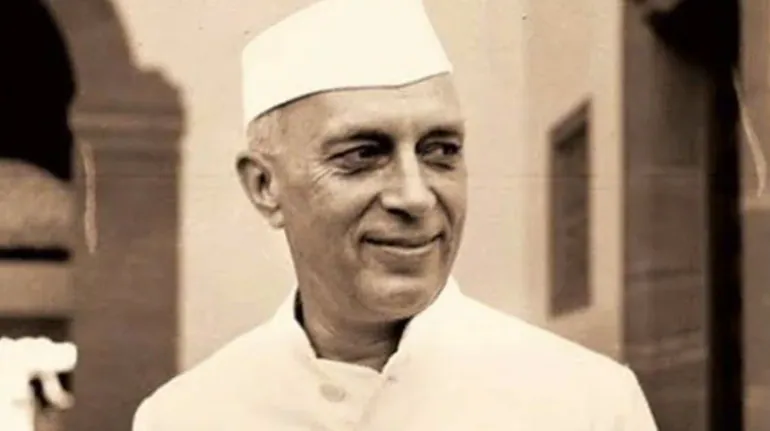
India’s choice of January 26 as Republic Day was rooted in the country’s struggle for independence, but the date also became the subject of an unusual debate involving astrology, public sentiment and the responsibilities of national leadership. A correspondence between India’s first Prime Minister, Jawaharlal Nehru, and Rajendra Prasad, who was then President of the Constituent Assembly, reveals that the decision was not entirely free of discussion about whether the day was considered auspicious.
In September 1949, as the Constituent Assembly’s work on the Constitution approached completion, Prasad brought an astrological concern to Nehru’s attention. An unidentified individual had suggested that January 26 might not be an appropriate date for the Constitution to take effect and that another date should be considered.
Nehru rejected the idea of allowing astrologers to determine an important national programme. In a letter dated September 27, 1949, he made clear that he had little faith in astrology and did not want national decisions to be guided by astrological advice.
Prasad, however, raised a different consideration: the feelings of citizens who genuinely believed in astrology. He argued that leaders acting as representatives of millions of people should not dismiss those sentiments without consideration.
The exchange offers a revealing glimpse into the thinking of two prominent figures involved in shaping independent India’s constitutional framework. It also helps explain why January 26 was ultimately retained, despite the suggestion that another date might be more auspicious.
What Nehru wrote about astrology and the Republic Day date
The correspondence began with a letter Prasad sent to Nehru on September 25, 1949. Prasad enclosed a communication from an unidentified person who had questioned the suitability of January 26 on astrological grounds.
Two days later, Nehru responded with a clear rejection of the suggestion. He wrote:
“I am afraid I have no faith in astrology and certainly I should not like to fix up national programmes in accordance with the dictates of astrologers.”
His response reflected a distinction between personal or religious beliefs and the principles that should guide decisions affecting the entire country. For Nehru, selecting the date on which the Constitution would take effect was a matter of national importance, not a decision that should depend on astrological calculations.
He was also concerned about the practical consequences of changing the date. January 26 had already acquired political and historical significance, and abandoning it would require an explanation to the public. Such a change, he feared, could create disagreement rather than settle the issue.
In his letter, Nehru warned that changing January 26 for another date would require considerable explanation. He also anticipated that many people would resent the decision and that it could lead to a bitter controversy.
“The change of date 26th January for another date would require a great deal of explanation…Many indeed would resent it greatly and there would be a bitter controversy from which we would not emerge happily.”
His objection was therefore not limited to his personal disbelief in astrology. It also involved the political and historical implications of abandoning a date that had a special place in India’s independence movement.
Why Rajendra Prasad asked Nehru to consider public sentiment
Prasad did not necessarily argue that astrology should determine national policy. Instead, he asked Nehru to consider the fact that a large section of the population attached importance to auspicious dates.
In his September 25 letter, Prasad suggested that national leaders had a responsibility to consider the beliefs of people they represented, even if those beliefs were not shared by every member of the leadership.
“When we act not in an individual capacity but as representatives of millions and millions of men and women who have that faith, it may be improper not to consider their feelings in the matter.”
His argument centred on public sentiment and representation. Prasad’s concern was that the leadership should not disregard the feelings of citizens simply because the decision-makers themselves might not follow astrological traditions.
Writing from Pilani in Rajasthan, Prasad also referred to India’s independence on August 15, 1947. He recalled that the date had been finalised without consulting astrologers, even though some people had described it as inauspicious and predicted misfortune.
Despite those concerns, the transfer of power had taken place on August 15. Prasad used the example to illustrate that the country had already faced a similar question when choosing the date of a major national event.
He also acknowledged the special significance of January 26. Rather than insisting that the date must be changed, he suggested that the leadership could informally explore whether another date considered auspicious might be suitable for the Constitution’s inauguration.
Why Nehru opposed changing January 26
Nehru was reluctant to reopen the question because he believed changing the date could create unnecessary confusion and public disagreement. January 26 was not an arbitrary choice. It had a direct connection to the freedom movement and the demand for complete independence from British rule.
He also questioned whether the suggestion forwarded by Prasad genuinely represented the views of millions of Indians. A letter from one unidentified individual, Nehru indicated, was not sufficient evidence that the wider population wanted the date changed.
His response raised a broader question about the role of public beliefs in decisions made by a modern constitutional state. If national programmes were repeatedly adjusted according to competing astrological opinions, it could become difficult for the government to establish a consistent basis for important decisions.
Prasad’s position, meanwhile, highlighted another aspect of leadership: the need to remain aware of the beliefs and sentiments of the people represented by public institutions.
The exchange did not prevent the two leaders from working towards the same constitutional milestone. Ultimately, January 26 remained the date on which the Constitution would come into force.
Why January 26 was chosen as India’s Republic Day
The historical importance of January 26 dates back to the Indian freedom movement. On January 26, 1930, the Indian National Congress observed Purna Swaraj Day, marking its declaration that complete independence from British rule was the country’s objective.
The declaration followed the Congress’s Lahore session in December 1929, where the demand for Purna Swaraj, or complete self-rule, was formally adopted under the presidency of Jawaharlal Nehru.
January 26, 1930, was subsequently observed across the country as a day of independence. People took pledges supporting complete freedom and rejecting the idea of accepting limited constitutional concessions under British rule.
Although India eventually became independent on August 15, 1947, the date of the Purna Swaraj observance remained an important symbol of the national movement. Choosing January 26 for the Constitution’s commencement allowed the new republic to connect its constitutional identity with the earlier demand for complete independence.
This historical connection explains why the date carried significance beyond the question of when the Constitution could legally take effect.
From Constitution adoption on November 26 to commencement on January 26
India’s Constitution was adopted by the Constituent Assembly on November 26, 1949, after nearly three years of deliberations, debates and drafting work. However, the adoption date and the date on which the Constitution came into force were different.
The Constitution was signed by members of the Constituent Assembly and came into effect on January 26, 1950. That day marked India’s formal transition into a sovereign democratic republic, replacing the constitutional arrangements that had governed the country during the initial period after independence.
The decision to retain January 26 therefore linked the country’s new constitutional order with the freedom movement’s 1930 declaration of complete independence.
The distinction between the two dates is important:
- November 26, 1949: The Constituent Assembly adopted the Constitution of India.
- January 26, 1950: The Constitution came into force, and India became a republic.
Both dates are now recognised in India’s constitutional history, but they commemorate different stages in the creation of the republic.
Why November 26 is celebrated as Constitution Day
While January 26 marks the commencement of the Constitution, November 26 commemorates its adoption by the Constituent Assembly. The day is observed across India as Constitution Day, also known as Samvidhan Divas.
The government officially designated November 26 as Constitution Day in 2015 to recognise the adoption of the Constitution and honour the contribution of Dr BR Ambedkar, chairman of the Drafting Committee, along with the other members of the Constituent Assembly.
Ambedkar played a central role in the drafting process, helping shape the document that established the framework for India’s democratic institutions, fundamental rights and constitutional governance.
The annual observance provides an opportunity to revisit the Constitution’s principles, including justice, liberty, equality and fraternity. Educational institutions, government departments and public organisations mark the occasion through activities focused on constitutional values and citizens’ responsibilities.
How Nehru and Rajendra Prasad shaped India’s early constitutional journey
The 1949 correspondence is significant because it captures two different considerations during the formation of the Indian republic. Nehru focused on the importance of keeping national decisions separate from astrological prescriptions, while Prasad emphasised the responsibility of public representatives to remain sensitive to the beliefs of the people.
Both leaders were central to India’s transition from colonial rule to constitutional government. Nehru became the country’s first Prime Minister, while Prasad, who presided over the Constituent Assembly, went on to become India’s first President.
Their exchange also demonstrates that the choice of January 26 was discussed before the Constitution came into force. The date was ultimately retained, not because of an astrological calculation, but because of its established connection with the freedom movement and the demand for Purna Swaraj.
What the 1949 letters reveal about the choice of Republic Day
The exchange between Nehru and Prasad was more than a disagreement over an auspicious date. It reflected a question that India’s founding leadership had to confront while establishing the institutions of a new republic: how should national decisions balance public sentiment, historical significance and the principles guiding constitutional governance?
Prasad’s letter acknowledged the beliefs of citizens who considered astrology important, while Nehru argued that national programmes should not be determined by astrologers. He also warned that abandoning January 26 could create controversy and weaken the historical meaning attached to the date.
In the end, the connection with the Purna Swaraj declaration of 1930 remained decisive. January 26, 1950, became the day India’s Constitution came into force, linking the country’s constitutional beginning with the freedom movement’s demand for complete independence.
As India observes Constitution Day on November 26, the correspondence offers a historical reminder of the discussions that preceded the republic’s birth. It also explains why January 26 continues to hold a distinct place in the country’s national history: it represents the transition from the aspiration for independence to the establishment of constitutional self-government.
For breaking news and live news updates, like us on Facebook or follow us on Twitter and Instagram. Read more on Latest India on thefoxdaily.com.


COMMENTS 0