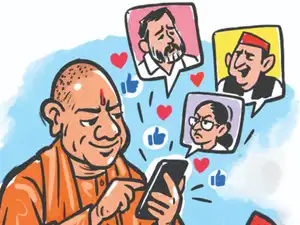
The Uttar Pradesh Chief Electoral Officer’s (CEO) office has apologised after its official X account posted a sarcastic response to Aam Aadmi Party (AAP) leader Sanjay Singh over allegations of caste bias linked to errors in voter records. The controversy began after an incorrectly translated voter entry appeared to read “Ram ne Yadav ko maara” (Ram hit Yadav), prompting Singh to question whether the electoral software was biased.
The office acknowledged that the language and tone of its response were inappropriate for an official government account. It apologised to those who were offended and promised that future communication would remain polite, dignified and formal.
The incident has also drawn attention to errors identified in electoral records prepared for Uttar Pradesh Legislative Council elections, raising questions about the accuracy of voter information and the software used to process entries.
Why Did the UP CEO’s Office Apologise?
The apology followed criticism of a post published by the Uttar Pradesh CEO’s official X handle in response to questions raised by AAP Rajya Sabha MP Sanjay Singh. The exchange concerned an unusual entry in a voter slip in which the name “Ramhit Yadav” was apparently converted into the Hindi phrase “Ram ne Yadav ko maara”.
Singh questioned Chief Election Commissioner Gyanesh Kumar over the error and asked why the incorrect entry appeared to single out a person belonging to the Yadav community. He also questioned whether the software used to prepare electoral records was caste-biased or whether a political agenda was involved.
In its initial response, the UP CEO’s account said that another unusual entry, “Ram ne Sharma ko maara”, had also appeared in the voter list for the recent Legislative Council elections. The account maintained that computers and software were not casteist and acknowledged that an error had occurred.
However, the response went further by making a sarcastic reference to religion and minority communities. It said that authorities were fortunate the incorrect entry had not involved a minority community, otherwise they could have faced accusations of communalism in addition to casteism.
The remark triggered criticism on social media, with users and Opposition leaders questioning the language used by an official electoral authority. The controversy shifted attention from the original voter-record error to the conduct and communication standards of the election office. The Indian Express reported on the apology and the controversy surrounding the post. :chatgpt-content-reference{index=”0″}
UP CEO Navdeep Rinwa Says Language Was Inappropriate
On October 27, Uttar Pradesh Chief Electoral Officer Navdeep Rinwa issued an apology through the official social media account. The statement acknowledged that the language, tone and sharp nature of the earlier response did not meet the standards expected from an official communication channel.
The office also said it had taken note of the public anger generated by the post and apologised to people who felt surprised, upset or offended by the remarks.
“The language, tone, and sharp nature of the comments in the quoted post of this handle are not in line with the nature of communication expected from this official handle,” the statement said.
It added: “We sincerely apologise to those who are surprised and upset by this. From now on, our communication will be polite and formal.”
The apology was an acknowledgement of the inappropriate tone of the social media response. It did not, by itself, resolve the separate questions surrounding the voter-list errors or their causes. :chatgpt-content-reference{index=”1″}
How Did ‘Ramhit Yadav’ Become ‘Ram Ne Yadav Ko Maara’?
The controversy originated from an error involving the conversion of names from English into Hindi while preparing electoral records. According to the UP CEO’s explanation, some names were supposed to be transliterated from English into Hindi, meaning their sounds should have been reproduced in the Hindi script.
Instead, the software translated certain English words into Hindi phrases based on their meanings. This created unusual entries that appeared to turn names into sentences.
The example cited by the election office involved the name “Ramhit Yadav”. When processed incorrectly, it appeared as “Ram ne Yadav ko maara”, which means “Ram hit Yadav”. The office also referred to another entry that appeared as “Ram ne Sharma ko maara”.
The distinction between transliteration and translation is important. Transliteration preserves the pronunciation of a name when changing scripts, whereas translation converts the meaning of words into another language. Applying translation to names can produce incorrect and potentially misleading voter-record entries.
The explanation offered by the UP CEO’s office pointed to a combination of software-related errors and human negligence. The incident raised concerns about the need for proper verification before voter information is finalised. :chatgpt-content-reference{index=”2″}
158 Errors Found in More Than 14.81 Lakh Voter Entries
The controversy emerged after unusual entries were identified in electoral records prepared for the biennial elections to the Uttar Pradesh Legislative Council. The records covered five graduate constituencies and six teachers’ constituencies.
According to reports, 158 discrepancies were identified among approximately 14.81 lakh entries. The errors involved voter names or details of their relatives, including entries that appeared nonsensical after being processed by the software.
Following the reports, Uttar Pradesh CEO Navdeep Rinwa sought explanations from the officials responsible for the electoral records. The office also said that the reasons behind the discrepancies were being examined and that appropriate steps would be taken to prevent similar mistakes from recurring.
The divisional commissioners concerned serve as Electoral Registration Officers (EROs) for these electoral rolls, while district magistrates function as Assistant Electoral Registration Officers (AEROs). Explanations were sought from the officials concerned over the discrepancies. :chatgpt-content-reference{index=”3″}
Sanjay Singh Questions Election Commission Over Caste Bias Allegations
AAP Rajya Sabha MP Sanjay Singh raised the issue publicly after the unusual voter entry came to light. In his post on X, he questioned why the incorrect translation appeared to involve a Yadav and asked whether similar errors had affected names associated with other communities.
Singh also questioned Chief Election Commissioner Gyanesh Kumar and asked whether the software used by election authorities was casteist or whether the process reflected the agenda of a political party.
His criticism turned an apparent technical error into a wider political controversy over the accuracy and impartiality of electoral records. The UP CEO’s sarcastic response intensified the dispute, prompting further criticism of the official account.
The exchange also highlighted the sensitivity surrounding voter information. Electoral rolls are essential records used to establish voter eligibility and support the conduct of elections. Errors in names and personal details can create confusion for voters and raise concerns about the reliability of the registration process.
Opposition Leaders Criticise the Official X Handle
The controversial response drew criticism from Opposition figures beyond Sanjay Singh. Congress leader Supriya Shrinate also questioned the language used by the Uttar Pradesh CEO’s account, criticising the manner in which an official institution had responded to concerns about voter records.
Singh described the remarks as communal and criticised the tone of the response. The backlash continued after the account’s reference to a minority community became a central part of the controversy.
The episode renewed debate over how government departments and constitutional authorities should use social media platforms. Official accounts are frequently used to clarify public concerns, share administrative updates and respond to allegations. Their language can influence public confidence in the institutions they represent.
In this case, the UP CEO’s office ultimately acknowledged that its response had fallen short of the communication standards expected from an electoral authority and promised to adopt a more restrained approach. :chatgpt-content-reference{index=”4″}
What Happens Next?
The Uttar Pradesh CEO’s office has said that it is examining the reasons behind the unusual voter-record entries and taking steps to prevent similar errors. The explanations sought from officials responsible for the electoral rolls are part of the process of identifying how the discrepancies occurred.
The apology has addressed the controversy over the official account’s language, but questions remain about the accuracy of the affected records, the software processes involved and the safeguards used to verify voter information.
The incident also highlights the importance of distinguishing between a technical explanation and the responsibility of public institutions to communicate respectfully. While the office attributed the unusual entries to translation-related errors and human negligence, the controversy demonstrated how an inappropriate official response can create a separate public dispute.
For now, the UP CEO’s office has promised more polite and formal communication. The focus will remain on examining the electoral-record discrepancies and ensuring that errors in voter names and other personal details do not recur.
For breaking news and live news updates, like us on Facebook or follow us on Twitter and Instagram. Read more on Latest India on thefoxdaily.com.






COMMENTS 0