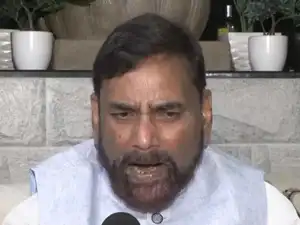
The political debate over the Special Intensive Revision (SIR) of electoral rolls has intensified, with the Janata Dal (United) urging Congress leader Rahul Gandhi to accept Union Home Minister Amit Shah’s challenge for a discussion in Parliament. JD(U) has argued that Gandhi’s participation would demonstrate his commitment to parliamentary democracy and provide an opportunity to discuss the concerns surrounding the voter-list revision exercise.
The exchange has added another dimension to the ongoing political disagreement between the ruling alliance and the Congress over the functioning of the Election Commission and the SIR process. While JD(U) has called for a parliamentary discussion, the Congress has taken a different position, demanding the resignation of Chief Election Commissioner Gyanesh Kumar.
JD(U) Asks Rahul Gandhi to Participate in the SIR Debate
The Janata Dal (United) has called on Rahul Gandhi to respond to Amit Shah’s challenge and engage in a debate on the Special Intensive Revision exercise in Parliament. The party believes that the issue should be discussed through parliamentary proceedings rather than remaining limited to political statements and public exchanges.
JD(U)’s appeal centres on the importance of parliamentary debate in addressing disagreements over electoral processes. By accepting the challenge, Gandhi would have an opportunity to present the Congress party’s concerns about SIR, explain its objections and respond to the arguments put forward by the government.
The party has maintained that participation in such a discussion would reflect confidence in parliamentary democracy. The demand also places pressure on the Congress leadership to clarify whether it is prepared to take the dispute over SIR to the floor of Parliament.
What Is the Special Intensive Revision Exercise?
The Special Intensive Revision, commonly known as SIR, is an exercise involving the revision of electoral rolls. Voter lists are an essential part of the electoral system because they determine who is registered to vote in elections.
The accuracy of electoral rolls is important for ensuring that eligible citizens can exercise their voting rights. Revision exercises are intended to update voter records and address changes in electoral registration. However, the process can become politically contentious when parties disagree over its implementation, procedures or possible consequences for voters.
The current political disagreement has brought questions surrounding SIR into the wider debate over electoral administration. The government and opposition have exchanged positions on the issue, with the Congress demanding accountability from the Election Commission and JD(U) advocating a parliamentary discussion.
Amit Shah’s Challenge Adds to the Political Exchange
Union Home Minister Amit Shah’s challenge to Rahul Gandhi has become a central point in the latest political confrontation. JD(U) has referred to the challenge while asking the Congress leader to participate in a debate on SIR.
The party’s argument is that Parliament provides a formal platform where political representatives can raise objections, question government positions and explain their own views. A discussion would allow arguments concerning the revision exercise to be presented directly before lawmakers.
The demand also reflects the broader disagreement between the ruling alliance and the opposition over how concerns about electoral procedures should be addressed. While JD(U) has emphasised parliamentary engagement, the Congress has continued to press its demand concerning the Election Commission’s leadership.
JD(U) Criticises Rahul Gandhi’s Remarks on PM Modi
Alongside its demand for a debate on SIR, JD(U) has criticised Rahul Gandhi over his comments concerning Prime Minister Narendra Modi’s leadership and foreign support. The criticism has widened the political exchange beyond the electoral-roll revision exercise.
The remarks have become part of the broader disagreement between the ruling alliance and the Congress. JD(U) has questioned Gandhi’s statements, while the Congress has maintained its focus on concerns about the electoral process and the Election Commission.
These exchanges illustrate how disagreements between political parties can extend across several issues at the same time. The SIR debate, criticism of political leadership and questions about institutional accountability have all become part of the current confrontation.
Congress Demands Gyanesh Kumar’s Resignation
Responding to the controversy surrounding SIR, the Congress has demanded the resignation of Chief Election Commissioner Gyanesh Kumar. The demand reflects the party’s objections to the electoral-roll revision exercise and its concerns about the Election Commission’s role.
The Congress’s position differs from JD(U)’s call for Rahul Gandhi to accept Amit Shah’s challenge. Rather than centring its response on the proposed parliamentary debate, the opposition party has raised the question of accountability within the Election Commission.
The demand for the Chief Election Commissioner’s resignation has added to the political pressure surrounding the issue. It has also highlighted the wider disagreement over the institution responsible for overseeing electoral processes in India.
Why the SIR Dispute Matters
The disagreement over SIR has implications beyond the immediate political exchange between the ruling alliance and the Congress. Electoral rolls are fundamental to the democratic process, and questions about their preparation and revision can directly affect public confidence in elections.
For political parties, the issue involves both administrative procedures and the protection of voters’ interests. Any disagreement over how voter records are updated can lead to demands for greater transparency, explanations and accountability.
Parliamentary debate can provide an opportunity for elected representatives to examine these concerns. It allows political parties to present their positions, question decisions and seek explanations through established legislative procedures.
At the same time, demands directed at the Election Commission raise broader questions about institutional responsibility. The independence and credibility of electoral administration remain important to public confidence in the voting process.
What Happens Next in the SIR Political Debate?
The latest exchange leaves several questions about the direction of the political dispute. One concerns whether Rahul Gandhi will accept Amit Shah’s challenge and participate in a parliamentary discussion on the Special Intensive Revision exercise.
Another concerns how the Congress will pursue its demand for Gyanesh Kumar’s resignation and whether the disagreement will lead to further political discussions over the Election Commission’s role.
For now, JD(U) has urged Gandhi to use Parliament as the platform for addressing the controversy, while the Congress has continued to demand accountability from the Chief Election Commissioner. The competing positions reflect the continuing disagreement between the ruling alliance and opposition parties over the SIR exercise.
The debate is likely to remain focused on electoral-roll revision, parliamentary accountability and the responsibilities of the Election Commission as political parties continue to present their respective positions.
For breaking news and live news updates, like us on Facebook or follow us on Twitter and Instagram. Read more on Latest India on thefoxdaily.com.






COMMENTS 0