The road to power in Uttar Pradesh ahead of the 2027 Assembly elections is increasingly running through Ayodhya. Alongside debates over governance, welfare schemes and caste equations, issues surrounding Lord Ram, the Ram Mandir and Sanatan Dharma have become central to the state’s political discourse.
The alleged embezzlement of donations made to the Ram Mandir has given the opposition Congress and Samajwadi Party (SP) an opportunity to question the BJP‘s moral credibility. However, in doing so, both parties are also engaging with the same religious narrative that the BJP has spent decades establishing in mainstream politics.
From Ayodhya to Kashi and Mathura, religion has become one of the defining themes of Uttar Pradesh Politics. Rather than avoiding the issue, opposition leaders are increasingly presenting themselves as defenders of Sanatan values while attempting to separate faith from allegations of financial wrongdoing.
How the BJP Changed Uttar Pradesh’s Political Narrative
For years, the BJP has combined Hindutva with governance, welfare and development, presenting Hindu identity as a key part of its political messaging.
The construction of the Ram Mandir, redevelopment of the Kashi Vishwanath Corridor and large-scale infrastructure projects in Ayodhya have helped the party portray Uttar Pradesh as the centre of India‘s cultural and civilisational revival.
Under Chief Minister Yogi Adityanath, pilgrimage centres have also been promoted as symbols of economic growth, tourism and infrastructure development, allowing the BJP to merge religious identity with governance.
As a result, political opponents WHO once criticised the BJP’s ideological approach are now increasingly engaging with similar religious themes.
Ram Mandir Donation Controversy Becomes Political Battleground
The alleged theft of donations at the Ram Mandir has provided the opposition with a powerful campaign issue.
The Congress and Samajwadi Party argue that questioning financial accountability does not amount to questioning faith or Lord Ram. Instead, they say devotees deserve transparency regarding money donated to one of India’s most important temples.
However, the controversy has also allowed the BJP to revisit the history of the Ram Janmabhoomi movement and remind voters of its long-standing association with the temple issue.
Yogi Adityanath Shifts Focus to Political History
Rather than limiting the debate to the alleged donation controversy, Chief Minister Yogi Adityanath has repeatedly highlighted the opposition’s historical position during the Ram Mandir movement.
Speaking at the AajTak Panchayat event, Yogi questioned how parties that had allegedly opposed religious processions and temple-related activities in the past were now presenting themselves as defenders of faith.
He also referred to the firing on karsevaks during the Ayodhya movement, arguing that voters should remember the political history surrounding the Ram Mandir before judging current controversies.
On the donation issue itself, Yogi said action was initiated after the temple trust sought an Investigation and that those allegedly involved had been arrested following the Special Investigation Team (SIT) report.
Every Party Has Its Own Ram Mandir Narrative
While all major parties are discussing the Ram Mandir issue, each has adopted a different political strategy.
- BJP: Presents itself as the party that fulfilled the decades-old promise of constructing the Ram Mandir.
- Samajwadi Party: Frames the issue as one of accountability while adopting stronger Hindu symbolism.
- Congress: Argues that protecting temple donations is part of respecting faith and transparency.
The controversy has therefore become both a governance issue and a larger debate over political ownership of religious identity.
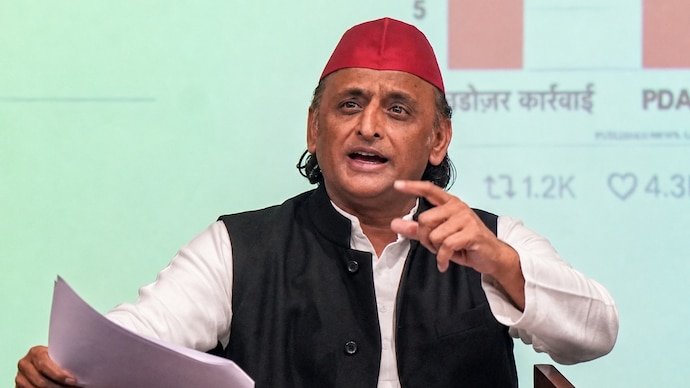
Akhilesh Yadav’s Soft Hindutva Strategy
Political observers believe Samajwadi Party chief Akhilesh Yadav has gradually repositioned his party ahead of the 2027 election.
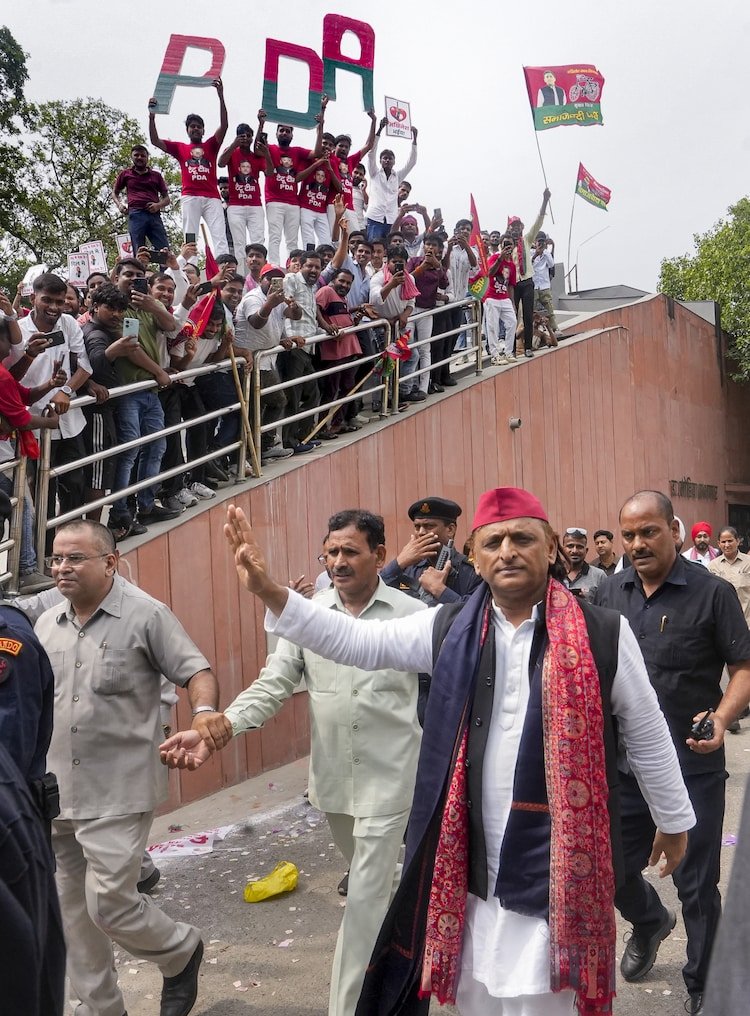
Instead of relying solely on the traditional PDA (Pichhda, Dalit and Alpsankhyak) coalition, Akhilesh has increasingly embraced Hindu religious symbolism.
In recent months, he has:
- Recited verses from the Hanuman Chalisa during public events.
- Spoken openly about astrology and religious beliefs.
- Expressed support for religious leaders during disputes with the state government.
- Raised concerns about temple-related issues.
- Projected himself as a leader comfortable with public expressions of faith.
This marks a significant shift from the Samajwadi Party’s political messaging during the 1990s and early 2000s.
SP Plans Rath Yatra Ahead of Elections
The Samajwadi Party is preparing to launch the proposed Samajwadi PDA Rath Yatra, which may begin from Ayodhya, Mathura or Kashi.
The choice of these religious centres reflects the party’s effort to connect its social justice agenda with Hindu religious symbolism.
Alongside the yatra, Akhilesh Yadav is also expected to inaugurate the newly built Kedareshwar Mahadev Temple in Etawah, another move widely viewed as politically significant ahead of the Assembly elections.
SP leaders have also said they intend to take the Ram Mandir donation controversy across Uttar Pradesh during the campaign.
Congress Also Repositions on Sanatan
The Congress has similarly adjusted its political messaging in Uttar Pradesh.
For years, the party largely emphasised constitutional secularism while allowing the BJP to dominate conversations around Hindu identity.
Now, Congress leaders are increasingly describing themselves as followers of Sanatan Dharma while insisting that faith and accountability can coexist.
State Congress president Ajay Rai has argued that the Ram Mandir controversy is about alleged financial irregularities rather than religion itself.
He has also stated that Congress leaders from Kashi are genuine followers of Sanatan traditions while questioning the BJP’s handling of temple-related issues.
For breaking news and live news updates, like us on Facebook or follow us on Twitter and Instagram. Read more on Latest India on thefoxdaily.com.





COMMENTS 0