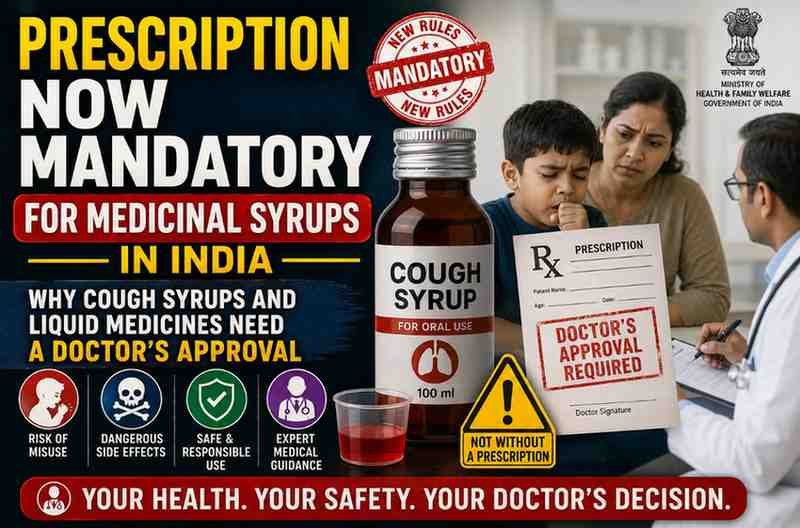
Buying a bottle of cough syrup from a pharmacy without seeing a doctor has long been common practice in India. Whether for a seasonal cold, fever, or a lingering cough, many people relied on over-the-counter liquid medicines as part of self-care. That routine is now changing.
Following amendments to the Drugs Rules, medicinal syrups—including cough syrups and other liquid formulations can no longer be purchased without a valid prescription from a registered medical practitioner. Interestingly, cough lozenges, tablets, and pills remain available over the counter, highlighting a targeted regulatory approach focused specifically on liquid medicines.
The decision reflects increasing concerns over medicine quality, misuse, and public health safety, particularly after several children died following the consumption of adulterated cough syrup in Madhya Pradesh last year.
What Has Changed Under the New Rules?
The amended regulations require pharmacists to dispense medicinal syrups only when patients present a doctor’s prescription.
This change applies to:
- Cough syrups.
- Liquid antibiotics.
- Pediatric medicinal syrups.
- Other prescription-based liquid formulations.
However, certain dosage forms such as:
- Cough lozenges.
- Tablets.
- Pills.
will continue to be sold over the counter, depending on their classification and ingredients.
Why Are Authorities Focusing on Syrups?
The move is partly rooted in safety concerns involving contaminated and substandard liquid medicines. Syrups, especially pediatric formulations, require stringent manufacturing standards because they are often consumed by vulnerable populations, including infants and children.
The deaths of 24 children in Madhya Pradesh after consuming adulterated cough syrup brought renewed attention to quality control and regulatory oversight.
The tragedy highlighted the potentially devastating consequences when medicine safety systems fail.
The Hidden Risks of Self-Medicating With Cough Syrups
Many consumers view cough syrups as harmless household remedies, but doctors say inappropriate use can carry risks.
Potential problems include:
- Incorrect diagnosis.
- Delayed treatment of serious illnesses.
- Drug interactions.
- Overuse of antibiotics.
- Unnecessary medication exposure in children.
- Adverse reactions.
Symptoms such as persistent cough can sometimes indicate conditions that require medical evaluation rather than symptomatic treatment alone.
Why Tablets and Lozenges Are Treated Differently
The decision to continue allowing certain tablets and lozenges to be sold over the counter reflects differences in manufacturing, dosage, and risk profiles.
Liquid formulations present unique challenges:
- They are more susceptible to contamination.
- They require precise ingredient mixing.
- Storage conditions are critical.
- Children often consume them.
- Errors in composition can have severe consequences.
This explains why regulators have adopted stricter controls specifically for medicinal syrups.
Comparison: Before and After the Rule Change
| Category | Earlier Practice | Current Requirement |
|---|---|---|
| Cough syrups | Often sold without prescription | Prescription mandatory |
| Liquid medicines | Easily available | Doctor’s prescription required |
| Lozenges | Over-the-counter | Still available OTC |
| Tablets and pills | OTC availability depending on type | No major change for many products |
| Pediatric syrups | Frequently purchased directly | Prescription-based access |
Why India’s Approach to Medicine Safety Is Evolving
India is one of the world’s largest producers of pharmaceuticals, supplying medicines to numerous countries. Maintaining public confidence in medicine quality is therefore both a public health priority and an economic necessity.
Recent years have seen greater emphasis on:
- Strengthening quality control.
- Improving manufacturing standards.
- Increasing inspections.
- Enhancing traceability.
- Preventing substandard medicines from reaching patients.
The stricter regulation of medicinal syrups forms part of this broader effort.
An Insight Competitors Often Miss: This Rule Is About More Than Cough Syrups
At first glance, requiring prescriptions for syrups may appear inconvenient. But the larger issue is the changing philosophy of healthcare regulation.
For decades, self-medication has been deeply ingrained in many countries, including India. However, modern medicine increasingly emphasizes rational drug use and physician-guided treatment.
The new rules represent a shift from convenience-based medicine access toward safety-focused healthcare practices.
In that sense, the regulation is not merely about cough syrup it reflects a broader transformation in how medicines are prescribed, monitored, and consumed.
What This Means for Parents
Parents often rely on liquid medicines because children have difficulty swallowing tablets.
The new rules mean that:
- Doctor consultations may become more important.
- Prescriptions should be retained for repeat purchases when appropriate.
- Parents should avoid using leftover medicines without advice.
- Symptoms that seem minor may warrant proper evaluation.
While this may involve additional steps, healthcare professionals argue that it improves safety and reduces unnecessary medication use.
Will This Affect Antibiotic Stewardship?
Experts have long warned against the indiscriminate use of antibiotics, which contributes to antimicrobial resistance.
By tightening access to liquid medicines, especially antibiotic syrups, authorities hope to encourage more responsible prescribing practices.
This could help:
- Reduce inappropriate antibiotic use.
- Slow the development of drug resistance.
- Improve treatment outcomes.
- Protect future generations from difficult-to-treat infections.
Looking Ahead: Stricter Oversight May Become the Norm
Public health experts believe regulatory scrutiny over medicines is likely to increase in the coming years.
Future reforms may focus on:
- Digital prescriptions.
- Improved medicine tracking systems.
- Enhanced manufacturing surveillance.
- Stronger pharmacovigilance.
- Greater patient awareness.
As healthcare becomes more evidence-driven, patient safety is expected to take precedence over convenience.
Conclusion
The requirement for a doctor’s prescription to purchase medicinal syrups marks a significant shift in India’s approach to medicine regulation. Prompted by concerns over safety and quality, particularly following tragic incidents involving contaminated cough syrups, the move aims to ensure that liquid medicines are used more responsibly and under medical supervision.
While the change may initially feel inconvenient for consumers accustomed to easy access, it reflects a broader commitment to safer healthcare practices. In an era where medicine quality and rational drug use are becoming increasingly important, the humble cough syrup has become the center of a much larger conversation about patient safety and public trust.
Sometimes, the most important ingredient in medicine is not what’s inside the bottle—but the safeguards surrounding it.
For breaking news and live news updates, like us on Facebook or follow us on Twitter and Instagram. Read more on Latest Health on thefoxdaily.com.






COMMENTS 0