Primary Keyword: plant-based wound dressing
LSI Keywords: sustainable wound care technology, biofilm prevention wounds, antibiotic wound dressing Innovation, eco-friendly medical materials, wound infection treatment early stage, tetracycline delivery dressing, advanced wound healing materials, Healthcare sustainability innovation
Introduction: A Smart Solution to a Costly Global Problem
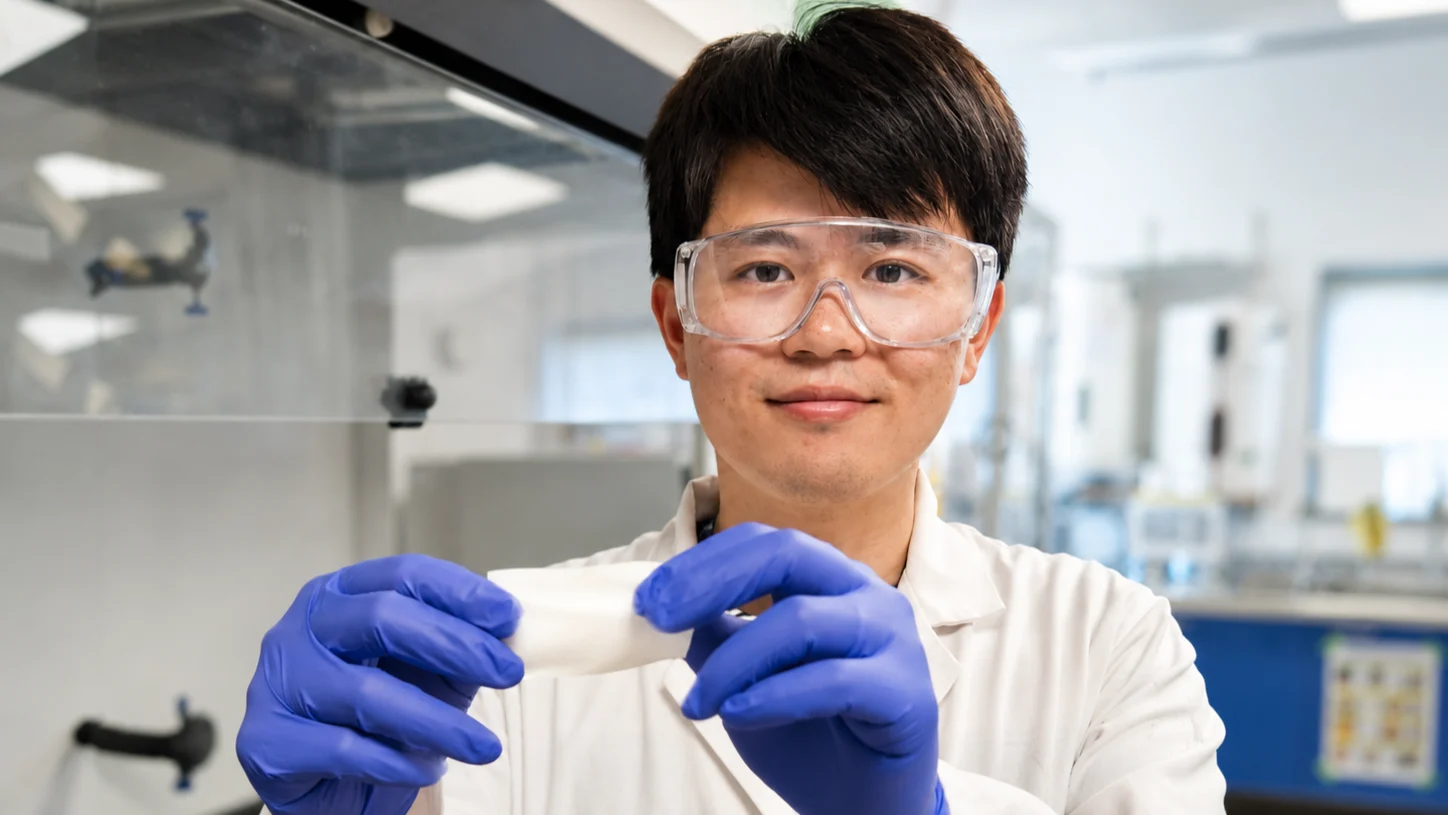
Wound infections remain one of the most persistent challenges in modern medicine—costing healthcare systems billions and delaying recovery for millions of patients. Now, researchers have developed a plant-based wound dressing that could change how infections are prevented, not just treated.
Created by scientists at the University of Bath, this innovative dressing delivers antibiotics directly to wounds during the most critical early hours—before bacteria can form protective biofilms that make infections harder to treat.
Who: Researchers from the University of Bath, with collaborators from leading UK institutions
What: A two-sided plant-based wound dressing that releases antibiotics
When: Recent breakthrough published in a scientific journal
Where: United Kingdom research laboratories
Why: To prevent infections at an early stage and improve healing outcomes
How: Using sustainable polymers derived from plant-based materials
The innovation sits at the intersection of healthcare and sustainability—two fields that rarely overlap so effectively.
The Problem: Why Wound Infections Are So Hard to Treat
When bacteria enter a wound, the clock starts ticking. Within hours, they can form a biofilm—a slimy protective layer that shields them from antibiotics and the body’s immune system.
Why Biofilms Are Dangerous
- Act as a barrier against antibiotics
- Slow down or completely halt healing
- Increase risk of chronic infection
- Require stronger, prolonged treatments
Once a biofilm forms, treatment becomes significantly more complicated. This is why timing is everything—and why early intervention is critical.
Key Insight: Preventing biofilm formation is far more effective than trying to eliminate it after it develops.
The Innovation: How This Plant-Based Wound Dressing Works
The newly developed dressing is not just another medical covering—it is a dual-function system designed to both treat and protect.
A Two-Sided Design with Distinct Roles
| Layer | Function |
|---|---|
| Inner (wound-facing side) | Releases antibiotic directly into the wound |
| Outer layer | Acts as a protective barrier and controls moisture |
This clever design ensures that medication is delivered exactly where it’s needed—while the outer layer maintains an optimal healing environment.
Rapid Antibiotic Delivery
- Releases tetracycline quickly
- Reaches effective levels within four hours
- Targets infection during the most vulnerable stage
This early response dramatically reduces the chances of bacteria gaining a foothold.
Sustainable Science: Why Plant-Based Materials Matter
One of the most groundbreaking aspects of this innovation is its material composition.
Unlike traditional wound dressings that rely on petroleum-based plastics, this dressing is made from plant-derived polymers. These materials were originally developed for sustainable packaging but have now been adapted for medical use.
Benefits of Plant-Based Polymers
- Reduced environmental impact
- Renewable and sustainable sources
- Comparable performance to synthetic materials
- Potential for scalable production
This marks an important shift toward eco-friendly healthcare solutions, where performance and sustainability go hand in hand.
The Science Behind the Material: Small Changes, Big Impact
Interestingly, the two layers of the dressing are made from polymers that are almost identical—differing by just two carbon atoms.
Yet, when spun into ultra-fine fibres, these tiny molecular differences produce dramatically different behaviours:
- One side attracts and delivers antibiotics
- The other repels water and protects the wound
This highlights a powerful concept in material science: small molecular changes can lead to large functional differences.
Proven Results: Fighting Infection-Causing Bacteria
The dressing has already been tested in laboratory conditions against common bacteria responsible for wound infections.
Bacteria Targeted
- Staphylococcus aureus
- Pseudomonas aeruginosa
Key Outcomes
- Reduced biofilm formation by over 90%
- Significant decrease in bacterial growth
- No toxicity observed in human skin cells
These results suggest that the dressing is not only effective but also safe for potential medical use.
Comparison: Traditional vs Advanced Wound Dressings
| Feature | Traditional Dressings | Plant-Based Dressing |
|---|---|---|
| Material | Petroleum-based | Plant-derived polymers |
| Antibiotic delivery | External application | Built-in, targeted release |
| Biofilm prevention | Limited | High (early intervention) |
| Environmental impact | Higher | Lower |
This comparison shows how the new approach goes beyond incremental improvement—it redefines how wound care can work.
Why This Matters: Real-World Impact on Healthcare
The implications of this innovation extend far beyond the laboratory.
Potential Benefits
- Faster wound healing
- Reduced need for prolonged antibiotic use
- Lower risk of chronic infections
- Decreased healthcare costs over time
In systems like the NHS, where wound care already costs billions annually, even small improvements can translate into massive savings.
Insight: Innovations that combine early intervention with sustainability could redefine cost-effective healthcare in the coming decade.
A Unique Angle: The Convergence of Sustainability and Medicine
One of the most exciting aspects of this breakthrough is not just its medical effectiveness—but its broader significance.
For years, sustainability and advanced healthcare have been treated as separate goals. This innovation proves they can coexist.
What This Signals
- Future medical materials may prioritise eco-friendly design
- Waste reduction could become a standard in healthcare products
- Sustainable polymers may replace traditional plastics in clinical settings
This is more than a new dressing—it’s a glimpse into the future of responsible medical innovation.
Challenges Ahead: From Lab to Hospital
Despite promising results, the dressing is not yet ready for widespread clinical use.
What Still Needs to Happen
- Clinical trials in real-world patients
- Regulatory approvals
- Large-scale manufacturing validation
These steps are essential to ensure safety, effectiveness, and accessibility before the technology can reach hospitals.
Future Outlook: What Comes Next?
The success of this plant-based wound dressing opens the door to several possibilities:
- Customised dressings for different types of wounds
- Integration with smart monitoring technologies
- Expansion into other drug-delivery systems
As research continues, we may soon see a new generation of smart, sustainable medical materials that actively participate in healing.
Conclusion: A Small Dressing with Big Potential
The development of this plant-based wound dressing represents a major step forward in both healthcare innovation and sustainability.
By targeting infections early, preventing biofilm formation, and reducing environmental impact, it addresses multiple challenges at once.
Final Insight: The future of medicine may not just be about stronger drugs—but smarter delivery systems that act faster, cleaner, and more sustainably.
For breaking news and live news updates, like us on Facebook or follow us on Twitter and Instagram. Read more on Latest Health on thefoxdaily.com.





COMMENTS 0