- Apple’s Biggest Leadership Shift in Over a Decade
- The Insider Advantage: 25 Years Inside Apple
- The Man Behind Apple’s Most Important Products
- Why Now? The Timing Behind the Transition
- A Strategic Shift: Back to Hardware-Centric Leadership?
- Comparison: Tim Cook vs John Ternus Leadership Style
- The “Invisible” Executive: Why His Low Profile Matters
- What Comes Next: Apple’s Future Under Ternus
- Tim Cook’s Continued Influence
- The Bigger Picture: Why This Leadership Change Matters
- Conclusion: A New Chapter Begins
Apple’s Biggest Leadership Shift in Over a Decade
Apple is entering a new era.
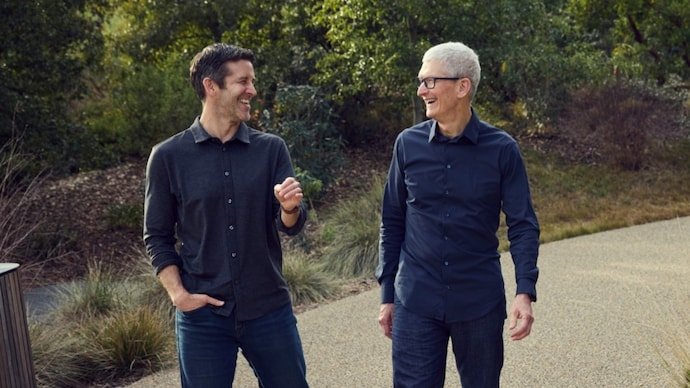
After nearly 15 years at the helm, Tim Cook is stepping down as CEO, handing over leadership to John Ternus a relatively low-profile but highly influential insider who has spent a quarter-century inside the company.
This transition raises important questions: Who is John Ternus? Why him? And what does his leadership mean for Apple’s future?
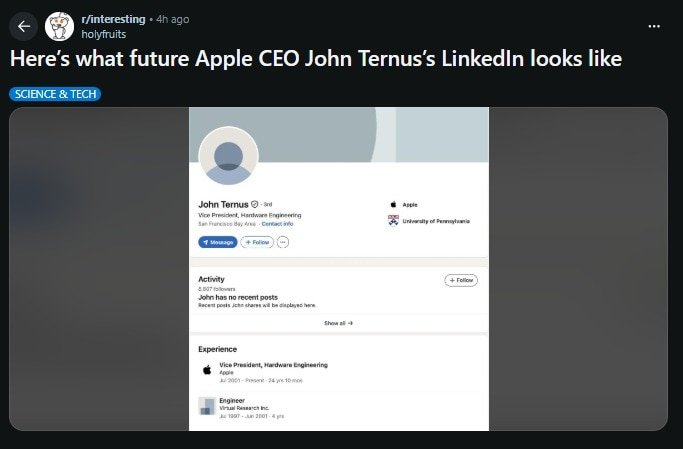
At first glance, Ternus may seem like an unusual choice. He’s not a public-facing executive, rarely makes headlines, and maintains a minimal online presence. But inside Apple, he is anything but invisible.
In fact, his appointment may signal something much bigger a strategic shift in how Apple plans to innovate in the coming decade.
The Insider Advantage: 25 Years Inside Apple
John Ternus joined Apple in 2001, long before the iPhone transformed the company into a global powerhouse. Over the years, he steadily rose through the ranks, eventually becoming Senior Vice President of Hardware Engineering.
Unlike many CEOs who arrive with external experience, Ternus represents a different model: the deeply embedded insider.
This brings several advantages:
- Deep understanding of Apple’s product philosophy
- Strong relationships across engineering and design teams
- First-hand experience with the company’s biggest technological transitions
In a company known for secrecy and tight integration, this kind of institutional knowledge is invaluable.
The Man Behind Apple’s Most Important Products
While not widely known to the public, Ternus has played a central role in shaping Apple’s hardware ecosystem.
He has overseen development of:
- Mac computers, including the transition to Apple Silicon
- iPads and their evolving product lineup
- AirPods and other key accessories
These are not side projects they represent the core of Apple’s Business, contributing a significant share of its revenue.
Perhaps his most important contribution has been leading the shift to Apple’s in-house chips. This move fundamentally changed the performance and efficiency of Macs, setting new standards across the industry.
In many ways, Ternus has already been shaping Apple’s future just without the spotlight.
Why Now? The Timing Behind the Transition
The leadership change did not come out of nowhere.
For months, there were subtle signals pointing toward Ternus as a likely successor:
- Increased public appearances at product launches
- Greater involvement in major announcements
- Direct engagement with global teams and stakeholders
These shifts suggested a carefully managed transition rather than a sudden decision.
The timing is also significant. Apple recently marked a major milestone its 50th anniversary. Leadership changes often coincide with such moments, offering a symbolic reset for the future.
A Strategic Shift: Back to Hardware-Centric Leadership?
One of the most important implications of Ternus’ appointment is what it says about Apple’s strategic direction.
Under Tim Cook, Apple achieved extraordinary financial success, expanding its services business and reaching unprecedented market valuation. However, critics often argued that innovation in hardware had slowed compared to earlier eras.
Ternus represents a different approach.
As an engineer deeply involved in product development, his leadership could bring:
- Greater focus on breakthrough hardware innovation
- Closer integration between design and leadership decisions
- A renewed emphasis on flagship product differentiation
In simple terms, Apple may be doubling down on what made it iconic in the first place category-defining products.
Comparison: Tim Cook vs John Ternus Leadership Style
| Aspect | Tim Cook | John Ternus |
|---|---|---|
| Background | Operations and business | Engineering and hardware |
| Leadership Focus | Efficiency, scale, services growth | Product innovation, hardware development |
| Public Presence | Highly visible | Low-profile |
| Strategic Strength | Execution and profitability | Technical vision and product design |
The “Invisible” Executive: Why His Low Profile Matters
One of the most intriguing aspects of John Ternus is how little is publicly known about him.
He maintains a minimal digital footprint, with limited activity on professional platforms and almost no public commentary.
In an era where executives often build personal brands, this stands out.
But within Apple’s Culture, it makes perfect sense.
Apple has always prioritized products over personalities. Leaders are expected to stay focused on execution rather than visibility. Ternus embodies that philosophy.
His low profile may actually be a strength allowing him to lead without distraction and maintain the company’s tradition of secrecy.
What Comes Next: Apple’s Future Under Ternus
With Ternus taking charge, attention now turns to what Apple will do next.
Several areas are likely to define his leadership:
1. Next-Generation Devices
Apple is reportedly working on major hardware innovations, including foldable devices and new form factors. These could represent the biggest changes to its product lineup in years.
2. AI Integration
While Apple has been slower than some competitors in the generative AI Race, integrating AI into hardware and software ecosystems will be a key challenge.
3. Wearable Technology
Future products may include advanced wearables such as smart glasses, potentially opening entirely new categories.
Ternus’ engineering background positions him well to drive these initiatives.
Tim Cook’s Continued Influence
Although stepping down as CEO, Tim Cook is not leaving Apple.
He will transition to the role of executive chairman, ensuring continuity in long-term strategy and governance.
This arrangement provides stability during the transition, allowing Ternus to lead operationally while benefiting from Cook’s experience.
It also suggests that Apple is aiming for evolution, not disruption.
The Bigger Picture: Why This Leadership Change Matters
Leadership transitions at companies like Apple are rare and highly consequential.
This change is particularly significant because it reflects a shift in priorities:
- From operational excellence to innovation leadership
- From scaling existing products to creating new categories
- From business-driven strategy to engineering-driven vision
In a rapidly evolving tech landscape, these shifts could determine Apple’s competitiveness for the next decade.
Conclusion: A New Chapter Begins
John Ternus may not be a household name yet.
But his appointment as Apple’s new CEO signals a deliberate and strategic move toward a future defined by hardware innovation and technical leadership.
With 25 years inside the company, he brings continuity. With his engineering background, he brings a renewed focus on products. And with Apple at a turning point in technology, he brings the potential for transformation.
The real question is not who John Ternus is but what Apple will become under his leadership.
For breaking news and live news updates, like us on Facebook or follow us on Twitter and Instagram. Read more on Latest Technology on thefoxdaily.com.






COMMENTS 0