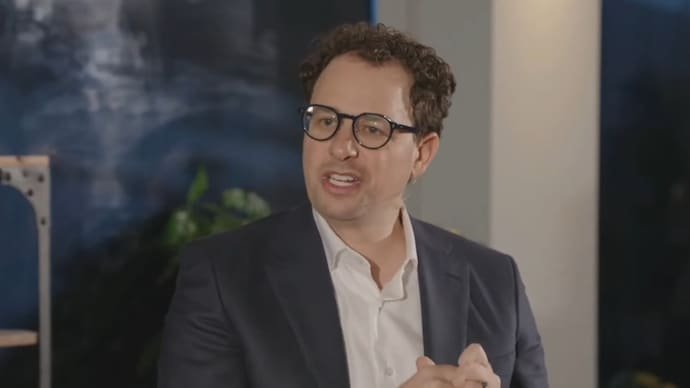
Anthropic CEO Dario Amodei believes Artificial Intelligence could transform medicine on a scale that is difficult to imagine today, potentially helping humans cure most diseases within the next five to 10 years.
Amodei’s prediction is ambitious, but he is not describing AI as simply another software tool for analysing medical records. His argument is that increasingly capable AI systems could participate in much larger portions of the scientific process, from generating hypotheses and designing experiments to improving biological research and accelerating the search for new treatments.
The Anthropic chief has previously outlined this vision in his essay Machines of Loving Grace, where he argued that advanced AI could produce major advances in biology and medicine. Anthropic has also launched an AI for science programme focused on using its Technology to support research in areas including biology, genetic analysis and drug discovery.
Amodei’s optimism comes alongside his well-known warnings about the risks of increasingly powerful AI. He has pushed back against the idea that his public message is overwhelmingly negative, arguing instead that the technology could bring enormous benefits while also creating serious dangers that need to be managed.
What Dario Amodei predicts about AI and medicine
Amodei’s central argument is that AI could dramatically increase the speed at which biological discoveries are made.
In his vision, AI would move beyond analysing information that humans have already collected. Advanced systems could help perform, direct and improve many of the activities involved in biological research.
That distinction is important. Today’s AI can already assist researchers with tasks such as analysing large datasets, predicting molecular structures and identifying patterns in biological information. Amodei is envisioning a much broader role in which increasingly capable systems could help scientists formulate ideas, determine which experiments are worth pursuing and iterate through possible solutions much faster.
He has estimated that sufficiently powerful AI could potentially increase the rate of biological discoveries by at least tenfold. In his view, that could compress decades of scientific progress into a much shorter period.
Amodei has framed the possibility as gaining the equivalent of 50 to 100 years of biological progress in five to 10 years. That is a prediction rather than an established scientific forecast, and its realisation would depend on major advances in AI capability as well as biology, experimentation, clinical development and regulation.
Why Amodei says he is not only pessimistic about AI
Amodei’s comments also respond to criticism that he tends to emphasise the dangers of artificial intelligence more than its potential benefits.
The Anthropic CEO has consistently argued that advanced AI presents a dual picture. Powerful systems could create serious risks if misused or poorly controlled, but the same capabilities could potentially accelerate scientific research and improve human welfare.
His essay Machines of Loving Grace was written partly to explore that optimistic side. Amodei has said he felt the technology industry was not painting an inspiring enough picture of how AI could transform the world for the better.
A substantial portion of that essay focuses on AI’s potential in Health and biology. The argument is based on a simple but consequential idea: if scientific work can be accelerated substantially, discoveries that might otherwise take decades could potentially arrive much sooner.
That does not mean AI can independently cure diseases today. It means increasingly capable systems could become powerful research partners that allow human scientists to investigate biological problems at a much greater scale.
AI is already being used in biological research
The prediction is built on developments that are already taking place in science.
One of the best-known examples comes from DeepMind’s AlphaFold, an AI system that transformed protein-structure prediction. Protein structures are fundamental to understanding biology because proteins perform many of the functions required for living organisms.
DeepMind has reported that AlphaFold can predict protein structures on a scale that would have been extraordinarily difficult using traditional experimental approaches alone. The resulting AlphaFold database has become a major resource for biological researchers.
Demis Hassabis, DeepMind’s co-founder and CEO, has repeatedly pointed to protein-structure prediction as evidence of how AI can change the speed of scientific work. In a CBS 60 Minutes interview, he explained that AI had enabled the prediction of structures at a scale far beyond what traditional methods could achieve.
The implications extend beyond mapping proteins. Better understanding of molecular structures can help researchers investigate disease mechanisms, identify possible drug targets and design molecules that interact with biological systems in useful ways.
AI could accelerate drug discovery, but a cure is more complicated
Drug development is one of the areas where AI’s potential is particularly significant.
Traditional drug discovery involves identifying a biological target, finding or designing candidate molecules, testing them in laboratory systems, evaluating their safety and effectiveness, and then moving successful candidates through clinical trials and regulatory approval.
AI can potentially accelerate parts of this process by helping researchers search through enormous numbers of molecular possibilities, predict properties of compounds and identify promising candidates before they enter expensive experimental stages.
Hassabis has suggested that AI could eventually reduce parts of drug-design work from years to months or even weeks. He has also argued that AI could help bring the “end of disease” within reach, potentially within the next decade.
But shortening the discovery phase does not automatically shorten the entire process of creating a safe and effective treatment.
Clinical trials still require evidence that a treatment works in humans and does not create unacceptable risks. Manufacturing, regulatory review, medical adoption and access also matter. Even if AI identifies a promising therapy quickly, patients cannot benefit from it until the necessary biological and clinical evidence exists.
That is one reason Amodei’s prediction should be understood as a forecast about the potential acceleration of biomedical discovery rather than a guarantee that most diseases will have approved cures within a fixed deadline.
Amodei’s personal connection to disease research
For Amodei, the potential of AI in medicine is not simply an abstract technological argument.
He has spoken publicly about losing his father to Hepatitis C. In discussing the potential of biomedical advances, Amodei noted that his father died only a few years before the development of direct-acting antiviral treatments such as sofosbuvir.
Modern direct-acting antiviral therapies have transformed the treatment of Hepatitis C, with cure rates generally exceeding 90% for many patient groups and treatment regimens. Amodei has used his father’s experience to illustrate how quickly the difference between an untreatable or difficult disease and a curable one can change when medical science makes a breakthrough.
His point is not that AI alone created those medicines. Rather, the story illustrates why increasing the speed of biological research could have enormous consequences for people who are waiting for treatments that do not yet exist.
Why “cure most diseases” is a difficult claim
The phrase “most human diseases” covers an enormous range of conditions with very different biological causes.
Some diseases are caused by infectious organisms. Others involve genetic mutations, immune-system dysfunction, cancerous cell growth, neurological degeneration, metabolic disorders or combinations of multiple factors.
A breakthrough against one category does not automatically translate into a solution for another. Cancer, for example, is not one disease but a broad collection of diseases with different molecular characteristics. Alzheimer’s disease and other neurodegenerative disorders present another set of challenges involving complex interactions among genetics, cells and biological processes.
This diversity is why Amodei’s timeline remains a high-level prediction rather than a scientific consensus.
AI may dramatically improve the tools available to researchers, but the biological world still has to be understood, experiments still have to be performed and treatments still have to demonstrate safety and effectiveness in humans.
How AI could change the scientific process
The most significant change may not be a single “AI cure.” It could instead be a transformation of how scientific discovery happens.
Advanced AI systems could potentially assist researchers across multiple stages of the process:
- Understanding biology: AI can analyse large and complex biological datasets to identify patterns that may be difficult for humans to detect.
- Generating hypotheses: More capable systems could help researchers propose explanations for biological observations and identify promising questions for investigation.
- Drug discovery: AI can help search molecular possibilities and predict properties of candidate compounds.
- Experiment design: AI could help researchers decide which experiments are most informative and how to prioritise them.
- Data analysis: Automated systems can process large volumes of experimental results and help scientists interpret them.
- Research coordination: More capable AI agents could potentially connect information across different scientific fields and research programmes.
The greater the number of these tasks AI can perform reliably, the greater the potential reduction in the amount of time researchers spend on routine or computationally intensive work.
Anthropic is already investing in AI for science
Amodei’s prediction is also consistent with Anthropic’s decision to establish a dedicated AI for Science programme.
Anthropic announced the programme in May 2025, providing API credits to researchers working on high-impact scientific projects. The company specifically highlighted biology and life sciences, including applications involving complex biological systems, genetic data and drug discovery.
The initiative illustrates how the company’s interest in scientific applications extends beyond public statements. Anthropic is actively encouraging researchers to experiment with its AI systems as tools for scientific work.
That does not prove Amodei’s five-to-10-year prediction will come true. It does show that the company sees scientific discovery as an important potential application of advanced AI.
Demis Hassabis has made a similar prediction
Amodei is not the only major AI leader predicting a dramatic transformation of medicine.
Demis Hassabis, CEO of Google DeepMind and a Nobel laureate, has also argued that AI could eventually help bring about what he described as the “end of disease.”
In a CBS 60 Minutes interview, Hassabis said that AI could potentially reduce parts of drug-design work from years to months or even weeks. He suggested that this could revolutionise human health and said that curing all disease with AI might eventually be possible. He placed the possibility of the “end of disease” within roughly the next decade.
Hassabis has a particularly relevant perspective because DeepMind’s work on AlphaFold demonstrated how AI could solve a major biological problem at unprecedented scale.
At the same time, Hassabis has stressed that AI carries serious risks. He has warned that the race to develop increasingly powerful systems could create incentives to cut corners on safety and that governments and leading AI companies will need to coordinate as the technology becomes more capable.
Amodei’s prediction depends on more than better AI
For AI to transform medicine at the pace Amodei envisions, advances in computing and algorithms would have to be matched by progress in the physical world.
Biology cannot be solved entirely inside a computer. AI-generated hypotheses need to be tested experimentally. Promising molecules need to be synthesised and evaluated. Treatments need to be tested in appropriate models and eventually in human clinical trials.
There are also practical barriers involving manufacturing capacity, medical Infrastructure, regulatory systems and the cost of making treatments available.
That means the ultimate impact of AI on Healthcare will depend not only on how intelligent AI systems become but also on how effectively scientists and institutions connect those systems to real-world research.
From faster discoveries to better health outcomes
There is an important difference between accelerating discovery and accelerating health outcomes.
If an AI system identifies a promising drug candidate in weeks rather than years, that is a major scientific achievement. But patients benefit only when that candidate becomes a validated treatment that can be manufactured, approved and delivered.
The same principle applies to disease diagnosis and prevention. AI may identify risk patterns earlier or help doctors interpret complex information, but clinical systems must still determine how those predictions should be used safely.
In other words, AI could become a powerful engine for medical progress without making traditional biomedical research obsolete.
What could happen over the next 5–10 years?
The next decade could provide a clearer test of the predictions made by Amodei, Hassabis and other AI leaders.
If increasingly capable AI systems can reliably generate useful biological hypotheses, design experiments and identify drug candidates at much greater speed, the impact on pharmaceutical research could be substantial.
One possible outcome is not a single dramatic moment when “AI cures disease,” but a steady acceleration across many areas of medicine. Researchers could discover new treatments faster, understand rare diseases more effectively and develop therapies for conditions that have remained difficult to address.
Another possibility is that the technology advances rapidly but encounters biological or clinical barriers that prevent those gains from translating into cures at the predicted speed.
The available evidence supports optimism about AI’s ability to accelerate parts of scientific research, but it does not establish that most diseases will be cured within five to 10 years. That remains Amodei’s forecast.
AI’s medical promise comes with a major caveat
The most credible version of the AI-and-medicine story is not that machines will suddenly replace doctors and scientists. It is that increasingly capable AI could become a powerful research partner, allowing humans to explore biological questions at a speed and scale that were previously impractical.
Examples such as AlphaFold demonstrate that AI can already produce major advances in biological research. Anthropic’s AI for Science programme shows that companies are actively exploring how frontier models can contribute to scientific discovery.
But the distance between a scientific prediction and a medical cure remains significant. Human trials, safety testing, regulation and access cannot simply be accelerated away by better algorithms.
Could AI really cure most human diseases?
Dario Amodei’s prediction is one of the boldest claims about the potential benefits of advanced AI. He believes powerful systems could increase the speed of biological discovery by at least tenfold and compress decades of progress into five to 10 years.
His optimism is reinforced by developments already visible in AI-powered biology, including protein-structure prediction and growing efforts to apply AI to drug discovery. Other leading figures such as Demis Hassabis have made similarly ambitious predictions about AI transforming medicine within the next decade.
Yet “could” remains the crucial word. No current evidence establishes that AI will cure most human diseases on that timeline. The prediction depends on continued advances in AI, successful integration with laboratory science, clinical breakthroughs and the ability of healthcare systems to turn discoveries into treatments.
What is already clear is that AI is changing the economics and speed of scientific research. If that trend continues, the next five to 10 years could produce some of the most important advances in biology in modern history. Whether those advances amount to an “end of disease” remains uncertain, but the possibility is becoming a serious subject of scientific and technological discussion rather than pure science fiction.
For breaking news and live news updates, like us on Facebook or follow us on Twitter and Instagram. Read more on Latest Technology on thefoxdaily.com.





COMMENTS 0