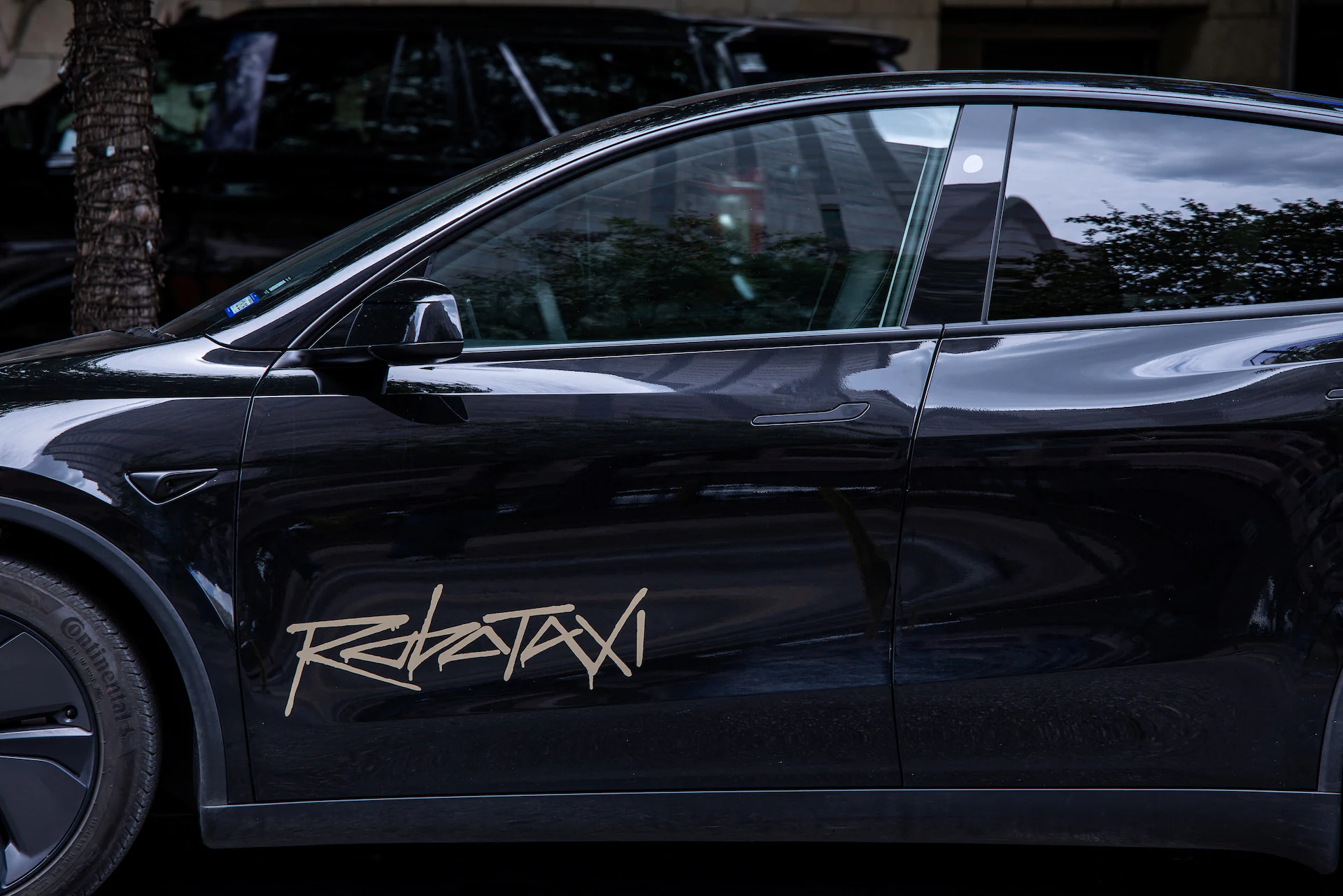
Tesla is aiming to begin selling its Cybercab robotaxis to customers by the end of 2026, even as US federal safety regulators investigate whether the driverless vehicles comply with existing automotive regulations. The announcement signals another step in CEO Elon Musk’s ambition to transform the electric vehicle maker into an Artificial Intelligence and robotics company, although regulatory uncertainty could affect the pace of the rollout.
Tesla Vice President of Vehicle Engineering Lars Moravy outlined the company’s target on Wednesday, October 21, following the release of its third-quarter results. He said Tesla hopes to deliver the first Cybercabs to customers before the end of the year, starting with a limited rollout while the company learns how autonomous vehicles perform under customer ownership and fleet management.
The Cybercab is a two-seat, fully autonomous vehicle designed without a steering wheel, pedals or mirrors. Its distinctive gold exterior and butterfly doors distinguish it from conventional passenger cars, while its driverless design makes it a central part of Tesla’s broader robotaxi strategy.
However, the company’s plans face scrutiny from the National Highway Traffic Safety Administration (NHTSA), which opened an investigation shortly after Tesla began offering paid Cybercab rides in Austin, Texas. The probe focuses on how Tesla determined that the vehicles comply with federal safety requirements traditionally written for cars operated by human drivers.
Tesla Targets Cybercab Deliveries by the End of 2026
Tesla’s engineering leadership says the company wants to start placing Cybercabs in customers’ hands before the end of this year. The initial rollout is expected to remain limited as Tesla gathers experience with the practical challenges of deploying fully autonomous vehicles beyond controlled testing environments.
Speaking to analysts after Tesla reported its third-quarter results, Moravy said the company expects fully designed autonomous vehicles to become a major part of its future product deliveries, with the Cybercab leading that transition.
“We’re trying to get Cybercabs to customers by the end of this year, 2026,” Moravy said.
He explained that Tesla intends to begin on a small scale before expanding deliveries as it learns more about customer ownership, vehicle delivery processes and the management of autonomous fleets.
The approach reflects the operational challenges associated with introducing a vehicle that does not require a human driver. Tesla must develop not only the vehicle itself but also the systems needed to support its use, including fleet management, service operations and the practical requirements of autonomous transportation.
The end-of-year target is a significant milestone for Tesla’s robotaxi ambitions. However, the timeline remains a company goal rather than confirmation that deliveries will occur as planned. Regulatory requirements and the results of the ongoing federal investigation could influence how quickly the Cybercab reaches customers.
What Makes the Tesla Cybercab Different?
The Cybercab has been designed around the concept of fully autonomous transportation. Unlike conventional passenger vehicles, it has no steering wheel, accelerator pedal, brake pedal or mirrors, reflecting Tesla’s intention for the vehicle to operate without direct human control.
The two-seat vehicle features butterfly doors and a gold exterior. Its unusual design is intended to support a transportation model in which passengers use an autonomous vehicle for a journey rather than drive it themselves.
Removing conventional driving controls creates a fundamental difference between the Cybercab and Tesla’s existing Electric Vehicles. It also raises regulatory questions because many federal vehicle safety requirements were developed around the assumption that a human driver would control the car.
For Tesla, the design represents more than a new vehicle launch. The company is positioning the Cybercab as a core component of a future business that combines Autonomous Driving technology, artificial intelligence and ride-hailing services.
If Tesla can expand the model successfully, it could eventually use the Cybercab as a dedicated vehicle for its robotaxi network. That strategy would distinguish the vehicle from existing models that were originally designed for human drivers and later adapted for autonomous operations.
NHTSA Investigates Cybercab Compliance With Federal Safety Rules
Tesla’s planned customer rollout comes amid an investigation by the National Highway Traffic Safety Administration, the US agency responsible for overseeing vehicle safety standards.
The investigation began just hours after Tesla started offering paid rides using a small fleet of Cybercabs in Austin, Texas, early in September. The service launch attracted attention from Tesla supporters and social media influencers, but the regulatory scrutiny quickly introduced questions about the vehicles’ legal status.
NHTSA is examining how Tesla determined that the Cybercab complies with federal motor vehicle safety regulations. The agency is also looking at the basis for Tesla’s certification and how the company decided that certain safety standards might not apply to the vehicle.
Federal regulations were developed decades ago for vehicles controlled by human drivers. They include requirements for manual controls and can limit the commercial deployment of vehicles designed without those features.
Because the Cybercab lacks a steering wheel and pedals, the central issue is how the vehicle fits within existing rules intended for conventional cars. The investigation does not, by itself, establish that Tesla has violated the law, but it places the company’s certification process under regulatory examination.
NHTSA declined to comment on the investigation. The agency said last month that Tesla had until October 30 to respond to its questions.
The response deadline is an important point in the regulatory process because Tesla’s explanation may help determine how the agency assesses the company’s compliance approach. The available information does not establish what action, if any, regulators will take after reviewing the response.
US Rules for Autonomous Vehicles Create Regulatory Uncertainty
The Cybercab investigation highlights a wider challenge facing autonomous vehicle developers in the United States: existing vehicle safety regulations were largely written for cars with human-operated controls.
In the US, automakers generally certify that their new vehicles comply with federal safety standards rather than obtaining the same type of pre-launch regulatory clearance required in many other countries. Manufacturers are responsible for determining whether their vehicles meet the applicable requirements.
This system allows companies to introduce new vehicle technologies without waiting for a separate approval process for every model. However, it can create uncertainty when manufacturers develop vehicles that differ substantially from traditional designs.
For a vehicle without a steering wheel, pedals or mirrors, the question becomes whether existing standards apply in the same way or whether specific requirements are irrelevant to its intended design.
NHTSA has proposed changes to federal safety standards that would accommodate autonomous vehicles designed without human controls. Until those changes are completed, however, the agency has said existing standards remain in force.
The distinction matters for Tesla because the company’s rollout plans depend on deploying vehicles that meet applicable federal requirements. Even if the company believes its certification approach is valid, regulatory questions may need to be resolved before the Cybercab can expand into wider commercial use.
The issue also has implications for other manufacturers developing driverless vehicles. As autonomous technology advances, regulators must address how safety rules designed for human drivers should apply to vehicles intended to operate without conventional controls.
Tesla Says Cybercab Manufacturing Can Scale Quickly
Despite the regulatory questions, Tesla executives expressed confidence in the vehicle’s manufacturing potential. Ashok Elluswamy, the company’s head of artificial intelligence, said Tesla was focused on obtaining the regulatory approvals needed to deploy Cybercabs as quickly as production allows.
He also argued that expanding manufacturing would not present an especially difficult challenge, describing the Cybercab as one of Tesla’s easiest products to scale from a manufacturing perspective.
That assessment suggests Tesla believes its production operations can support a larger rollout once the necessary regulatory conditions are satisfied. However, the ability to manufacture vehicles is only one part of a successful autonomous transportation business.
Tesla will also need to manage fleet operations, vehicle maintenance, customer support and the technology required to operate driverless vehicles reliably. The company has acknowledged that its early customer deliveries will provide an opportunity to learn about ownership and fleet management before expanding further.
The distinction between production capacity and commercial deployment is important. Even if Tesla can manufacture Cybercabs at scale, regulatory requirements and operational readiness will influence how quickly those vehicles can enter service.
Cybercab to Become a Core Part of Tesla’s Robotaxi Network
The Cybercab is part of Tesla’s wider robotaxi network, which also includes autonomous Model Y vehicles. Some of those vehicles operate with human safety monitors, reflecting a different deployment model from the fully driverless Cybercab.
Over time, Tesla intends to make the Cybercab the main driverless vehicle operating within a larger robotaxi network. The company’s strategy combines dedicated autonomous vehicles with its existing ride-hailing operations as it works toward a transportation service built around self-driving technology.
The Cybercab could eventually allow Tesla to deploy vehicles specifically designed for passenger transport without the controls and equipment associated with conventional driving. Such a model would differ from using ordinary passenger cars for ride-hailing because the vehicle itself would be engineered around autonomous operation.
However, the transition will depend on the company’s ability to expand its service, meet applicable safety requirements and manage the operational demands of driverless transportation.
Tesla has also been expanding its geographic ambitions. Elluswamy said the company plans to extend its Cybercab service to Dallas in November. The planned expansion would build on its activities in Austin, although the company’s broader rollout remains subject to regulatory and operational considerations.
Tesla’s Robotaxi Strategy and Elon Musk’s AI Ambitions
CEO Elon Musk has positioned autonomous vehicles as a major part of Tesla’s effort to evolve beyond its traditional electric vehicle business. The Cybercab is central to that vision because it is designed specifically for a driverless transportation model.
The strategy reflects Tesla’s broader emphasis on artificial intelligence and robotics. Rather than relying exclusively on selling conventional electric cars, the company aims to develop technologies and services that could support autonomous mobility.
A successful robotaxi business could give Tesla a new way to use its vehicle technology by operating or supporting fleets of autonomous cars. The Cybercab’s design suggests that Tesla wants to move toward a dedicated vehicle model rather than depending entirely on existing passenger vehicles.
However, the commercial potential of that approach remains tied to execution. Tesla must demonstrate that its vehicles can operate within the applicable regulatory framework and that its fleet operations can support customer demand.
The federal investigation adds uncertainty to a strategy that already requires substantial technological and operational development. Its outcome could influence the pace at which Tesla moves from limited robotaxi operations toward broader customer ownership and deployment.
Missed Timelines Add Pressure to Tesla’s Cybercab Plans
Tesla’s latest delivery target comes after years of missed promises associated with Musk’s autonomous vehicle ambitions. The company has now begun offering paid Cybercab rides in Austin, but moving from a limited service to customer deliveries would represent another stage in the vehicle’s development.
Beginning deliveries before the end of 2026 would allow Tesla to test its assumptions about ownership, vehicle support and autonomous fleet management with customers. The company says it intends to start small and expand as it gains experience.
Nevertheless, the timing remains important because Tesla must demonstrate progress against its stated goals while addressing questions about safety certification. A delay caused by regulatory issues or operational challenges could affect the rollout schedule.
Investors and customers will therefore be watching both the company’s production progress and its response to NHTSA. The October 30 deadline gives Tesla a near-term regulatory milestone, while the end-of-year target provides a broader measure of the company’s ability to begin delivering the vehicle.
What Happens Next for Tesla Cybercab?
Tesla’s next steps will involve responding to NHTSA’s questions, pursuing the regulatory approvals it considers necessary and preparing for the planned expansion of its autonomous transportation operations.
The company has set a target of beginning Cybercab deliveries by the end of 2026, with a limited initial rollout followed by a gradual expansion. Its executives believe manufacturing can scale, but the pace of deployment will also depend on regulatory compliance and the readiness of the wider robotaxi network.
Meanwhile, the planned expansion to Dallas in November could provide another indication of how Tesla intends to grow its autonomous transportation service. The company will need to manage that expansion alongside its efforts to resolve questions surrounding the Cybercab’s design and certification.
The broader significance of the vehicle extends beyond Tesla. The Cybercab’s lack of conventional driving controls raises questions about how federal safety standards should evolve as autonomous vehicles become more advanced.
For now, Tesla is pursuing an ambitious rollout while regulators examine the company’s compliance approach. Whether the Cybercab reaches customers by the end of the year will depend not only on manufacturing progress but also on how the safety questions surrounding fully driverless vehicles are addressed.
For breaking news and live news updates, like us on Facebook or follow us on Twitter and Instagram. Read more on Latest Business on thefoxdaily.com.






COMMENTS 0