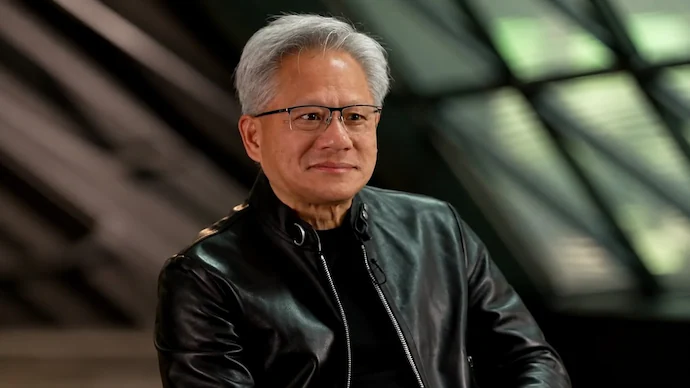
China has strongly rejected allegations that a woman linked to Nvidia Chief Executive Jensen Huang was working for Chinese intelligence, describing the claims as unsubstantiated and part of a smear campaign against Beijing.
The statement from China’s Foreign Ministry came after reports that Huang had acknowledged an intimate relationship with a business executive whom US intelligence agencies suspected of gathering information for Beijing. The allegations have drawn attention to the personal life of the head of one of the world’s most valuable technology companies.
The controversy has also created fresh questions about Nvidia’s business dealings with China, particularly its attempts to sell powerful Artificial Intelligence processors despite restrictions imposed by Washington to limit Beijing’s access to advanced semiconductor technology.
Nvidia announced that its board would investigate the reported foreign intelligence concerns. Meanwhile, the allegations have attracted attention from investors, policymakers and Chinese state-linked media, adding another layer of uncertainty to the company’s already complicated position between the United States and China.
China Rejects Allegations of Intelligence Links to Jensen Huang
Chinese Foreign Ministry spokesperson Guo Jiakun rejected the espionage allegations on Monday, November 9, 2026, describing the so-called Chinese spy narrative as unsupported.
“The so-called Chinese spy allegation is unsubstantiated. It is nothing but smears against China,” Guo said during a regular press briefing.
Beijing’s response followed reporting by The New York Times about Huang’s relationship with a business executive identified as Alice Huang. According to the report, US intelligence agencies had determined that the woman was gathering information for Beijing.
China had previously rejected reporting that linked Alice Huang to Chinese intelligence. Its latest statement reinforces the government’s position that the espionage allegations are unfounded.
However, a government denial does not independently resolve the questions raised by the reports. Establishing whether intelligence activity took place would require evidence about the individual’s conduct, the information involved and any potential access to sensitive material.
Jensen Huang has not publicly identified the woman involved in the extramarital relationship. The reported connection between his personal relationship and the alleged intelligence activity should therefore be treated as a matter under scrutiny rather than an established finding of wrongdoing by the Nvidia chief.
Why Jensen Huang’s Relationship Has Become a Corporate Issue
The controversy extends beyond Huang’s personal life because of his position at Nvidia and the company’s importance to the global technology industry.
Nvidia develops graphics processing units and specialised computing systems used to train and operate advanced AI models. Its products are central to the expansion of AI data centres, cloud computing and other high-performance computing applications.
As chief executive, Huang has significant influence over the company’s strategy, major business relationships and engagement with governments. Any credible concern that a personal relationship could have exposed confidential corporate or strategically sensitive information therefore attracts attention beyond the individuals involved.
According to The New York Times report cited in the coverage, Huang acknowledged his relationship to Nvidia’s board. The board subsequently announced an investigation into reports that he had been targeted in a foreign intelligence effort.
Several important questions remain unresolved. These include whether Huang knew about any alleged intelligence activities, whether confidential information was shared and whether Nvidia’s internal security procedures were affected.
George Chen, a partner and chair of digital practice at Washington-based consultancy The Asia Group, cautioned against reaching conclusions without evidence.
He said the key issues were whether Huang knew about any espionage activity and whether confidential or strategically sensitive information had been compromised. Those questions, he argued, require evidence rather than speculation.
This distinction is important for investors and the company. A reported personal relationship, an intelligence agency’s suspicions and proof of an actual security breach are three different matters. The board’s investigation will need to establish whether there is evidence connecting them.
Nvidia Launches Investigation as Shares Face Pressure
Nvidia said on Sunday that its board would investigate the reports involving Huang and the alleged foreign intelligence effort. The decision signals that the company considers the matter serious enough to require formal scrutiny.
The investigation is particularly significant because Nvidia operates in an industry where confidential information, product development and relationships with governments and technology partners have strategic importance.
Investors are likely to watch for information about the scope of the investigation, the findings of independent reviewers and any changes to the company’s internal controls.
Nvidia shares fell approximately 5 per cent in pre-market trading on Monday following the latest developments. The movement reflected investor concern and uncertainty surrounding the allegations, although a share-price decline alone does not establish that the company’s business operations or financial position have been affected.
Nvidia is among the world’s most valuable publicly traded companies, alongside technology giants such as Apple and Microsoft. Its market position means that questions involving its chief executive can attract considerable attention across global financial markets.
The board’s review will be important in determining whether the controversy remains a personal and reputational issue or develops into a matter involving corporate security, governance or regulatory concerns.
Why Nvidia’s China Chip Sales Are Under Renewed Scrutiny
The allegations have also revived attention on Huang’s efforts to maintain Nvidia’s access to the Chinese market. China represents an important potential market for advanced computing products, but selling high-performance AI processors there has become increasingly complicated because of US export controls.
Washington has introduced restrictions on certain advanced semiconductor exports to China over concerns that the technology could strengthen Beijing’s military capabilities and strategic computing infrastructure.
Nvidia has repeatedly argued that restrictions could weaken its competitiveness and encourage Chinese companies to rely on domestic alternatives. Huang has also engaged with US policymakers, including President Donald Trump, to advocate for a regulatory approach that would allow the company to continue serving Chinese customers within permitted limits.
The reported intelligence controversy has created an additional layer of scrutiny around those efforts. However, there is no established evidence in the supplied reporting that Huang’s personal relationship influenced Nvidia’s export-control decisions or that the company knowingly violated US restrictions.
The distinction between commercial lobbying and intelligence activity is important. Companies can legally advocate for changes to government policy, while regulators remain responsible for determining which products may be exported and under what conditions.
Trump Allows Nvidia to Sell H200 Chips to China
One of the most important developments in Nvidia’s China strategy has involved its H200 processors. US President Donald Trump allowed Nvidia to sell the chips to China in 2026, creating a potential route for the company to regain some access to the market.
The H200 is a powerful AI accelerator designed for demanding computing workloads, including the training and operation of large AI models. Although it is not Nvidia’s most advanced processor generation, it remains a significant product in the company’s data centre portfolio.
Permission from Washington, however, does not guarantee that Chinese companies will purchase the chips. Beijing can impose its own restrictions, and Chinese regulators and technology companies have their own interests in developing domestic semiconductor capabilities.
According to Nvidia’s August filing cited in the report, the company had sold only a small number of chips to China because sales were restricted by the Chinese government.
This highlights the two-sided nature of the export-control dispute. Even when Washington permits a particular product to be sold, Chinese authorities can limit purchases or encourage domestic alternatives.
For Nvidia, the result is uncertainty over how much revenue it can generate from China, despite the market’s potential demand for AI computing infrastructure.
What Happened to Nvidia’s H20 Chips?
Before the H200 developments, Huang had pushed for permission to sell Nvidia’s H20 processors to Chinese customers. The H20 was designed specifically for the Chinese market to comply with US export restrictions in place at the time.
The product was part of Nvidia’s effort to maintain a commercial presence in China while meeting Washington’s limits on the computing capabilities that could be exported.
However, the regulatory environment changed repeatedly, creating uncertainty for the company and its customers. US restrictions and licensing requirements affected the availability of certain products, while Chinese authorities also influenced whether domestic companies could purchase them.
The H20 episode illustrates the difficulty of designing products for a market where export rules can change and where approval from one government does not guarantee access to customers.
For Nvidia, China remains an important strategic market, but its ability to compete there depends on decisions made in both Washington and Beijing.
Why Advanced AI Chips Matter in the US-China Technology Rivalry
Advanced AI processors have become a major focus of competition between the United States and China. These chips provide the computing power required to train sophisticated AI models, operate large data centres and support applications across business, research and government.
High-performance processors can also be relevant to military and national security research. This is one reason the US government has placed restrictions on exports of certain advanced semiconductor technologies to China.
Washington’s approach aims to limit access to computing capabilities that could contribute to sensitive technological development. At the same time, US semiconductor companies have argued that maintaining access to international markets is important for their revenues, research investment and global competitiveness.
China, meanwhile, has been investing in its domestic semiconductor industry to reduce dependence on foreign suppliers. Restrictions on imported processors have increased the importance of local alternatives, although matching the performance and production capabilities of leading global chipmakers remains a significant technological challenge.
Nvidia occupies a central position in this competition because its products are widely used by AI developers and cloud computing companies. Decisions about which processors can be sold to China therefore have commercial consequences as well as implications for technology policy and national security.
Chinese State Media Questions the Timing of the Reports
Chinese state media and government-linked outlets have focused on the controversy, with some questioning the timing of the reports about Huang’s personal relationship and the alleged intelligence activity.
The state-owned Global Times suggested that the reporting could be connected to broader tensions between Washington and Beijing. It argued that attempts to undermine improving relations between the two countries often emerge when diplomatic ties appear to be getting better.
“Whenever China-US relations begin to improve, there are often those firing shots from the shadows,” the newspaper said.
Such comments reflect the political interpretation promoted by sections of Chinese state-linked media. They do not establish the motivation behind the original reporting or resolve the underlying allegations.
The episode comes against a wider backdrop of competition over semiconductors, artificial intelligence, trade and national security. Both governments have sought to protect their strategic interests while managing economic relationships that remain important to businesses in both countries.
For Nvidia, this environment makes the controversy especially sensitive. The company must maintain confidence among investors and customers while navigating regulations and political pressure in two major markets.
What the Controversy Could Mean for Nvidia
The developments place Huang and Nvidia under scrutiny on several fronts. The first is the company’s internal response to the reported intelligence concerns. The second involves questions about executive accountability and the protection of confidential information. The third concerns Nvidia’s ability to continue selling advanced processors to Chinese customers under changing regulatory conditions.
The board investigation will be central to understanding whether the reported relationship created any actual security or governance problem. Until its findings are available, claims about compromised information or direct involvement in espionage should remain unproven.
Investors will also be watching the company’s China business. Even without the latest controversy, Nvidia faces uncertainty because US export permissions and Chinese purchasing decisions do not always align.
The H200 approval illustrates how quickly access to a major market can change through government decisions. However, the limited sales reported in Nvidia’s filing show that regulatory permission does not automatically translate into commercial demand.
China’s rejection of the espionage allegations adds a diplomatic dimension to an already sensitive dispute. The outcome will depend on evidence gathered through the company’s investigation and any further information released by the relevant authorities.
For now, the controversy remains an unresolved combination of personal allegations, corporate governance questions and geopolitical tensions. Its significance for Nvidia will become clearer as the board examines the reports and the company continues navigating the competing demands of the US and Chinese markets.
For breaking news and live news updates, like us on Facebook or follow us on Twitter and Instagram. Read more on Latest World on thefoxdaily.com.






COMMENTS 0