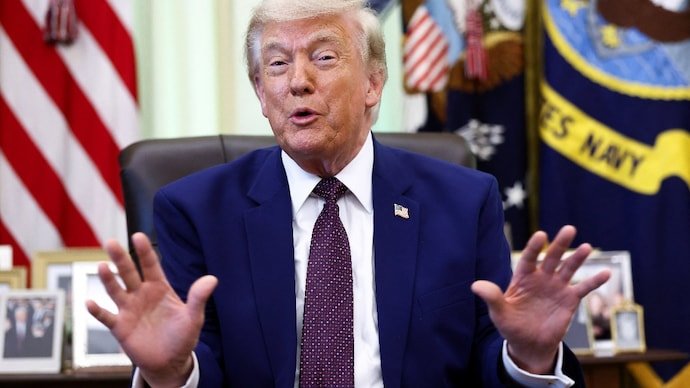
The rapidly evolving relationship between governments and Artificial Intelligence companies entered a new chapter this week when US President Donald Trump signaled a notable shift in his view of Anthropic, one of the world’s leading AI developers.
In an interview with Axios, Trump said that while he might have viewed Anthropic as a National Security concern just a week earlier, he no longer holds that opinion. The change comes after the company swiftly complied with administration orders aimed at restricting foreign access to its most advanced AI systems.
The episode highlights a growing reality facing governments worldwide: artificial intelligence is no longer simply a technology issue. It has become a matter of economic competitiveness, national security, geopolitical influence, and strategic power.
As countries race to dominate the next era of technological Innovation, the debate surrounding Anthropic provides insight into how governments may regulate advanced AI systems in the years ahead.
What Did Trump Say About Anthropic?
During an interview with Axios, Trump was asked whether he viewed AI company Anthropic or its chief executive, :contentReference[oaicite:0]{index=0}, as a threat to US national security.
Trump’s response drew attention because it reflected a significant change from his earlier position.
“Well, not now, but a week ago, maybe.”
The president explained that Anthropic had responded quickly and responsibly to concerns raised by his administration regarding access to advanced AI technologies.
According to Trump, the company’s willingness to cooperate helped alleviate immediate concerns.
What Triggered the Dispute?
The disagreement centered on foreign access to Anthropic’s most advanced artificial intelligence models.
The company reportedly restricted access to its cutting-edge systems after the administration ordered tighter controls on who could use the technology.
The issue reflects growing fears that advanced AI capabilities could potentially be leveraged by foreign governments, adversaries, cybercriminal organizations, or other actors in ways that threaten national interests.
As AI systems become more powerful, governments are increasingly treating them as strategic technologies comparable to:
- Semiconductors.
- Defense technologies.
- Quantum computing systems.
- Cybersecurity infrastructure.
- Advanced telecommunications networks.
The Anthropic case illustrates how rapidly AI Governance is moving into the realm of national security policy.
Who Is Anthropic?
:contentReference[oaicite:1]{index=1} has emerged as one of the most influential AI companies in the world.
Founded by former AI researchers, the company focuses on developing advanced generative artificial intelligence systems designed to be powerful, reliable, and aligned with human intentions.
Its AI models compete with systems developed by major industry players, including:
- :contentReference[oaicite:2]{index=2}
- :contentReference[oaicite:3]{index=3}
- :contentReference[oaicite:4]{index=4}
- :contentReference[oaicite:5]{index=5}
The company’s rapid growth has made it an important participant in discussions about AI safety, governance, and global competitiveness.
Why Governments Are Increasingly Concerned About Advanced AI
Artificial intelligence has evolved far beyond consumer applications such as chatbots and productivity tools.
Advanced AI systems can potentially influence sectors critical to national security.
These include:
- Cybersecurity.
- Defense planning.
- Scientific research.
- Infrastructure management.
- Intelligence analysis.
- Autonomous systems.
- Financial markets.
Because of these capabilities, governments increasingly view leading AI companies as custodians of strategically important technologies.
The concern is not necessarily about the companies themselves but about who gains access to the systems they create.
The Growing AI Export Control Debate
The Anthropic episode forms part of a larger debate surrounding AI export controls.
Governments have long restricted the export of sensitive technologies.
Historically, these restrictions focused on:
- Military equipment.
- Advanced weapons systems.
- Nuclear technologies.
- Semiconductor manufacturing tools.
- Encryption technologies.
Now artificial intelligence is increasingly joining that list.
Policymakers worry that unrestricted access to frontier AI models could provide strategic advantages to competitors or adversaries.
This has led to growing discussions about how advanced AI should be controlled, monitored, and distributed internationally.
Why Anthropic’s Response Changed Trump’s View
According to Trump’s comments, Anthropic’s swift compliance played a major role in changing his assessment.
Rather than challenging the administration’s directive, the company reportedly acted quickly to restrict access and engage with government officials.
This approach appears to have reassured policymakers that Anthropic was willing to cooperate on security-related concerns.
In industries involving sensitive technologies, cooperation often becomes a crucial factor in regulatory relationships.
Governments tend to distinguish between companies that actively engage with regulators and those perceived as resisting oversight.
The Defense Production Act Question
One of the most significant aspects of Trump’s interview involved his comments about potential government powers.
He did not rule out using authorities available under the Defense Production Act (DPA).
The DPA is a powerful federal law that allows the US government to direct private-sector resources and production capabilities during situations considered critical to national interests.
Historically, it has been used for:
- Defense manufacturing.
- Emergency response efforts.
- Strategic industrial support.
- Supply chain security.
Trump’s remarks suggest that advanced AI technologies may increasingly be viewed through a similar strategic lens.
Why This Matters Beyond One Company
The implications extend far beyond Anthropic.
Every major AI developer is watching how governments respond to the rapid advancement of artificial intelligence.
The outcome could shape future regulations involving:
- Model access restrictions.
- Cross-border AI deployment.
- Security testing requirements.
- Government oversight mechanisms.
- International AI partnerships.
The Anthropic case may become an early example of how governments balance innovation with national security concerns.
AI Has Become a Geopolitical Competition
One of the biggest changes in recent years is the transformation of AI from a commercial technology into a geopolitical asset.
Countries increasingly view AI leadership as critical for:
- Economic growth.
- Military modernization.
- Scientific leadership.
- National competitiveness.
- Global influence.
As a result, governments are becoming more active participants in shaping the industry’s direction.
The question is no longer whether governments will regulate advanced AI but how extensively they will do so.
Comparison: Traditional Tech Regulation vs AI Regulation
| Traditional Technology Regulation | Advanced AI Regulation |
|---|---|
| Focus on privacy | Focus on national security and safety |
| Consumer protection | Strategic technology protection |
| Competition oversight | Geopolitical competitiveness |
| Market regulation | Capability control |
| Data governance | Model access governance |
This shift demonstrates why AI policy discussions increasingly involve defense officials, intelligence agencies, and national security experts rather than solely technology regulators.
A Key Insight Competitors Are Missing: Compliance May Become a Competitive Advantage
Most coverage of AI Regulation focuses on restrictions and limitations. However, the Anthropic episode reveals a different trend.
As governments become more involved in AI oversight, regulatory cooperation itself may become a competitive advantage.
Companies that demonstrate transparency, security safeguards, and responsiveness to policymakers could gain easier access to partnerships, government contracts, and strategic opportunities.
In other words, future AI leadership may depend not only on technological capability but also on the ability to build trust with regulators.
The relationship between governments and AI firms is increasingly becoming a strategic partnership rather than a purely regulatory one.
The Broader AI Governance Challenge
The central challenge facing policymakers is finding the right balance.
Too little oversight could create security vulnerabilities.
Too much regulation could slow innovation and reduce competitiveness.
The ideal framework would:
- Protect national interests.
- Encourage innovation.
- Maintain global competitiveness.
- Support responsible development.
- Enable international collaboration where appropriate.
Achieving that balance will likely define AI policy debates for the remainder of the decade.
Future Outlook
Trump’s softened stance toward Anthropic may ease immediate tensions, but the underlying issues remain unresolved. Governments around the world are still grappling with questions surrounding access controls, AI governance, model security, and international competition.
As AI capabilities continue advancing, similar disputes are likely to emerge involving other companies and technologies. Policymakers will increasingly face difficult decisions about how to protect national security while preserving innovation and economic growth.
The Anthropic case may ultimately be remembered as an early example of the complex relationship between governments and frontier AI developers.
Conclusion
Donald Trump’s decision to no longer view Anthropic as a national security threat reflects how quickly perceptions can change when technology companies cooperate with government concerns. The company’s rapid response to restrictions on foreign access appears to have reassured the administration and helped avoid a larger confrontation.
However, the episode also highlights a much bigger story. Artificial intelligence is no longer just a business sector—it has become a strategic asset with implications for national security, economic leadership, and geopolitical influence.
As governments seek greater oversight of advanced AI systems, the relationship between regulators and technology companies will play a defining role in shaping the future of the global AI Industry. Anthropic’s experience may be only the beginning of a much broader transformation in how nations govern the world’s most powerful emerging technology.
For breaking news and live news updates, like us on Facebook or follow us on Twitter and Instagram. Read more on Latest World on thefoxdaily.com.






COMMENTS 0