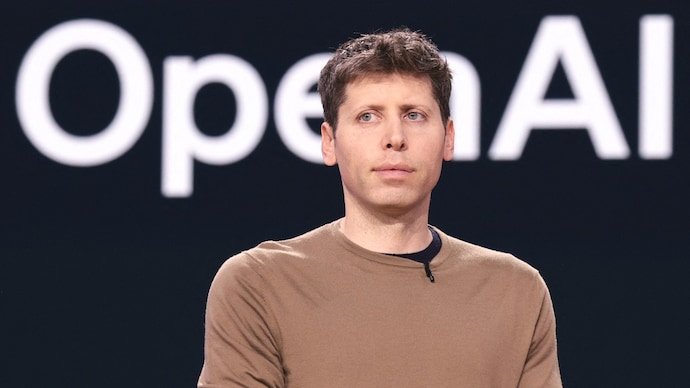
The Artificial Intelligence industry is entering a phase unlike anything the technology sector has experienced before. OpenAI, the company behind ChatGPT, reportedly recorded a staggering loss of approximately $38.5 billion in 2025 while continuing its aggressive expansion across AI research, computing infrastructure, product development, and talent acquisition.
At first glance, the figure appears shocking. The loss alone is larger than the annual revenue generated by several of India’s largest technology companies. It has reignited a critical question being asked by investors, economists, and technology leaders worldwide: How can a company lose tens of billions of dollars and still be considered one of the most valuable businesses on Earth?
The answer lies in understanding the unique economics of artificial intelligence. Unlike traditional software businesses that can scale efficiently with relatively modest infrastructure costs, modern AI requires enormous investments in computing power, specialized chips, research teams, data processing, and energy-intensive data centers.
For OpenAI, the objective appears clear: dominate the race toward increasingly powerful AI systems, even if that means accepting historic losses in the short term.
Why OpenAI’s Reported Loss Is Making Headlines Worldwide
The reported $38.5 billion loss is remarkable not merely because of its size but because of what it represents.
Most high-growth technology companies lose money during their early years. However, OpenAI is operating at a scale rarely seen before. The company already serves hundreds of millions of users through ChatGPT while simultaneously investing billions into future AI models.
To understand the scale of the spending:
- Many Fortune 500 companies do not spend $38 billion in total annually.
- Several countries allocate less than that amount to entire national technology budgets.
- The loss exceeds the annual revenue of multiple established technology giants.
- It highlights the extraordinary costs associated with building frontier AI systems.
Rather than focusing on profitability today, OpenAI appears to be prioritizing market Leadership, technological breakthroughs, and long-term strategic dominance.
The AI Industry’s New Economic Reality
Artificial intelligence has fundamentally changed how technology companies spend money.
Traditional software firms typically invest heavily in engineers and product development. AI companies must do all of that while also financing massive computing infrastructure.
Training advanced AI models requires:
- Thousands of high-performance AI chips
- Massive cloud computing capacity
- Specialized research teams
- Data storage systems
- Global networking infrastructure
- Energy-intensive data centers
Each new generation of AI models requires significantly more computing power than the previous one. As capabilities improve, costs often rise exponentially rather than linearly.
This creates a new business model where companies spend billions today in anticipation of future revenue opportunities that may emerge years later.
Comparing OpenAI’s Loss With India’s IT Giants
The comparison between OpenAI and India’s leading IT firms has attracted attention because it highlights the contrasting economics of two technology eras.
| Company | 2025 Revenue (Approx.) | Business Model |
|---|---|---|
| TCS | $30+ Billion | IT Services & Consulting |
| Infosys | $19+ Billion | Technology Services |
| HCLTech | $13+ Billion | IT & Engineering Services |
| Wipro | $10+ Billion | Consulting & IT Services |
| Tech Mahindra | $6+ Billion | Digital Transformation Services |
| OpenAI Reported Loss | $38.5 Billion | AI Research & Infrastructure |
The key distinction is that Indian IT companies operate mature, profitable business models built around delivering services to enterprise clients. Their goal is operational efficiency and sustainable profitability.
OpenAI, meanwhile, is investing in creating entirely new technological capabilities. The company is effectively building foundational infrastructure for what many believe could become the next computing revolution.
Where Is All the Money Going?
One of the most misunderstood aspects of AI economics is where these enormous expenditures actually go.
1. Computing Infrastructure
Training advanced AI systems requires vast amounts of computational power. Cutting-edge graphics processing units (GPUs) and AI accelerators are expensive and often in short supply.
Major AI companies spend billions securing access to these chips and the data centers required to operate them.
2. Research and Development
OpenAI employs some of the world’s most sought-after researchers, engineers, mathematicians, and scientists.
Competition for AI talent has become so intense that compensation packages frequently reach levels rarely seen elsewhere in the technology sector.
3. Product Expansion
ChatGPT is no longer just a chatbot. OpenAI has expanded into enterprise solutions, developer tools, AI agents, multimodal systems, image generation, video generation, and advanced reasoning models.
Each new capability requires substantial investment.
4. Data Center Operations
Running AI systems is almost as expensive as building them.
Every user query consumes computing resources. As hundreds of millions of users interact with AI daily, operational costs continue to rise.
Why Investors Are Still Betting Big on OpenAI
In most industries, a $38.5 billion loss would trigger alarm bells. Yet investors continue pouring money into OpenAI.
Why?
Because investors are evaluating OpenAI based on future potential rather than current profitability.
Many analysts believe artificial intelligence could transform industries including:
- Healthcare
- Education
- Finance
- Manufacturing
- Software Development
- Media and Entertainment
- Scientific Research
- Customer Service
If AI becomes as foundational as the internet or smartphones, companies controlling the leading platforms could generate enormous future cash flows.
This is why investors are willing to tolerate significant losses today.
The AGI Factor: Why OpenAI Is Spending So Aggressively
A major driver behind OpenAI’s strategy is the pursuit of Artificial General Intelligence (AGI).
AGI refers to AI systems capable of performing intellectual tasks at a level comparable to or exceeding human capabilities across a wide range of domains.
While experts disagree on when AGI might arrive, many believe the first company to achieve it could gain an unprecedented competitive advantage.
This possibility has transformed AI development into a high-stakes global race.
From OpenAI’s perspective, spending tens of billions of dollars may be justified if it accelerates progress toward increasingly capable AI systems.
In the AI race, many companies are acting as if the biggest risk is not spending too much but spending too little and falling behind.
How OpenAI Differs From Traditional Technology Companies
Historically, technology businesses followed a relatively predictable path:
- Build a product
- Acquire users
- Increase revenue
- Improve margins
- Generate profits
OpenAI’s model appears different.
The company is investing ahead of demand, building infrastructure that could support future AI applications not yet fully commercialized.
This resembles how cloud computing providers invested billions in data centers years before widespread enterprise adoption.
The difference is that AI infrastructure costs are even larger.
The Real Question: Is This Sustainable?
The biggest challenge facing OpenAI is not whether it can raise money today. It is whether it can eventually convert its technological leadership into sustainable profitability.
Several factors will influence that outcome:
- Growth in enterprise AI adoption
- Expansion of paid subscriptions
- Developer ecosystem revenue
- Licensing agreements
- AI-powered productivity tools
- Future AI agent services
If revenue growth accelerates faster than infrastructure spending, profitability could eventually emerge.
If computing costs continue rising faster than revenue, the path becomes more challenging.
What This Means for the Global Technology Industry
OpenAI’s spending is reshaping the entire technology ecosystem.
Companies worldwide are now increasing investments in:
- AI infrastructure
- Semiconductor manufacturing
- Cloud computing
- Energy generation
- Data center construction
- AI talent acquisition
This has created ripple effects across global markets.
Chip manufacturers are experiencing unprecedented demand. Cloud providers are expanding capacity at record pace. Governments are developing national AI strategies to remain competitive.
The result is an AI investment cycle that rivals previous technological revolutions such as the internet boom and mobile computing era.
What Indian IT Companies Can Learn From the AI Shift
The comparison with TCS, Infosys, HCLTech, Wipro, and Tech Mahindra highlights an important transition occurring in global technology.
Traditional IT services remain highly profitable and essential. However, AI is changing client expectations.
Businesses increasingly want:
- AI-powered automation
- Intelligent customer support
- Predictive analytics
- AI software development tools
- Autonomous business processes
Indian IT leaders are already investing heavily in AI capabilities to remain competitive in this evolving landscape.
The future likely belongs to organizations that successfully combine enterprise expertise with advanced AI technologies.
A Prediction: The AI Spending Race Is Just Beginning
One insight many observers may be underestimating is that OpenAI’s spending could represent the beginning rather than the peak of AI investment.
As AI models become more sophisticated, infrastructure requirements are expected to increase further.
Competition from rivals such as Anthropic, Google, Meta, xAI, and emerging global players may push industry-wide spending even higher.
Future AI systems capable of advanced reasoning, autonomous task execution, scientific discovery, and real-time decision-making could require computing resources far beyond current levels.
If that scenario unfolds, today’s billions may eventually look modest compared to what comes next.
Conclusion: OpenAI’s Loss Is a Bet on the Future of Intelligence
OpenAI’s reported $38.5 billion loss is not simply a story about a company spending too much money. It is a reflection of the extraordinary scale of the global race to build the next generation of artificial intelligence.
While the figure exceeds the annual revenue of some of India’s largest technology firms, the comparison highlights two very different business models: one focused on mature profitability and the other on creating transformative technology with potentially massive future value.
The ultimate question is whether OpenAI can translate its investments into sustainable long-term returns. Investors clearly believe it can. That confidence explains why billions continue flowing into AI despite unprecedented losses.
As AI becomes increasingly embedded in everyday life, OpenAI’s spending may be remembered not as excessive, but as one of the defining investment campaigns of the digital age. Whether it ultimately delivers trillion-dollar value or becomes a cautionary tale will depend on how successfully the company turns technological breakthroughs into enduring economic success.
For breaking news and live news updates, like us on Facebook or follow us on Twitter and Instagram. Read more on Latest Technology on thefoxdaily.com.






COMMENTS 0