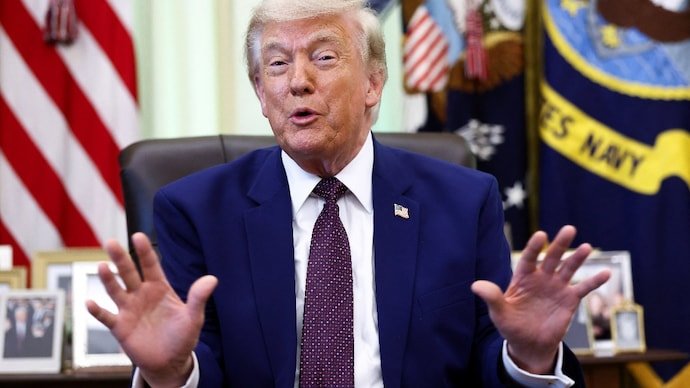
The latest round of US-Iran Diplomacy has exposed a familiar fault line that has shaped negotiations for decades: Nuclear Inspections. On Tuesday, US President Donald Trump publicly declared that no peace agreement with Iran would move forward without robust international monitoring of Tehran’s nuclear facilities, directly contradicting statements from Iranian officials WHO suggested no such arrangement had been accepted.
The dispute comes at a critical moment as Washington and Tehran attempt to negotiate a broader framework designed to reduce tensions across West Asia, prevent future military escalation, and establish long-term mechanisms governing Iran’s nuclear activities.
Trump’s remarks underscore the central reality facing negotiators: while both sides may be interested in avoiding another major conflict, they remain far apart on the question of verification, transparency, and international oversight.
Trump Rejects Iran’s Position on Nuclear Monitoring
Speaking to reporters, Trump forcefully dismissed suggestions from Tehran that inspectors would not be granted access to sensitive nuclear facilities.
“They’re wrong. They know they’re wrong and if they were right, I’d cancel the meetings right now,” Trump said, referring to Iranian statements challenging reports about inspection commitments.
The US president insisted that inspectors from the International Atomic Energy Agency (IAEA) would eventually be permitted access under the proposed agreement.
“They’ll be on the ground at the appropriate time,” he said.
The comments signal that Washington views inspections as a mandatory pillar of any future arrangement rather than a negotiable component that can be diluted or postponed.
For the Trump administration, verification appears to be the foundation upon which any broader peace framework must rest.
Why Nuclear Inspections Matter So Much
Nuclear inspections have long been the most contentious element of diplomacy involving Iran.
International inspectors serve as independent monitors who verify whether a country is complying with commitments related to nuclear development. Their role includes examining facilities, reviewing activities, monitoring uranium enrichment levels, and ensuring that civilian nuclear programmes are not diverted toward weapons development.
Without inspections, any agreement relies largely on trust, something that has historically been in short supply between Washington and Tehran.
Supporters of inspections argue that they provide:
- Independent verification of nuclear activities.
- Greater transparency for the international community.
- Early warning of potential violations.
- Confidence-building measures between rival states.
- Reduced risk of military confrontation.
Critics inside Iran, however, often view extensive inspection regimes as infringements on national sovereignty and potential intelligence-gathering opportunities for hostile governments.
The Central Role of the IAEA
The International Atomic Energy Agency has been at the heart of virtually every major agreement involving Iran’s nuclear programme.
Established as the world’s primary nuclear watchdog, the agency is responsible for ensuring that civilian nuclear technology is not used to develop weapons.
Over the years, IAEA inspectors have conducted numerous inspections inside Iran under various agreements and monitoring arrangements.
However, access has frequently become a source of dispute.
Iran has periodically restricted inspections, challenged agency findings, or disagreed with the scope of monitoring activities. Meanwhile, Western governments have often argued that stronger verification mechanisms are necessary to ensure compliance.
Trump’s latest comments indicate that the IAEA would once again play a central role if a new agreement is finalized.
A Familiar Pattern in US-Iran Relations
The current disagreement reflects a recurring pattern in US-Iran diplomacy.
Nearly every major negotiation between the two countries has ultimately centered on three interconnected questions:
- How much nuclear activity Iran should be allowed to conduct.
- What restrictions should be imposed.
- How compliance should be verified.
While the technical details often dominate headlines, the underlying issue is fundamentally about trust.
Washington seeks mechanisms that guarantee transparency and accountability. Tehran seeks assurances that its sovereignty, security, and economic interests will be protected.
Balancing these competing priorities has repeatedly proven difficult.
Trump’s Strategy: Diplomacy Backed by Pressure
Trump’s comments reveal a negotiating strategy that combines diplomacy with continued pressure.
While the administration remains engaged in talks, the president has made it clear that military and economic pressure remain available if negotiations fail.
This approach reflects Trump’s broader foreign policy philosophy, which often emphasizes negotiating from a position of strength.
By publicly declaring inspections a red line, Trump may be attempting to:
- Strengthen the US negotiating position.
- Reassure domestic critics concerned about concessions.
- Signal seriousness to international partners.
- Increase pressure on Tehran to accept verification measures.
- Demonstrate that diplomacy will not come at any cost.
The strategy carries both opportunities and risks. While firm positions can strengthen leverage, they can also reduce flexibility during complex negotiations.
Congressional Pressure Complicates the Picture
Trump’s comments came as domestic political pressures intensified in Washington.
The US Senate recently approved a war powers resolution aimed at limiting further military action against Iran, reflecting growing concern among lawmakers about the possibility of a wider regional conflict.
The vote highlighted divisions within American Politics over how to balance diplomacy, deterrence, and military involvement in the Middle East.
Some lawmakers argue that negotiations offer the best path toward stability. Others believe Iran should face stronger pressure before any concessions are considered.
Trump now faces the challenge of maintaining diplomatic momentum while also responding to political pressures from both supporters and critics.
Iran’s Perspective on Verification
From Tehran’s standpoint, inspections are often viewed through a different lens.
Iranian officials have historically argued that their country has the right to pursue peaceful nuclear activities and that excessive monitoring can undermine national sovereignty.
Many Iranian policymakers also remain skeptical about Western intentions, citing previous disputes over Sanctions, agreements, and enforcement mechanisms.
As a result, Iranian negotiators typically seek limits on inspection access while attempting to secure economic benefits such as sanctions relief and greater international engagement.
The latest disagreement suggests that these fundamental differences remain unresolved.
Regional Implications of a Successful Agreement
If negotiators can overcome disputes surrounding inspections, the impact could extend far beyond Iran and the United States.
A durable agreement could influence security dynamics across the Middle East by reducing the likelihood of direct military confrontation.
Potential benefits could include:
- Reduced regional tensions.
- Improved energy market stability.
- Greater confidence among international investors.
- Enhanced diplomatic cooperation.
- Lower risk of escalation involving regional allies and rivals.
Conversely, a collapse in negotiations could reignite concerns about military conflict, sanctions expansion, and broader geopolitical instability.
Verification May Determine the Fate of the Deal
History suggests that the success or failure of the current negotiations may ultimately depend less on political declarations and more on technical verification arrangements.
Even when governments agree on broad principles, disagreements often emerge over implementation details.
Questions that negotiators will need to answer include:
- Which facilities can inspectors access?
- How frequently will inspections occur?
- What reporting mechanisms will be used?
- How will violations be handled?
- What consequences will follow non-compliance?
These technical issues may appear bureaucratic, but they often determine whether an agreement is viewed as credible by the international community.
The Road Ahead for US-Iran Diplomacy
Negotiations between Washington and Tehran remain ongoing, but Trump’s latest comments make clear that inspections are likely to become one of the defining issues of the talks.
By publicly insisting that IAEA inspectors must be allowed access, Trump has established a clear benchmark for any future agreement.
Iran, meanwhile, continues to signal reservations about the extent of international monitoring it is prepared to accept.
The coming weeks may determine whether negotiators can bridge that gap or whether verification disputes once again derail a potential breakthrough.
Conclusion
Donald Trump’s warning that there can be no agreement without nuclear inspections highlights the enduring challenge at the heart of US-Iran diplomacy. While both sides appear interested in avoiding renewed conflict, they remain divided over how Iran’s nuclear programme should be monitored and verified.
For Washington, inspections are essential to building trust and ensuring compliance. For Tehran, they remain a sensitive issue tied to sovereignty and National Security. As negotiations continue, the fate of any peace agreement may ultimately depend on whether both sides can find common ground on verification. Until then, international inspections remain the critical obstacle—and potentially the key—to a lasting diplomatic breakthrough.
[/faq_widget]
For breaking news and live news updates, like us on Facebook or follow us on Twitter and Instagram. Read more on Latest World on thefoxdaily.com.





COMMENTS 0