- Understanding Chabahar Port: India’s Strategic Gateway
- The Sanctions Challenge: Why the US Waiver Matters
- India’s Strategic Options: A Tactical Pause, Not a Retreat
- Timeline: How India’s Chabahar Strategy Evolved
- Why Chabahar Matters More Than Ever
- The Diplomatic Balancing Act: US vs Iran
- Comparison: Chabahar vs Gwadar Port
- Economic Implications: Trade, Investment, and Risk
- A Unique Insight: The Rise of “Flexible Infrastructure Diplomacy”
- What Happens Next? Key Scenarios
- Prediction: Why India Is Unlikely to Exit Chabahar Permanently
- Conclusion: A Defining Moment for India’s Global Strategy
India’s evolving strategy at Iran’s Chabahar Port is drawing global attention as a key US sanctions waiver approaches its expiration. The situation raises urgent questions: What is India planning? Why does Chabahar matter so much? And how could this reshape regional trade and geopolitics?
At the center of this development is India’s $120 million investment in Chabahar, a project designed to unlock direct access to Afghanistan and Central Asia while bypassing Pakistan. However, with US sanctions on Iran tightening and the current waiver nearing its end, New Delhi is exploring contingency options including a temporary restructuring of its stake.
This is not just about a port. It’s about influence, connectivity, and navigating one of the most complex diplomatic tightropes in modern geopolitics.
Understanding Chabahar Port: India’s Strategic Gateway
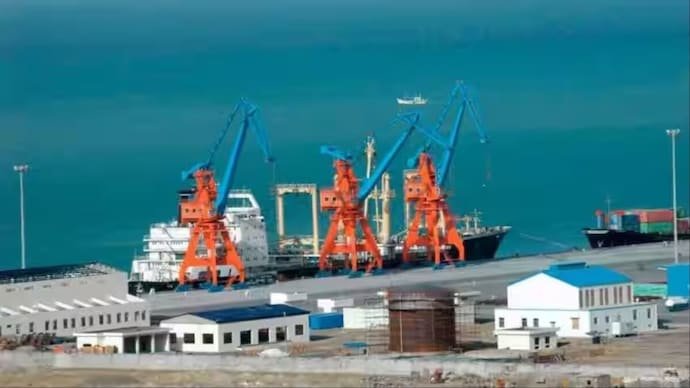
Chabahar Port is located in southeastern Iran along the Gulf of Oman. Its importance goes far beyond geography. For India, it represents:
- A direct trade corridor to Afghanistan
- Access to landlocked Central Asian markets
- A strategic counterbalance to china’s regional infrastructure projects
- An alternative route that bypasses Pakistan entirely
Unlike traditional trade routes that rely heavily on Pakistani transit, Chabahar allows India to independently expand its economic and diplomatic footprint in Eurasia.
In many ways, Chabahar is not just a port it is a cornerstone of India’s long-term foreign policy architecture.
The Sanctions Challenge: Why the US Waiver Matters
The United States has long imposed sanctions on Iran, targeting its energy, financial, and infrastructure sectors. However, recognizing Chabahar’s importance for Afghanistan’s development, Washington previously granted India a sanctions waiver.
This exemption allowed India to operate the port and invest in related infrastructure without facing penalties. But with the waiver now nearing expiration, India faces three difficult choices:
- Continue operations and risk sanctions exposure
- Pause or restructure its involvement
- Seek an extension through diplomatic negotiations
Each option carries significant geopolitical consequences, not just for India but for the broader region.
India’s Strategic Options: A Tactical Pause, Not a Retreat
India is reportedly evaluating a range of approaches to safeguard its interests while staying compliant with international regulations. One potential solution involves temporarily transferring its stake to an Iranian entity.
This approach would allow India to:
- Maintain operational continuity indirectly
- Avoid immediate sanctions risks
- Retain the option to re-enter fully once conditions stabilize
Importantly, this is not a signal of withdrawal. Instead, it reflects a pragmatic adjustment to shifting geopolitical realities.
In Diplomacy, timing is everything and sometimes stepping back briefly is the only way to move forward later.
Timeline: How India’s Chabahar Strategy Evolved
| Year | Key Development |
|---|---|
| 2016 | India signs agreement with Iran to develop Chabahar Port |
| 2018 | US grants sanctions waiver recognizing Afghanistan’s needs |
| 2020–2023 | Gradual expansion of port operations and connectivity plans |
| Nov 2025 | India secures a six-month waiver extension |
| 2026 | India evaluates stake restructuring as waiver nears expiry |
Why Chabahar Matters More Than Ever
The stakes surrounding Chabahar have increased significantly in recent years due to shifting global dynamics:
1. Competing Infrastructure Projects
China’s investments in regional ports and corridors have intensified competition. Chabahar offers India a strategic foothold to counterbalance this influence.
2. Afghanistan’s Economic Stability
Chabahar provides a vital supply line for Afghanistan, especially as the country seeks economic recovery and reduced dependence on neighboring transit routes.
3. Energy Security and Trade Routes
Located near one of the world’s most critical maritime chokepoints, the port plays a role in securing trade flows and energy shipments.
4. Regional Diplomacy
India’s engagement with Iran through Chabahar strengthens bilateral ties while also shaping its broader West Asia policy.
The Diplomatic Balancing Act: US vs Iran
India’s position is uniquely complex. It maintains strong strategic relations with the United States while also valuing its partnership with Iran.
This creates a classic diplomatic dilemma:
- Align too closely with US sanctions → risk losing access to Chabahar
- Ignore US concerns → risk economic and financial repercussions
India’s approach has historically been one of strategic autonomy maintaining relationships on both sides without fully aligning with either.
The current situation tests that approach more than ever.
Comparison: Chabahar vs Gwadar Port
| Feature | Chabahar Port (India-backed) | Gwadar Port (China-backed) |
|---|---|---|
| Location | Iran | Pakistan |
| Strategic Backer | India | China |
| Primary Objective | Access to Central Asia | China-Pakistan Economic Corridor |
| Geopolitical Role | Counterbalance to regional influence | Expansion of Belt and Road Initiative |
| Transit Advantage | Bypasses Pakistan | Enhances China-Pakistan connectivity |
This comparison highlights why Chabahar is not just an infrastructure project but a geopolitical counterweight.
Economic Implications: Trade, Investment, and Risk
If India alters its stake in Chabahar, the ripple effects could be significant:
- Trade Disruptions: Temporary restructuring could slow logistics operations
- Investor Sentiment: Uncertainty may impact confidence in regional infrastructure projects
- Supply Chain Shifts: Businesses relying on this corridor may need alternative routes
However, a well-managed transition could minimize these risks and even strengthen long-term resilience.
A Unique Insight: The Rise of “Flexible Infrastructure Diplomacy”
One overlooked aspect of this situation is how it reflects a broader trend in global geopolitics what could be called flexible infrastructure diplomacy.
Countries are increasingly designing projects that can adapt to:
- Sanctions
- Political shifts
- Economic disruptions
India’s potential move to temporarily shift its stake is a textbook example of this strategy in action.
Instead of abandoning investments under pressure, nations are learning to pause, adapt, and re-engage.
What Happens Next? Key Scenarios
Scenario 1: Waiver Extension
The most straightforward outcome would be a renewed US waiver, allowing India to continue operations uninterrupted.
Scenario 2: Temporary Stake Transfer
India could proceed with a tactical shift, maintaining indirect involvement while avoiding sanctions.
Scenario 3: Partial Slowdown
Operations may continue at reduced capacity while negotiations remain ongoing.
Scenario 4: Long-Term Strategic Reset
India could use this moment to redesign its broader connectivity strategy across the region.
Prediction: Why India Is Unlikely to Exit Chabahar Permanently
Despite current uncertainties, a complete withdrawal from Chabahar appears unlikely. Several factors support this view:
- Significant sunk investment
- Long-term strategic importance
- Lack of viable alternatives offering similar geopolitical advantages
More importantly, exiting would create a vacuum that competing powers could quickly fill something India is unlikely to allow.
Conclusion: A Defining Moment for India’s Global Strategy
The decisions India makes in the coming weeks regarding Chabahar Port will have far-reaching implications. This is not merely about compliance with sanctions or managing a single investment.
It is about how a rising global power navigates competing alliances, protects its strategic interests, and adapts to an increasingly complex world order.
Chabahar is a test case not just for India, but for how modern geopolitics works.
If managed skillfully, India could emerge stronger, demonstrating that strategic flexibility can coexist with long-term ambition. If mishandled, however, it risks losing a critical foothold in one of the world’s most strategically important regions.
Either way, the outcome will shape the future of regional connectivity, trade dynamics, and geopolitical alignment for years to come.
For breaking news and live news updates, like us on Facebook or follow us on Twitter and Instagram. Read more on Latest World on thefoxdaily.com.






COMMENTS 0