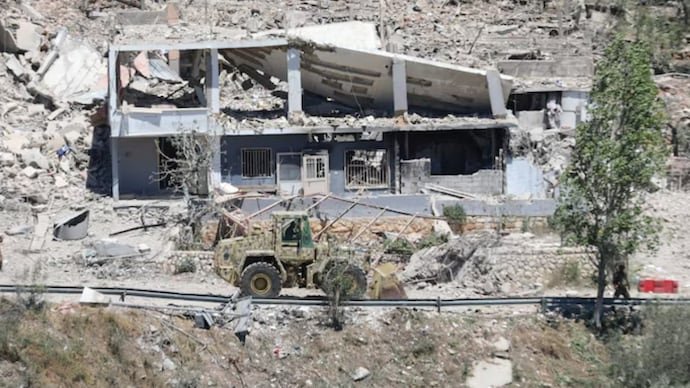
The latest attempt to halt fighting between Israel and Hezbollah is facing a serious challenge just hours after it was announced. While the governments of Israel and Lebanon reportedly agreed to a US-mediated ceasefire framework, Hezbollah’s immediate rejection has cast doubt on whether the proposal can survive beyond the negotiating table.
The Iran-backed group made it clear that it does not consider itself bound by an agreement negotiated without its participation. At the same time, Israeli forces have continued military operations in southern Lebanon and signaled that a withdrawal from recently seized positions is not imminent.
The result is a familiar Middle East dilemma: a ceasefire that exists diplomatically but struggles to exist on the battlefield.
The situation highlights a deeper reality about modern conflicts. Peace agreements are often only as strong as the willingness of armed groups to accept them. When key military actors remain outside negotiations, ceasefires can become political statements rather than practical solutions.
What Does the Proposed Ceasefire Include?
The US-backed initiative reportedly seeks to reduce hostilities by establishing several conditions designed to separate Hezbollah forces from the Israeli border.
Key elements include:
- Implementation of a ceasefire between Israel and Lebanon.
- Withdrawal of Hezbollah fighters from border areas.
- Reduced military activity in southern Lebanon.
- Security arrangements aimed at protecting northern Israel.
- Continued diplomatic engagement through international mediators.
From Washington’s perspective, the arrangement represents a potential first step toward reducing regional tensions that have intensified across multiple fronts during recent months.
However, the plan faces an immediate credibility problem because Hezbollah rejects its core assumptions.
Why Hezbollah Rejected the Agreement
Hezbollah’s leadership argues that any ceasefire framework that ignores Israeli military operations in southern Lebanon cannot be considered a genuine peace proposal.
According to the group’s position, continued Israeli military presence in contested areas effectively undermines the concept of a ceasefire.
The organization’s leadership has repeatedly emphasized that resistance activities will continue as long as what it considers occupation remains in place.
This stance reflects a broader strategic calculation.
For Hezbollah, accepting a ceasefire without securing Israeli withdrawal could be interpreted by supporters as a political and military concession. Such a move could weaken the group’s standing both domestically and regionally.
The Core Problem: Who Represents Lebanon?
One of the most overlooked aspects of the crisis is the complex relationship between the Lebanese state and Hezbollah.
Unlike conventional conflicts between sovereign nations, the Lebanon-Israel confrontation involves both government institutions and powerful non-state military actors.
This creates a fundamental diplomatic challenge.
A government may agree to a ceasefire, but if an influential armed group operating within the country rejects it, implementation becomes significantly more difficult.
This dynamic has complicated multiple peace initiatives throughout the region’s history.
Why Southern Lebanon Remains the Main Flashpoint
Southern Lebanon has long been one of the Middle East’s most strategically sensitive regions.
Its proximity to northern Israel makes it a critical security concern for both sides.
Israel argues that military operations in the area are necessary to prevent cross-border attacks and protect civilian communities.
Hezbollah, meanwhile, portrays its activities as defensive measures against Israeli military pressure.
The result is a cycle where each side justifies its actions as a response to the other’s behavior.
This security dilemma makes ceasefires particularly difficult to sustain.
How Iran Shapes the Conflict
No analysis of Hezbollah can be complete without understanding Iran’s role.
For decades, Tehran has viewed Hezbollah as one of its most important regional allies.
The relationship extends beyond ideology and includes political, military, and strategic dimensions.
As regional tensions have intensified, Iran has increasingly linked developments in Lebanon to broader negotiations involving the United States and Israel.
This means the Lebanon front is no longer an isolated conflict.
Instead, it has become part of a wider geopolitical contest involving multiple countries and competing strategic interests.
The Security Zone Dispute Explained
A central disagreement concerns areas of southern Lebanon currently under Israeli military control.
Israel describes these positions as necessary security zones designed to protect border communities.
Hezbollah and its allies view them differently.
They argue that any lasting ceasefire must include a return to previous military positions and an end to Israeli operations in Lebanese territory.
The disagreement creates a major obstacle because both sides see the issue as directly linked to national security.
| Issue | Israel’s Position | Hezbollah’s Position |
|---|---|---|
| Security Zone | Necessary for defense | Must be removed |
| Military Presence | Temporary security measure | Occupation |
| Ceasefire Conditions | Hezbollah withdrawal first | Israeli withdrawal first |
| Future Security | Prevent attacks | Protect Lebanese territory |
Why Previous Ceasefires Have Struggled
The current proposal is not the first attempt to reduce violence.
Several ceasefire announcements have emerged during the conflict, yet many have failed to deliver lasting stability.
Common reasons include:
- Conflicting interpretations of ceasefire terms.
- Continued military operations.
- Lack of trust between parties.
- Regional interference.
- Absence of enforcement mechanisms.
Without clear monitoring systems and mutual confidence, ceasefires often become temporary pauses rather than genuine pathways to peace.
The Regional Stakes Are Increasing
The consequences of continued fighting extend far beyond Israel and Lebanon.
Regional governments, international organizations, and global markets are closely monitoring developments because the conflict intersects with several broader challenges:
- Energy security.
- Maritime trade routes.
- US-Iran relations.
- Regional military alliances.
- Economic stability.
Any significant escalation could trigger consequences affecting countries throughout the Middle East and beyond.
The Humanitarian Cost Continues to Grow
While diplomatic and military discussions dominate headlines, civilians remain at the center of the crisis.
Communities on both sides of the border continue facing displacement, insecurity, and economic hardship.
Infrastructure damage, interrupted education, reduced economic activity, and ongoing uncertainty create long-term challenges that persist even when active fighting decreases.
The longer negotiations remain stalled, the greater the burden on affected populations.
The Hidden Challenge: No Clear Endgame
One reason the conflict remains difficult to resolve is the absence of a mutually acceptable end-state.
Israel seeks durable security guarantees.
Hezbollah seeks changes to military realities on the ground.
Lebanon seeks stability.
Iran seeks broader strategic influence.
The United States seeks regional de-escalation.
These objectives overlap in some areas but conflict sharply in others.
As a result, even successful ceasefires often struggle to evolve into comprehensive political settlements.
Prediction: The Ceasefire Will Face Immediate Tests
The most likely short-term scenario is not complete peace or full-scale escalation but continued instability.
Military exchanges may decrease temporarily, yet isolated incidents, retaliatory actions, and political disputes are likely to continue.
The ceasefire’s survival will largely depend on whether mediators can create mechanisms that address both immediate security concerns and longer-term political grievances.
Without such measures, violations could quickly undermine confidence in the agreement.
Future Outlook
The coming weeks will be critical for determining whether diplomacy can regain momentum. International mediators are expected to intensify efforts to bridge differences regarding military withdrawals, border security, and implementation mechanisms.
At the same time, developments in broader US-Iran relations will continue influencing the conflict’s trajectory. Any progress in regional diplomacy could strengthen ceasefire efforts, while setbacks may increase pressure on all sides.
For now, the gap between political agreements and military realities remains the greatest obstacle to lasting peace.
Conclusion
Hezbollah’s rejection of the US-backed ceasefire highlights a fundamental weakness in many modern peace initiatives: agreements cannot succeed if major armed actors refuse to participate. While Israel and Lebanon may have accepted a diplomatic framework, implementation depends on realities on the ground rather than statements issued in foreign capitals.
The conflict in southern Lebanon is no longer simply a border dispute. It has become a focal point for wider regional tensions involving Israel, Iran, the United States, and multiple non-state actors.
The key insight often missed in headline coverage is that ceasefires are not merely legal agreements they are political bargains built on mutual incentives. Until all major stakeholders believe they have something to gain from peace, even the most carefully negotiated ceasefire will remain vulnerable.
The coming months will reveal whether this latest initiative becomes the foundation for a broader settlement or another entry in the long history of Middle East ceasefires that struggled to survive contact with reality.
For breaking news and live news updates, like us on Facebook or follow us on Twitter and Instagram. Read more on Latest World on thefoxdaily.com.






COMMENTS 0