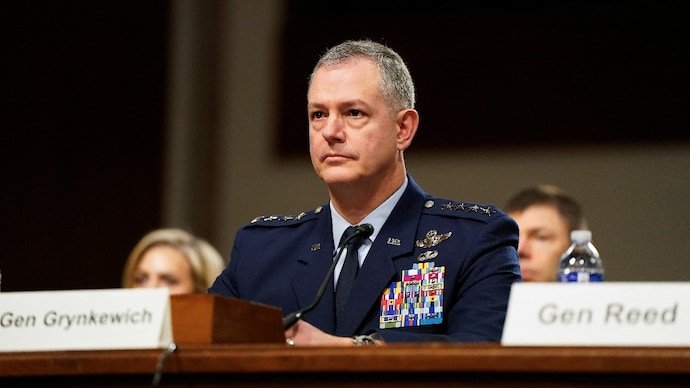
The United States‘ ability to support Israel‘s Missile Defense has come under renewed scrutiny after reports that a senior American military commander warned the Pentagon about a shortage of naval assets available for continued operations in the eastern Mediterranean. According to reports, Gen. Alexus Grynkewich, commander of the United States European Command (EUCOM), cautioned that current naval deployments may not be sufficient to sustain missile interception missions if regional hostilities intensify.
The reported assessment comes at a time of heightened security concerns across the Middle East, where the United States has been supporting Israel against missile and drone attacks while simultaneously maintaining military commitments across Europe, the Indo-Pacific, and other strategic regions. The issue highlights a broader question facing Washington: how to balance support for allies with finite military resources and growing operational demands.
Key Highlights
- Reports indicate the commander of US European Command warned about insufficient naval assets for sustained missile defense operations.
- US Navy destroyers in the Mediterranean play a central role in intercepting ballistic missiles targeting Israel.
- The warning reportedly reflects concerns about maintaining both homeland defense and overseas commitments.
- Growing operational demands have increased pressure on interceptor missile inventories and naval deployments.
- The situation underscores broader challenges facing US military readiness during prolonged regional conflicts.
What Is the Reported Pentagon Warning?
According to reports, Gen. Alexus Grynkewich informed Pentagon officials that the US military could face difficult operational choices if additional naval assets are not deployed to the eastern Mediterranean.
The reported warning suggests that existing destroyer deployments may not provide sufficient capacity to continue defending Israel from sustained ballistic missile attacks while simultaneously preserving America’s ability to respond to threats against its own territory and other strategic priorities.
Although the Pentagon has not publicly confirmed the reported communication, the discussion reflects the increasing complexity of managing military resources during extended periods of regional instability.
Why US Navy Destroyers Are Critical to Israel’s Defense
American guided-missile destroyers are among the most capable air and missile defense platforms in the world. Equipped with advanced radar systems and missile interceptors, these vessels can detect, track and engage ballistic missiles long before they reach their intended targets.
Operating in the Mediterranean Sea, US destroyers provide an additional defensive layer alongside Israel’s own integrated missile defense network.
Their missions may include:
- Tracking ballistic missile launches.
- Intercepting long-range missiles over regional waters.
- Providing early warning and surveillance.
- Supporting allied naval operations.
- Strengthening regional deterrence through visible military presence.
Understanding the Role of US European Command (EUCOM)
The United States European Command is responsible for military operations across Europe and significant portions of the surrounding region, including the Mediterranean.
Its responsibilities include:
- Supporting NATO allies.
- Managing military operations in Europe.
- Coordinating regional security missions.
- Overseeing naval deployments in the Mediterranean.
- Supporting partners during regional crises.
Because missile threats directed toward Israel often transit airspace and maritime regions covered by EUCOM, the command plays an important role in coordinating American defensive operations.
Current US Naval Presence in the Mediterranean
According to publicly reported information, the United States currently maintains several destroyers forward-based in Spain, allowing rapid deployment into the Mediterranean when required.
These warships form part of NATO’s broader maritime posture while remaining available for contingency operations involving regional security.
The reported addition of another destroyer later this year would modestly increase operational flexibility, though military planners continue to evaluate whether current force levels remain adequate for evolving security conditions.
How Ballistic Missile Defense Works at Sea
Naval missile defense relies on a combination of sophisticated radar, command systems and interceptor missiles capable of engaging incoming ballistic threats during different stages of flight.
| Defense Component | Primary Function |
|---|---|
| Advanced Radar | Detects and tracks missile launches over long distances. |
| Combat Information Systems | Analyzes threats and coordinates interception. |
| Interceptor Missiles | Destroy incoming ballistic missiles before impact. |
| Regional Coordination | Shares targeting information with allied defense systems. |
This layered approach improves the probability of successful interception, particularly when multiple defensive systems operate together.
Growing Pressure on Missile Interceptor Inventories
One of the broader strategic concerns highlighted in recent reports involves the availability of interceptor missiles.
Unlike conventional ammunition, advanced missile interceptors require complex manufacturing processes, specialized components and significant production time. During prolonged conflicts, replenishing inventories can become a major logistical challenge.
Military planners must therefore carefully balance operational requirements with long-term readiness, ensuring sufficient stockpiles remain available for future contingencies.
The Broader Challenge: Global Military Commitments
The United States maintains defense commitments across multiple regions simultaneously. In addition to the Middle East, American forces support allies in Europe, monitor developments in the Indo-Pacific and maintain homeland defense responsibilities.
As a result, military assets cannot simply be concentrated in one theater without considering potential consequences elsewhere.
The reported warning illustrates this balancing act, where commanders must evaluate competing priorities while ensuring forces remain prepared for a range of scenarios.
Comparison: Homeland Defense vs. Overseas Operations
| Mission | Primary Objective | Operational Priority |
|---|---|---|
| Homeland Defense | Protect US territory and citizens. | Highest national security priority. |
| Support for Israel | Assist an ally against missile threats. | Regional security commitment. |
| NATO Operations | Strengthen collective defense in Europe. | Alliance obligation. |
| Indo-Pacific Presence | Maintain strategic stability. | Long-term geopolitical priority. |
Managing these responsibilities simultaneously requires careful allocation of personnel, ships, aircraft and missile defense systems.
What This Means for Israel’s Defense
Israel operates one of the world’s most sophisticated multilayered missile defense architectures, incorporating systems designed to intercept threats at different ranges and altitudes. American naval support serves as an additional layer rather than the sole means of protection.
The reported concerns therefore relate primarily to sustaining extended joint operations rather than suggesting that Israel lacks its own defensive capabilities.
Continued cooperation between the two countries remains an important component of regional security planning.
Strategic Implications for the United States
The reported warning reflects a broader issue confronting many modern militaries: maintaining readiness during extended periods of high operational tempo.
Even highly capable armed forces must account for:
- Maintenance cycles for ships.
- Crew rotation requirements.
- Missile inventory replenishment.
- Global deployment commitments.
- Industrial production capacity.
Balancing these factors becomes increasingly challenging when multiple crises occur simultaneously.
Expert Insight: Military Capacity Is About Sustainability, Not Just Numbers
A common misconception is that military strength is measured solely by the total number of ships or weapons a country possesses. In reality, operational effectiveness depends on how long those assets can be sustained without reducing readiness elsewhere.
Modern missile defense operations require continuous logistics, maintenance, trained personnel and a reliable supply of sophisticated interceptor missiles. As conflicts become longer and more technologically demanding, sustaining these capabilities becomes just as important as deploying them initially.
The reported concerns from senior military leadership illustrate that strategic planning increasingly focuses on endurance, flexibility and efficient allocation of resources rather than simply expanding deployments.
What to Watch Going Forward
Several developments could influence the situation in the coming months:
- Any decision to deploy additional US Navy destroyers to the Mediterranean.
- Changes in the regional security environment.
- Efforts to replenish interceptor missile stockpiles.
- Future defense budget allocations for missile defense and naval readiness.
- Continued coordination between US and Israeli military planners.
These factors will help determine how effectively the United States can sustain regional missile defense operations while preserving global military readiness.
Future Outlook
The reported warning serves as a reminder that even the world’s most capable military must continuously balance competing priorities. As geopolitical tensions evolve, Washington is likely to evaluate additional deployments, accelerate production of advanced interceptor missiles and reassess force distribution across multiple theaters.
For allies such as Israel, continued cooperation with the United States is expected to remain an important element of regional security. However, long-term resilience will increasingly depend on diversified defense planning, stronger industrial capacity and efficient management of military resources.
Conclusion
Reports that the commander of US European Command warned about limited naval assets highlight the growing complexity of sustaining missile defense operations in the Middle East. While the United States continues to provide significant military support to Israel, prolonged regional tensions place increasing demands on warships, interceptor missile inventories and operational planning.
Whether additional naval deployments are approved or existing resources are redistributed, the episode underscores a broader strategic reality: modern defense is no longer defined only by military capability but also by the ability to sustain that capability across multiple regions over extended periods. As Global Security challenges continue to evolve, resource management and long-term readiness will remain central to US defense strategy.
For breaking news and live news updates, like us on Facebook or follow us on Twitter and Instagram. Read more on Latest World on thefoxdaily.com.






COMMENTS 0