A retired homicide detective has questioned the investigative strategy in the disappearance of Nancy Guthrie, the mother of NBC Today show host Savannah Guthrie, arguing that authorities may be placing too much emphasis on forensic technology and unidentified DNA evidence instead of traditional detective work.
Chris McDonough, a retired homicide detective who hosts the programme The Interview Room, made the remarks during an interview with NewsNation’s Ashleigh Banfield. He argued that investigators should focus more closely on Nancy’s personal life, relationships and social circle to identify people who may have information about her disappearance.
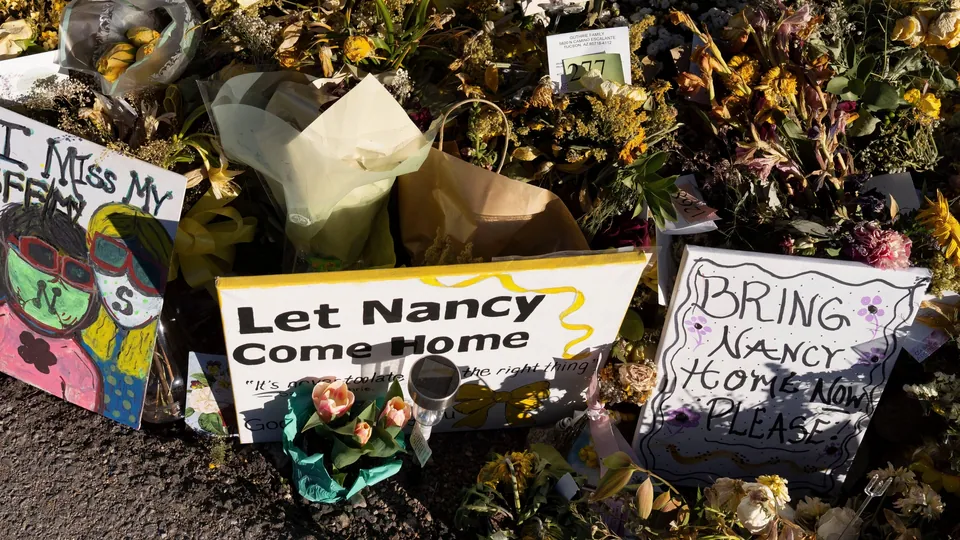
Nancy was last seen at her home in the Catalina Foothills area near Tucson, Arizona, on the evening of January 31, 2026. Her family reported her missing on February 1. More than nine months later, no suspect has been publicly identified, and the case remains unresolved.
The comments have renewed discussion about the role of forensic evidence in the investigation, particularly an unidentified male DNA sample reportedly recovered from Nancy’s home. McDonough’s criticism reflects concern that investigators could spend too much time trying to interpret a DNA sample without first establishing whether it is connected to the disappearance.
Why Is the Unidentified Male DNA Evidence Being Questioned?
The unidentified male DNA sample has become one of the most discussed pieces of forensic evidence in the investigation. According to reports, investigators recovered a mixed DNA sample from Nancy’s home and have subjected it to extensive testing in an effort to identify a possible contributor.
However, a mixed DNA sample can contain genetic material from more than one person, making interpretation and identification more complicated. Investigators must determine whether the material belongs to someone connected to the disappearance or could have come from an individual who had an ordinary reason to visit the property.
During the NewsNation interview, Banfield questioned whether the unidentified DNA should be treated as the central clue. She suggested that the sample could have originated from someone such as a delivery worker rather than necessarily belonging to the person responsible for Nancy’s disappearance.
Her argument was not that DNA evidence should be ignored, but that investigators should avoid assuming an unidentified sample is directly connected to the crime before establishing its relevance.
McDonough agreed with that concern. His criticism focused on the risk of allowing forensic technology to dominate an investigation when detectives still need to establish the victim’s movements, relationships and possible vulnerabilities.
Chris McDonough Says Investigators Should Return to Traditional Detective Work
McDonough argued that investigators should place greater emphasis on interviewing people and understanding Nancy’s personal circumstances. He believes that conversations with relatives, friends, neighbours, acquaintances and others who may have interacted with her could help reveal information that technology alone cannot provide.
“You need to get to fundamentals, and you need to talk to people,” McDonough said during the interview. “You need to learn about the victim. You need to learn about their circle of influence.”
Traditional investigative work can help detectives build a detailed picture of a missing person’s routine, relationships, financial circumstances and recent activities. It can also help identify unusual behaviour, unfamiliar contacts or interactions that might otherwise be overlooked.
Such interviews do not replace forensic testing. Instead, information gathered from witnesses and people close to the victim can help investigators decide which forensic leads deserve further attention and whether particular evidence fits the known timeline.
McDonough’s comments represent his professional assessment of the investigation, not an official finding that authorities have mishandled the case. Investigators have not publicly indicated that they are abandoning DNA analysis or other forensic methods.
Retired Detective and Ashleigh Banfield Criticise Sheriff Chris Nanos
During their discussion, McDonough and Banfield also questioned the investigative approach of Pima County Sheriff Chris Nanos, who is leading the local investigation into Nancy’s disappearance.
The criticism centred on what they described as an excessive emphasis on technology, particularly the unidentified DNA evidence. McDonough argued that the investigation should place greater weight on traditional detective skills, including interviews and an understanding of Nancy’s personal network.
The sheriff’s department, however, has continued to defend its investigative efforts. Authorities have been working with the FBI and specialist laboratories to examine forensic evidence, review surveillance footage and assess information submitted by members of the public.
In late October, investigators travelled to Florida to meet with scientists and discuss ways to advance the DNA analysis. The department has also continued asking the public to report even seemingly minor information that could help establish what happened to Nancy.
The disagreement highlights a wider question in complex missing-person investigations: how should detectives balance modern forensic technology with traditional investigative methods? DNA can provide valuable evidence, but its usefulness depends on whether investigators can establish who contributed the sample and whether that person has a meaningful connection to the crime.
What Do the Ransom Notes Say About Nancy Guthrie’s Disappearance?
Ransom notes have added another layer of uncertainty to the investigation. Two messages sent to a Tucson television station shortly after Nancy disappeared attracted particular attention because they contained different claims about her condition and what had happened after her alleged abduction.
The first message demanded payment in cryptocurrency in exchange for Nancy’s return. It reportedly demanded $4 million in Bitcoin and included details that investigators considered important enough to examine as part of the case.
A second message, sent on February 6, made a much more disturbing claim. It alleged that Nancy had died shortly after being taken and that her body had been buried in a natural area.
The messages were sent to a local media outlet rather than directly to the Guthrie family. Investigators examined their contents and attempted to trace their origins, but the claims contained in a ransom message cannot automatically be treated as verified information about the victim’s fate.
The second note’s claim that Nancy had died has not been independently established through publicly confirmed forensic evidence.
Savannah Guthrie’s Emotional Appeal After the Second Note
Following the arrival of the second ransom message, Savannah Guthrie addressed the person or people responsible through an Instagram statement published on February 7.
She acknowledged receiving the communication and made an emotional appeal for her mother’s safe return. Her message also indicated that the family was prepared to pay in exchange for Nancy’s return.
“We received your message and we understand,” Savannah said. “We beg you now to return our mother to us. … This is very valuable to us, and we will pay.”
The statement reflected the family’s desperation for information after Nancy disappeared from her home. Savannah has continued to appeal publicly for anyone with relevant information to contact investigators.
However, the existence of ransom communications has not established who sent them or whether the sender was involved in Nancy’s disappearance. Authorities have also encountered other messages and demands connected to the case that required credibility assessments.
Latest Nancy Guthrie Investigation Update: No Suspect Identified
As of November 12, 2026, no suspect has been publicly identified or arrested in connection with Nancy’s disappearance. The FBI and Pima County Sheriff’s Department continue to investigate what authorities believe was an abduction from her Tucson-area home.
Investigators have examined DNA evidence, surveillance footage, digital information and communications received after Nancy went missing. The FBI previously released images of an unidentified, armed individual appearing to tamper with the home’s front-door camera around the time of her disappearance.
Authorities have also continued assessing possible ransom communications. A more recent message reported in September was reviewed by the joint FBI and Pima County task force, which later determined that it was not credible.
In August, human remains were discovered in a desert area approximately 15 miles from Nancy’s home. Authorities said there was no indication at the time that the remains were connected to her disappearance. The discovery did not lead to the identification of a suspect.
On November 1, Savannah made another public appeal for information, asking anyone who knew something about her mother’s disappearance to come forward. She said the family wanted to bring Nancy home and give her dignity.
Why the Investigation Remains Challenging
The disappearance has presented investigators with several unresolved questions. They must establish who entered or approached Nancy’s property, what happened after she was last seen and whether the available forensic and digital evidence can identify the person responsible.
The investigation involves several different types of evidence, each with its own limitations:
- DNA evidence: Investigators are working to identify contributors to an unidentified male DNA sample, but its connection to the disappearance has not been publicly established.
- Surveillance footage: Images of an unidentified armed individual near Nancy’s home provide a potential investigative lead, but the person’s identity remains unknown.
- Ransom communications: Multiple messages have been examined, but not every communication has been considered credible.
- Witness interviews: Information from people who knew Nancy or may have interacted with her could help establish her movements and identify relevant leads.
- Digital evidence: Investigators continue examining available electronic records and other information that could help reconstruct events surrounding her disappearance.
These investigative methods are not mutually exclusive. Forensic testing can help identify individuals, while interviews and background research can provide the context needed to determine whether a particular lead is meaningful.
What Happens Next in the Nancy Guthrie Case?
The debate raised by McDonough and Banfield is likely to keep attention focused on how investigators are handling the DNA evidence. Their argument is that detectives should not allow an unidentified sample to overshadow the broader investigation into Nancy’s life and the people around her.
For the family, the priority remains finding answers about what happened and locating Nancy. For investigators, the challenge is to separate credible evidence from speculation, verify the origin of communications and establish whether forensic clues can be connected to a specific individual.
McDonough’s recommendation to return to traditional investigative fundamentals does not mean abandoning modern forensic science. Rather, it highlights the importance of combining laboratory analysis with detailed interviews, background checks and careful examination of the victim’s personal circumstances.
Until investigators establish the identity of the person responsible and clarify the significance of the available evidence, major questions surrounding Nancy Guthrie’s disappearance will remain unanswered.
For breaking news and live news updates, like us on Facebook or follow us on Twitter and Instagram. Read more on Latest World on thefoxdaily.com.






COMMENTS 0