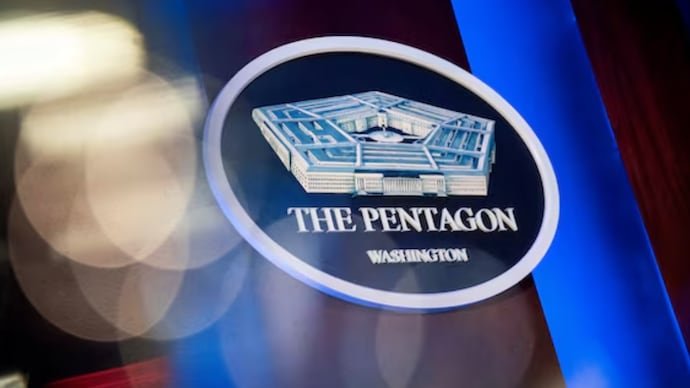
The United States has taken another significant step in its ongoing technology and national Security competition with china by adding several high-profile Chinese companies including Alibaba, Baidu, BYD and robotics firm Unitree to the Pentagon‘s Section 1260H list of entities allegedly supporting China’s military-industrial complex.
While being placed on the list does not automatically result in Sanctions or a ban on operations, the designation sends a powerful signal to investors, policymakers and global markets. It also highlights a broader shift in international relations where Artificial Intelligence, robotics, cloud infrastructure and advanced manufacturing are increasingly viewed not just as commercial technologies but as strategic assets with national security implications.
The Pentagon’s latest move comes at a time when Washington and Beijing are competing fiercely for leadership in emerging technologies. From AI models and semiconductor chips to electric vehicles and humanoid robots, technological dominance is becoming as important as economic and military power in shaping the future global order.
What Is the Pentagon’s 1260H List?
The Section 1260H list was established under the US National Defense Authorization Act and requires the Department of Defense to identify Chinese companies that it believes are directly or indirectly linked to China’s military modernization efforts.
The objective is not necessarily to punish companies immediately but to increase transparency and alert investors and government agencies about potential national security concerns.
Companies included on the list can face:
- Greater regulatory scrutiny
- Restrictions on military contracts
- Reduced access to government-funded projects
- Potential future sanctions
- Heightened investor caution
With the latest additions, the Pentagon’s list now includes nearly 200 Chinese firms across sectors such as artificial intelligence, semiconductors, telecommunications, aerospace, robotics, batteries and electric vehicles.
Why Alibaba’s Inclusion Matters
Alibaba is often associated with e-commerce, but its significance extends far beyond online shopping. The company has become one of China’s most influential technology groups, operating in cloud computing, digital payments, logistics, artificial intelligence and enterprise software.
Alibaba Cloud is among the largest cloud service providers in Asia and plays a central role in China’s digital infrastructure. Cloud computing has become a strategic technology because it powers everything from AI development and big data analysis to government services and industrial automation.
For US policymakers, the concern is that advanced cloud infrastructure could potentially support military applications, particularly in a system where civilian and defense technologies increasingly overlap.
The inclusion of Alibaba therefore reflects concerns about technological capabilities rather than traditional military activities.
Baidu’s Growing Role in Artificial Intelligence
Baidu’s addition to the list may be even more significant from an AI perspective.
Originally known as China’s leading search engine, Baidu has transformed itself into one of the country’s most advanced artificial intelligence companies. The company has invested heavily in:
- Large language models
- Generative AI systems
- Autonomous driving technology
- AI-powered cloud platforms
- Smart transportation infrastructure
- Machine learning research
Baidu’s AI ecosystem has become increasingly important as China seeks to compete with American firms such as OpenAI, Google, Microsoft and Anthropic.
As AI capabilities advance rapidly, governments around the world are becoming concerned about the military applications of machine learning, autonomous systems and large-scale data analysis.
The Military-Civil Fusion Debate
A central issue behind the Pentagon’s decision is China’s military-civil fusion strategy.
This policy encourages collaboration between civilian companies, universities, research institutions and military organizations. The goal is to ensure that technological breakthroughs achieved in the commercial sector can support national defense capabilities when needed.
From Washington’s perspective, this means that even private Chinese technology firms may contribute to military modernization efforts.
Chinese officials strongly reject the accusation, arguing that the United States is unfairly using national security arguments to suppress Chinese technological development and maintain its own competitive advantage.
The disagreement highlights a fundamental divide in how both countries view the relationship between commercial innovation and national security.
Why Unitree’s Addition Signals a New Focus on Robotics
Among the newest additions, Unitree Robotics has attracted particular attention.
The company has become one of the world’s most prominent robotics manufacturers, producing advanced quadruped robots and humanoid systems that have gained international recognition.
Its technologies demonstrate capabilities in:
- Autonomous navigation
- Machine vision
- AI-powered movement
- Industrial automation
- Human-machine interaction
Robotics is increasingly viewed as a strategic industry because future military and security operations may rely heavily on autonomous systems.
Technologies originally developed for industrial, commercial or research purposes can often be adapted for defense applications. This dual-use nature of robotics makes companies like Unitree particularly important from a national security standpoint.
BYD and the Strategic Importance of Electric Vehicles
The addition of BYD demonstrates how the US-China competition has expanded far beyond software and artificial intelligence.
BYD has emerged as one of the world’s largest electric vehicle manufacturers and a major competitor to global automotive brands.
The company is also a leader in battery technology, one of the most strategically important sectors in the modern economy.
Battery manufacturing affects:
- Electric vehicles
- Energy storage systems
- Renewable energy infrastructure
- Industrial equipment
- Defense technologies
Control over battery supply chains is increasingly viewed as a matter of economic and national security, making companies like BYD important players in global geopolitical competition.
The Bigger Story: Technology Is the New Geopolitical Battlefield
The most important takeaway from the Pentagon’s decision is that technology has become the central arena of strategic competition.
During the Cold War, military strength and nuclear capabilities defined global power. Today, artificial intelligence, semiconductors, cloud computing, robotics and advanced manufacturing are increasingly playing that role.
Governments now recognize that leadership in these technologies can influence:
- Economic growth
- Military capability
- Cybersecurity strength
- Scientific innovation
- Global influence
- National competitiveness
This is why AI companies, battery manufacturers and robotics firms are attracting the same level of strategic attention that defense contractors once received.
How the US Has Gradually Increased Restrictions on Chinese Tech
The latest additions are part of a broader strategy that has evolved over several years.
| Technology Area | US Policy Approach | Primary Objective |
|---|---|---|
| Semiconductors | Export restrictions on advanced chips | Limit AI computing power |
| Artificial Intelligence | Enhanced oversight and controls | Prevent military AI advancement |
| Telecommunications | Restrictions on infrastructure providers | Reduce security vulnerabilities |
| Cloud Computing | Increased scrutiny of providers | Protect sensitive data systems |
| Electric Vehicles | Tariffs and investment reviews | Support domestic manufacturing |
| Robotics | National security assessments | Address dual-use technology risks |
This pattern shows that the competition between Washington and Beijing is increasingly focused on controlling strategic technologies rather than simply managing trade balances.
What the Move Means for Investors
Investors closely monitor Pentagon designations because they can affect long-term business prospects.
Although companies on the 1260H list are not immediately sanctioned, inclusion can create uncertainty around future regulations, access to markets and investment opportunities.
Potential consequences include:
- Higher compliance costs
- Increased geopolitical risk premiums
- Investor caution
- Potential restrictions on future partnerships
- Challenges in accessing certain US government programs
Large institutional investors often reassess exposure to companies facing elevated regulatory or geopolitical risks.
Implications for Global Supply Chains
The impact of these measures extends well beyond the United States and China.
Many multinational corporations rely on Chinese technology firms for cloud services, manufacturing, batteries, software development and hardware production.
As geopolitical tensions increase, companies around the world are accelerating efforts to diversify supply chains and reduce dependence on any single market.
This trend has contributed to growing investment in alternative manufacturing hubs, including India, Vietnam, Indonesia and Mexico.
Businesses are increasingly prioritizing resilience alongside efficiency when designing global supply chains.
Will More Chinese Companies Be Added?
Many analysts believe additional Chinese technology companies could face similar scrutiny in the future.
Sectors most likely to remain under close observation include:
- Artificial intelligence
- Quantum computing
- Advanced semiconductors
- Biotechnology
- Autonomous vehicles
- Space technology
- Cybersecurity solutions
As AI and advanced technologies continue to evolve, governments are likely to broaden their definitions of strategic industries and national security risks.
The Emerging Tech Cold War
One unique aspect often overlooked in discussions about these restrictions is that the world may be witnessing the emergence of a new kind of Cold War one centered on technology rather than ideology.
Unlike the Cold War of the 20th century, today’s competition revolves around data, algorithms, computing power, advanced manufacturing and artificial intelligence.
The companies being added to lists such as the Pentagon’s 1260H database are not traditional defense contractors. They are cloud providers, AI developers, robotics innovators and EV manufacturers.
That shift illustrates how economic power, technological leadership and national security have become deeply interconnected in the modern era.
Conclusion
The Pentagon’s decision to add Alibaba, Baidu, BYD and Unitree to its list of Chinese military-linked companies marks another important chapter in the evolving US-China technology rivalry. While the designation does not impose immediate sanctions, it signals growing concern in Washington about the strategic implications of China’s advances in artificial intelligence, robotics, cloud computing and electric vehicles.
The move reflects a broader reality that technology has become a core element of national power. Companies once viewed primarily as commercial enterprises are now being assessed through a geopolitical and security lens.
Looking ahead, investors, businesses and policymakers should expect continued scrutiny of emerging technologies and greater competition between the world’s two largest economies. As artificial intelligence, robotics and advanced manufacturing reshape industries worldwide, the intersection of technology and national security will likely remain one of the defining themes of the coming decade.
For breaking news and live news updates, like us on Facebook or follow us on Twitter and Instagram. Read more on Latest Technology on thefoxdaily.com.





COMMENTS 0