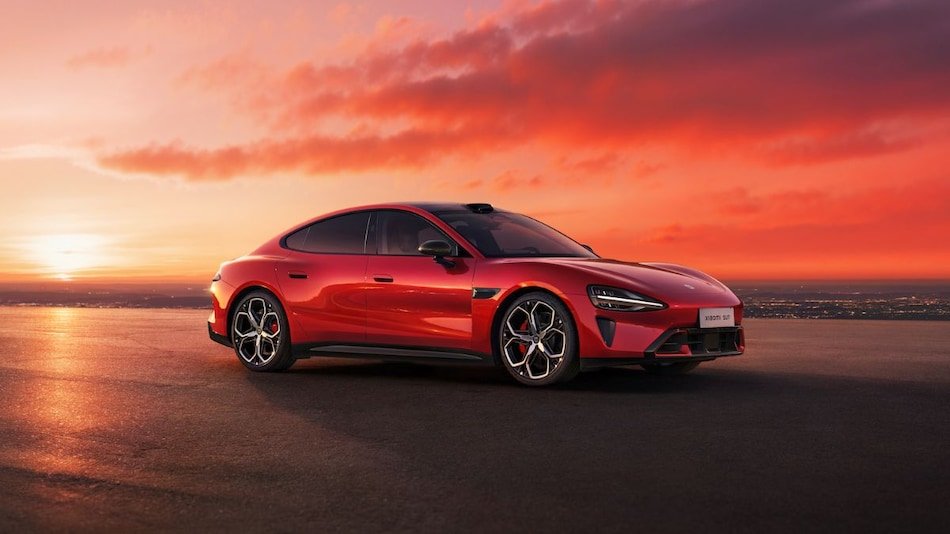
- Xiaomi SU7 EV Price and Market Positioning
- Design Evolution: Familiar Yet More Refined
- Inside the Cabin: Where Xiaomi’s DNA Truly Shows
- AI and Computing Power: A Dual-Chip Strategy
- 360-Degree Perception: Sensor Fusion Explained
- Smart Chassis 2.0: Engineering Meets Intelligence
- Performance and Battery: Breaking Range Anxiety
- Safety: Built for Real-World Conditions
- Owner Management Mode: A Unique Control Feature
- Real-World Impact: Why the Xiaomi SU7 Matters
- Conclusion: A Glimpse Into the Future of Mobility
The electric vehicle (EV) race is no longer just about traditional automakers. Technology companies are now serious contenders and Xiaomi’s latest move proves it. With the launch of the Xiaomi SU7 EV refresh, the company is doubling down on its vision of a fully connected mobility ecosystem.
What: A next-generation electric sedan with up to 902km CLTC range and AI-powered assisted driving.
WHO: Xiaomi, a global tech giant expanding into EVs.
When: Announced as an updated version of its debut electric car lineup.
Where: Currently launched in china, with global expansion yet to be confirmed.
Why: To integrate smartphones, homes, and vehicles into a single intelligent ecosystem.
How: Through advanced hardware like Nvidia DRIVE AGX Thor and software powered by Xiaomi HyperOS.
This isn’t just another EV update it’s a statement. Xiaomi is positioning the SU7 not as a car, but as a smart device on wheels. And that distinction matters.
Xiaomi SU7 EV Price and Market Positioning
The refreshed Xiaomi SU7 EV is offered in three variants:
| Variant | Price (China) | Approx. Price (India) | Range (CLTC) |
|---|---|---|---|
| Standard | CNY 219,900 | ~₹30 lakh | 720 km |
| Pro | CNY 249,900 | ~₹34 lakh | 902 km |
| Max | CNY 303,900 | ~₹41 lakh | 835 km |
Insight: Xiaomi is aggressively pricing the SU7 to undercut premium EV competitors while offering features typically found in higher-end luxury vehicles. This mirrors its smartphone strategy high specs, competitive pricing, rapid ecosystem adoption.
Design Evolution: Familiar Yet More Refined
The Xiaomi SU7 retains its identity as a luxury C-segment sedan, but subtle refinements elevate its presence.
- Length: ~5 metres
- Wheelbase: 3 metres
- Signature styling: Waterdrop headlights, halo taillights
- New addition: Aerodynamically optimized grille with integrated radar
The design philosophy here is continuity rather than reinvention an approach often seen in premium automotive brands. Xiaomi is building recognition, not chasing trends.
Customization as a Differentiator
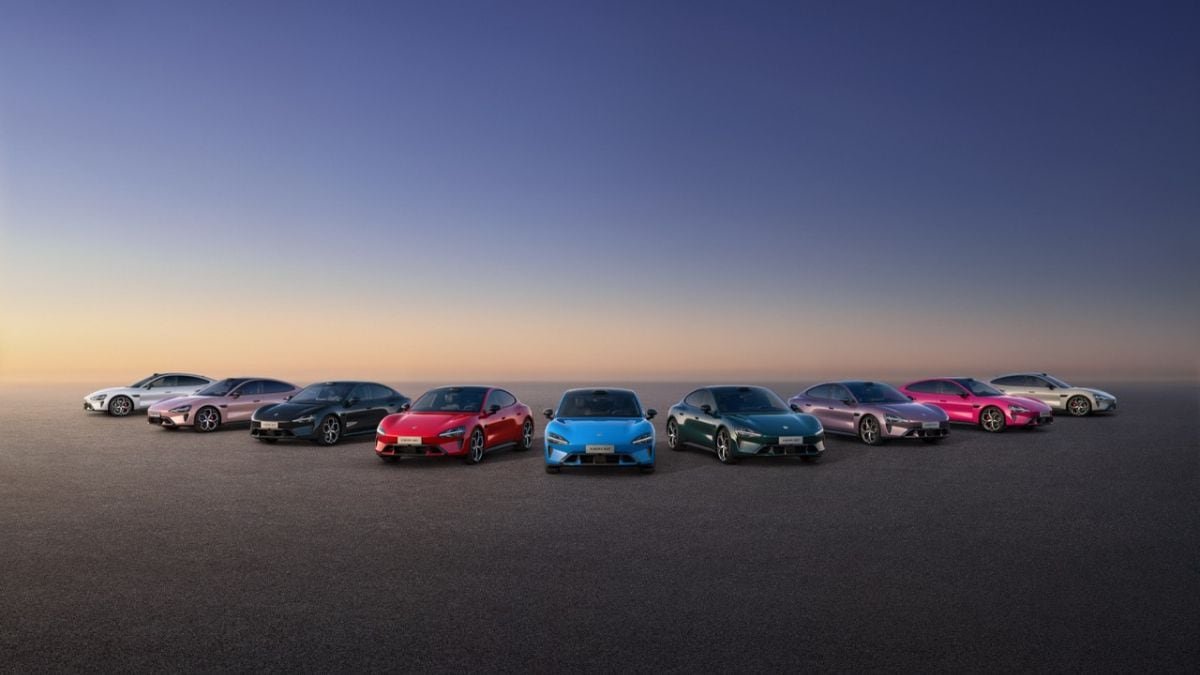
Buyers can choose from nine exterior colors, including bold options like Coastal Blue and Blazing Red. This emphasis on Personalization aligns with younger, tech-savvy consumers who expect customization in all their devices including cars.
Inside the Cabin: Where Xiaomi’s DNA Truly Shows
If the exterior reflects automotive tradition, the interior is unmistakably Xiaomi.
The SU7’s cabin is built around a digital-first experience powered by Xiaomi’s ecosystem.
- Ambient lighting spanning over 3,600mm
- Ventilated, heated seats with optional zero-gravity mode
- Symmetrical, minimalist center console
- Electric front trunk (frunk) with multiple access modes
But the real story lies in the software.
HyperOS Smart Cabin: The Ecosystem Advantage
The SU7 runs Xiaomi’s HyperOS, enabling seamless interaction between:
- Smartphones
- Smart home devices
- The vehicle itself
Unique Angle: Unlike traditional automakers, Xiaomi isn’t building a car from scratch it’s extending an existing ecosystem. This gives it a major advantage in user familiarity and integration.
For example, users can:
- Control home appliances from the car
- Use a unified AI voice assistant across devices
- Manage multiple in-car displays, including rear screens
AI and Computing Power: A Dual-Chip Strategy
The Xiaomi SU7 EV stands out with its dual-chip architecture:
- Snapdragon 8 Gen 3: Handles infotainment and cabin operations
- Nvidia DRIVE AGX Thor: Powers assisted driving and AI processing
This separation ensures smoother performance and scalability similar to how modern smartphones use dedicated chips for AI tasks.
Why Nvidia Thor Matters
The inclusion of Nvidia’s automotive-grade AI platform signals Xiaomi’s serious ambitions in autonomous driving.
It enables:
- Real-time hazard detection
- Advanced parking assistance
- Voice-controlled driving functions
- Continuous learning through AI models
Prediction: As software updates roll out, the SU7 could gain new capabilities over time turning it into a continuously evolving product rather than a static vehicle.
360-Degree Perception: Sensor Fusion Explained
The SU7’s assisted driving system relies on a comprehensive sensor suite:
- LiDAR
- Radar
- Cameras
- Ultrasonic sensors
This multi-layered approach is known as sensor fusion, allowing the vehicle to build a detailed understanding of its surroundings.
Why it matters: Redundancy improves safety. If one sensor fails or is obstructed, others compensate critical for real-world driving conditions.
Smart Chassis 2.0: Engineering Meets Intelligence
The Xiaomi Smart Chassis 2.0 introduces adaptive driving dynamics:
- Double wishbone front suspension
- Five-link rear suspension
- Adaptive air suspension
- Continuous damper control
This allows the car to adjust ride height and stiffness in real time.
Wet Road AI Detection: A Practical Innovation
One standout feature is Wet Road AI Detection, which analyzes:
- Rain sensors
- Temperature data
- Camera inputs
- Microphone signals
The system then recommends or activates a stability mode for safer driving.
Insight: This is a shift from reactive safety systems to predictive ones anticipating risks before they escalate.
Performance and Battery: Breaking Range Anxiety
The Xiaomi SU7 EV delivers impressive performance figures:
- 0–100 km/h in as little as 3.08 seconds
- Top speed of 265 km/h
But the real highlight is the battery technology.
CTB (Cell-to-Body) Integration
Unlike traditional battery packs, CTB integrates cells directly into the vehicle structure.
Benefits include:
- Higher energy density
- Improved structural rigidity
- Better space utilization
Charging Capabilities
- Up to 670 km range in 15 minutes
- 10–80% charge in approximately 12 minutes
- Peak charging rate of 5.2C
Comparison Insight: These figures place the SU7 among the fastest-charging EVs globally, directly addressing one of the biggest consumer concerns charging time.
Safety: Built for Real-World Conditions
Xiaomi has emphasized safety with:
- 9 airbags as standard
- High-strength steel body (2,200 MPa)
- Advanced battery protection system
The battery system is specifically designed to prevent fire or explosion even under extreme stress an increasingly important factor as EV adoption grows.
Owner Management Mode: A Unique Control Feature
This feature allows owners to limit vehicle performance without disabling core functionality.
Use cases include:
- Valet mode
- Teen driver restrictions
- Energy-saving configurations
This reflects a broader shift toward user-controlled vehicle behavior, similar to parental controls in digital devices.
Real-World Impact: Why the Xiaomi SU7 Matters
The SU7 isn’t just another EV it represents a new category of competition.
1. Tech Companies vs Automakers
Xiaomi’s entry signals a future where tech firms compete directly with automotive giants.
2. Software-Defined Vehicles
The SU7 is built to improve over time via updates blurring the line between hardware and software products.
3. Ecosystem Lock-In
Users already in Xiaomi’s ecosystem may find the SU7 a natural extension of their digital lives.
Conclusion: A Glimpse Into the Future of Mobility
The Xiaomi SU7 EV with 902km range and Nvidia Thor-powered AI is more than a refreshed electric sedan it’s a strategic leap into the future of transportation.
By combining long-range performance, rapid charging, advanced AI, and deep ecosystem integration, Xiaomi is redefining what consumers should expect from a modern car.
Final Insight: The real competition in the EV space is no longer just about horsepower or range it’s about intelligence, connectivity, and user experience.
If Xiaomi executes its global expansion successfully, the SU7 could become a blueprint for the next generation of smart vehicles.
For breaking news and live news updates, like us on Facebook or follow us on Twitter and Instagram. Read more on Latest Automobile on thefoxdaily.com.






COMMENTS 0