- Mahindra BE 6 at Formula E: Why This Moment Matters
- From Utility Brand to Global EV Challenger
- Mahindra BE 6 Design: Aggressive, Aerodynamic, Futuristic
- Mahindra BE 6 Specifications and Performance
- Why the “Race-to-Road” Philosophy Matters
- The Bigger Picture: India’s EV Industry Is Rapidly Evolving
- Can Mahindra Compete Globally?
- Mahindra BE 6 vs Global Electric SUVs
- Formula E Association Adds Brand Credibility
- The Real Challenge Starts After the Hype
- What the BE 6 Represents for Indian Automotive History
- Conclusion
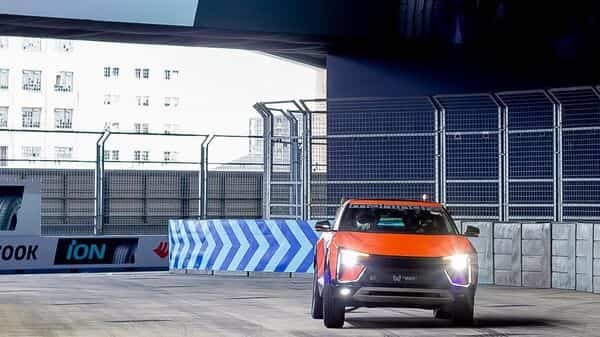
Mahindra’s electric mobility ambitions took a major global leap this weekend after the Mahindra BE 6 performed hot laps at the London Formula E E-Prix, becoming the first Indian-made electric SUV to appear in such a high-profile international motorsport Environment.
For Mahindra, this was more than a promotional showcase. The appearance of the BE 6 at one of the world’s biggest electric racing events signals the company’s intent to position itself as a serious global EV contender rather than just a domestic automaker experimenting with electrification.
The moment also marks an important milestone for India’s automotive industry, which has long been associated with affordability and practicality but is now increasingly entering conversations around advanced EV engineering, performance Technology, and futuristic vehicle design.
Mahindra BE 6 at Formula E: Why This Moment Matters
The London Formula E E-Prix is not just another racing event. Formula E has become one of the most important global platforms for electric mobility Innovation, featuring manufacturers and technology companies focused on the future of sustainable high-performance transportation.
Against this backdrop, Mahindra putting the BE 6 on track carries symbolic and strategic importance.
Unlike static auto-show displays, hot laps allow a vehicle to demonstrate acceleration, handling, road presence, and dynamic capability in front of a global audience. For an Indian electric SUV to appear in such a setting reflects growing confidence in the country’s EV engineering standards.
Mahindra has been involved in Formula E for years through its motorsport participation, but showcasing a production-oriented electric SUV at the event creates a stronger “race-to-road” connection.
That philosophy was highlighted by Mahindra & Mahindra’s Chief Design Officer Pratap Bose, who shared the moment on Social Media and described “Race to Road” as a core principle behind the SUV’s design language and development.
From Utility Brand to Global EV Challenger
Mahindra’s global image historically revolved around rugged SUVs and utility-focused vehicles. Models like the Scorpio, Bolero, and Thar built the company’s reputation for durability rather than futuristic technology.
The BE lineup represents a dramatic shift.
With the BE 6, Mahindra is attempting to reinvent itself as a modern electric mobility brand capable of competing not only with Indian rivals but also with international EV manufacturers entering emerging markets.
The company’s strategy appears focused on three key areas:
- Bold futuristic design
- Long-range electric performance
- Global-ready technology platforms
The London E-Prix showcase suggests Mahindra no longer wants its EVs viewed as “India-only products.” Instead, the brand is increasingly positioning itself within the broader global electric vehicle conversation.
Mahindra BE 6 Design: Aggressive, Aerodynamic, Futuristic
One reason the BE 6 attracted attention even before launch was its unconventional styling.
The SUV departs sharply from Mahindra’s traditional boxy SUV approach and instead adopts a more aerodynamic, coupe-inspired electric SUV design language.
Key design highlights include:
- Sharp LED lighting signatures
- Sculpted aerodynamic bodywork
- Flush door handles
- Futuristic front fascia
- Sporty rear profile
- Large aero-optimized alloy wheels
The overall design philosophy clearly targets younger EV buyers who want their vehicles to feel technologically advanced rather than purely practical.
The Formula E appearance amplified this sporty identity, with the BE 6 looking more aligned with modern global EV aesthetics than traditional Indian SUVs.
Mahindra BE 6 Specifications and Performance
The Mahindra BE 6 is underpinned by the company’s INGLO skateboard platform, developed specifically for born-Electric Vehicles.
This dedicated EV architecture allows for improved weight distribution, battery packaging, cabin space, and performance efficiency compared to converted internal combustion platforms.
Battery Options
- 59 kWh battery pack
- 79 kWh battery pack
Claimed Range
- Up to 535 km (59 kWh variant)
- Up to 682 km (79 kWh variant)
Power Output
- 230 bhp (59 kWh)
- 285 bhp (79 kWh)
The rear-wheel-drive configuration also adds a more performance-oriented driving character compared to front-wheel-drive electric SUVs commonly seen in mainstream segments.
For many enthusiasts, the combination of rear-wheel drive and high torque delivery makes the BE 6 particularly interesting because EVs naturally deliver instant acceleration.
Why the “Race-to-Road” Philosophy Matters
The phrase “Race to Road” is more than marketing jargon.
Modern motorsport often acts as a testing ground for technologies that later appear in production vehicles. This includes:
- Battery cooling systems
- Regenerative braking
- Aerodynamic efficiency
- Lightweight materials
- Energy management software
- High-speed power delivery systems
Formula E especially has become a technology incubator for EV innovation.
By associating the BE 6 with Formula E, Mahindra is attempting to communicate that its production EVs are being influenced by global motorsport-level electric technology development.
Even psychologically, this changes how consumers perceive Indian EV brands. Instead of being viewed as “budget alternatives,” vehicles like the BE 6 are increasingly being positioned as technology-driven products with international relevance.
The Bigger Picture: India’s EV Industry Is Rapidly Evolving
The BE 6’s appearance at the London E-Prix also reflects the rapid evolution of India’s electric vehicle ecosystem.
Only a few years ago, India’s EV market was largely limited to small urban electric cars and low-speed mobility solutions.
Today, Indian manufacturers are investing heavily in:
- Dedicated EV platforms
- Battery technology
- Fast charging infrastructure
- Connected vehicle systems
- Performance-focused EV engineering
Mahindra, Tata Motors, Ola Electric, and other Indian companies are now competing not only on affordability but also on design, software integration, range, and performance.
The BE 6 is part of this larger transition where Indian automakers are trying to prove they can innovate rather than simply manufacture at scale.
Can Mahindra Compete Globally?
The big question surrounding the BE lineup is whether Mahindra can eventually compete internationally.
There are reasons for optimism.
The global EV market is becoming increasingly diverse, and many buyers are now looking beyond traditional legacy automakers.
Mahindra’s advantages include:
- Strong SUV expertise
- Competitive pricing strategy
- Growing EV infrastructure investment
- Established manufacturing scale
- Experience in Formula E racing
However, global expansion would also bring major challenges:
- Stricter safety regulations
- Brand recognition hurdles
- Intense competition from Chinese EV makers
- Software ecosystem expectations
- Charging compatibility requirements
The London E-Prix showcase may not confirm global launch plans immediately, but it clearly indicates Mahindra wants to be taken seriously outside India.
Mahindra BE 6 vs Global Electric SUVs
| Feature | Mahindra BE 6 | Typical Global Mid-Size EV SUV |
|---|---|---|
| Platform | Dedicated INGLO EV architecture | Dedicated EV platform |
| Drive Layout | Rear-wheel drive | Mostly AWD or RWD |
| Range | Up to 682 km claimed | 450–650 km average |
| Design Focus | Sporty futuristic coupe SUV | Aerodynamic premium styling |
| Target Audience | Young tech-focused EV buyers | Mainstream premium EV buyers |
| Price Positioning | Aggressive value pricing | Generally more expensive |
While real-world international comparisons will depend on crash safety ratings, charging ecosystems, and software performance, the specifications suggest Mahindra is aiming well above the entry-level EV segment.
Formula E Association Adds Brand Credibility
In the modern EV market, perception matters almost as much as performance.
Formula E has become associated with innovation, sustainability, and future mobility. Being visible in that ecosystem helps manufacturers build credibility among younger and tech-savvy audiences.
For Mahindra, the BE 6 hot laps serve as a branding exercise as much as a technical showcase.
It tells potential customers:
- This is not a conventional SUV
- This vehicle belongs in the future mobility conversation
- Mahindra wants to play on a global stage
That messaging becomes especially important as EV buyers increasingly value design identity and technological sophistication.
The Real Challenge Starts After the Hype
While the London E-Prix appearance generated excitement, long-term success for the BE 6 will depend on factors beyond design and publicity.
Key challenges include:
- Real-world battery efficiency
- Charging infrastructure expansion
- Software reliability
- After-sales support
- Battery longevity
- Competitive pricing sustainability
Indian consumers are becoming more informed EV buyers, and global buyers even more so. Strong specifications and futuristic styling alone will not guarantee success.
Still, Mahindra appears to understand this shift and is investing heavily in platform engineering and EV ecosystem development.
What the BE 6 Represents for Indian Automotive History
The BE 6 doing hot laps at a Formula E event may seem symbolic on the surface, but it reflects a larger transformation happening within India’s automotive industry.
Indian manufacturers are increasingly moving from:
- Cost-focused engineering to innovation-led development
- Domestic-only thinking to global ambitions
- Practical mobility to aspirational mobility
- ICE adaptation to born-electric platforms
That transition could define the next decade of Indian automotive growth.
The BE 6 may not yet rival the biggest global EV brands in market presence, but moments like the London E-Prix showcase indicate that Indian automakers no longer see themselves as outsiders in the electric future.
Conclusion
The Mahindra BE 6’s appearance at the London Formula E E-Prix marks a landmark moment for both Mahindra and India’s growing EV industry.
By becoming the first Indian electric SUV to perform hot laps at such a prestigious international motorsport event, the BE 6 signals a bold new direction for Indian automotive engineering — one focused on technology, performance, global relevance, and futuristic design.
More importantly, the showcase highlights how India’s EV ambitions are evolving beyond affordability into innovation and global competitiveness.
Whether the BE 6 ultimately succeeds internationally remains to be seen, but one thing is clear: Indian EVs are no longer staying in the slow lane.
For breaking news and live news updates, like us on Facebook or follow us on Twitter and Instagram. Read more on Latest Automobile on thefoxdaily.com.




COMMENTS 0